Cleaning Drone vs. Pressure Washing Crew: The Full Comparison
Full comparison of cleaning drone vs traditional pressure washing. Cost per sqft, speed, safety, ROI, and which method works best for different jobs.
Which Method Wins on Cost, Speed, Safety, and ROI?
If you run a pressure washing business or manage building exteriors, you've probably heard about cleaning drones. Maybe you've seen videos of them blasting grime off 15-story facades while a single operator watches from the ground. The question isn't whether drones work anymore. It's whether they make more financial sense than your current method.
This guide breaks down the real numbers: cost per square foot, labor requirements, safety exposure, speed, and return on investment. No hype, no theory, just what operators on both sides of the equation are actually experiencing.
Cost Per Square Foot: Where the Math Gets Interesting
Traditional pressure washing on a multi-story commercial building typically runs $0.15 to $0.75 per square foot, depending on height, access complexity, and local labor rates. That range widens fast once you factor in equipment rental.
A boom lift or swing stage can cost $500 to $2,000+ per day. Scaffolding on a large job might run $15,000 to $50,000 for setup alone. That equipment cost gets baked into every square foot.
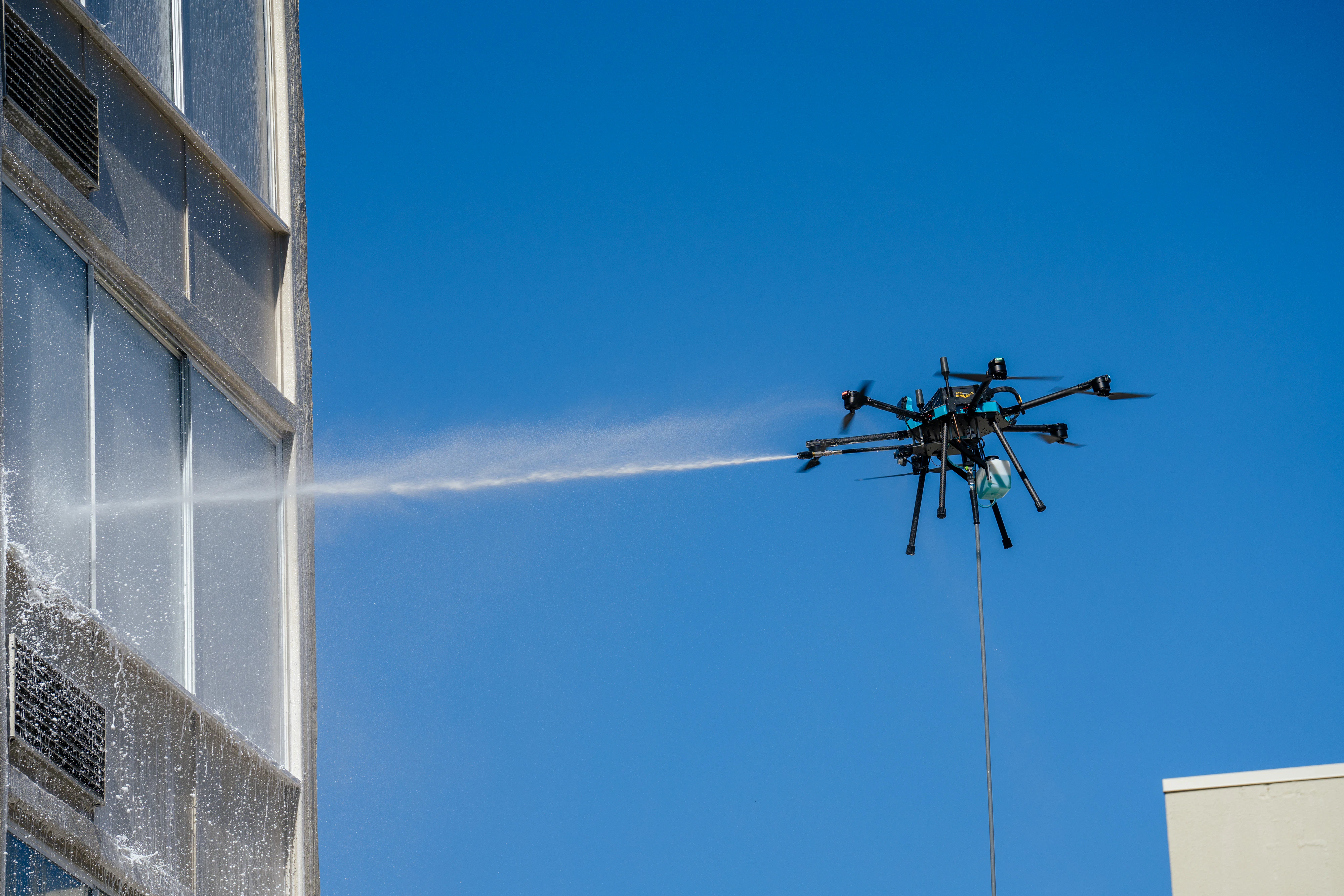
Drone cleaning changes the equation. With the Lucid Sherpa covering over 300 square feet per minute (approximately 5,700 sqft per flight), the per-sqft cost drops significantly. Operators report job costs 50 to 80% lower than traditional methods once the upfront equipment investment is recovered.
The key variable: how many jobs you're running. A pressure washing crew amortizes their equipment across volume. A drone operator amortizes a $45,000 Sherpa (or $2,950/month through Lucid Refresh) across that same volume, but with dramatically lower per-job labor and equipment overhead.
Bottom line: For buildings above 3 stories, drone cleaning typically costs 40 to 60% less per square foot than traditional crew-based methods.
Speed: One Operator vs. a Full Crew
A traditional crew of 4 to 8 workers cleaning an 8-story commercial building exterior might spend 3 to 5 days on site. That includes setup time for lifts or scaffolding, safety checks, and the actual cleaning.
A single Sherpa operator can cover the same building in 1 to 2 days. The drone cleans over 300 sqft per minute with up to 19 minutes of flight time per battery set. No scaffolding setup. No lift positioning between sections. No crew coordination.
For the business owner, speed means two things: you can take on more jobs per month, and you can quote faster turnarounds that win contracts.
Safety: This Is Where Drones Win Definitively
Falls from elevation are consistently among the top causes of workplace fatalities in the U.S. Traditional exterior cleaning puts workers on ladders, scaffolding, swing stages, or boom lifts, often 50 to 200 feet above ground.
Drone-based cleaning eliminates elevated worker exposure entirely. The operator stays on the ground. The drone handles the height. That's not just a safety talking point - it directly impacts insurance costs, OSHA compliance burden, and liability exposure.
Operators switching from traditional methods to the Sherpa report meaningful drops in their workers' comp premiums. When you remove the primary risk factor (elevation), insurers notice.
What Each Method Handles Best
Pressure washing crews excel at: ground-level concrete, sidewalks, parking structures, tight interior spaces, heavy industrial degreasing at ground level, and jobs where water runoff containment is critical.
Cleaning drones excel at: building exteriors above 3 stories, window cleaning (with the Sherpa's window washing payload), facades, EIFS, stucco, curtain walls, solar panel cleaning, any surface that traditionally requires scaffolding or lift access, soft wash applications (300 PSI), and high-pressure applications up to 4,500 PSI.
The sweet spot for many operators: using both. Ground-level flatwork stays with the pressure washing rig. Everything above the first floor goes to the drone. This hybrid approach maximizes revenue per job while keeping the crew safe.
ROI Comparison: Payback Period
Traditional Pressure Washing Business Startup
- Truck, trailer, pump, surface cleaner, hoses: $15,000 to $40,000
- Boom lift rental per job: $500 to $2,000/day
- Crew payroll (4 workers): $1,200 to $2,400/day
- Insurance (elevated work): $5,000 to $15,000/year
- Payback: typically 6 to 18 months
Drone Cleaning Business with Sherpa
- Sherpa drone package: $45,000 (or $2,950/month with Lucid Refresh)
- Single operator: $200 to $400/day
- No lift/scaffold rental: $0
- Insurance (ground-level operation): significantly lower
- Training: included (Sherpa Academy + Part 107 certification)
- Payback: Most operators report ROI after 2 jobs
The Sherpa's 400% ROI comes from real operator data: what once required a crew of 8 and $150,000 in project expenses can now be handled by one person and a drone.
For a deeper look at commercial drone cleaning economics, equipment options, and operator revenue data, read our complete guide to commercial drone building cleaning.
The Verdict
This isn't drone vs. pressure washing as an either/or decision. It's about matching the right tool to the right job.
If you're cleaning parking lots, driveways, and ground-level concrete, a traditional pressure washing setup is proven and cost-effective. If you're cleaning building exteriors, windows, or anything that currently requires scaffolding or lifts, the economics have shifted. A cleaning drone like the Sherpa reduces labor costs, eliminates elevation risk, and lets a single operator handle jobs that used to require a full crew.
The operators growing fastest right now are the ones using both.
Frequently Asked Questions
Is a cleaning drone actually cheaper than a pressure washing crew?
For buildings above 3 stories, yes. Drone cleaning typically costs 40 to 60% less per square foot because you eliminate scaffolding rental ($2,000-$5,000/week), reduce crew size from 4-8 workers to 1 operator, and cut job duration by 50-70%. Ground-level flatwork is still more cost-effective with traditional equipment.
How fast can a drone clean a building compared to a crew?
A single Sherpa operator can clean an 8-story building in 1 to 2 days. A traditional crew of 4 to 8 workers typically needs 3 to 5 days on the same building, including scaffolding setup and safety checks.
Do I need a special license to operate a cleaning drone?
Yes. You need an FAA Part 107 Remote Pilot Certificate. The exam costs $175 and most people pass on the first attempt. Lucid Bots provides prep materials and training through Sherpa Academy.
Can I add drone cleaning to my existing pressure washing business?
Absolutely. Many of the fastest-growing operators run a hybrid model: traditional pressure washing for ground-level work and the Sherpa drone for everything above the first floor. Lucid Refresh starts at $2,950/month with no long-term commitment, so you can test the economics in your market before buying outright.
Ready to see the Sherpa in action? Book a demo and get a custom ROI analysis for your business.
Related Articles
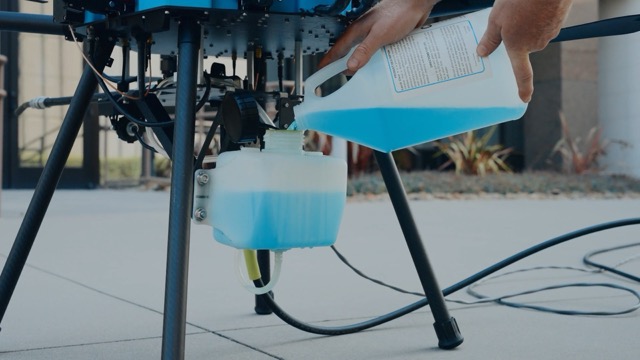
Chemical Safety, Dilution, and Environmental Protection in Drone Cleaning
The most powerful tool in exterior cleaning is chemistry. And chemistry handled without discipline creates consequences that outlast any single job: surface damage from incorrect dilution, operator injuries from skipped PPE, landscaping damage from runoff or drift, and the reputational harm that follows all of these. This gives drone cleaning operators a complete practical framework for working with exterior cleaning chemistry safely and responsibly on every job. Topics covered include sodium hypochlorite dilution guidelines for heavy growth and light growth applications with specific mix ratios and dwell time requirements, the full PPE kit every operator should have on every job site and the reasoning behind each piece of equipment, and a complete landscaping protection protocol organized across the three phases of every job: pre-treatment, during application, and post-treatment. The post also covers chemical neutralization basics for both sodium hypochlorite and acid-based cleaners, and the post-cleaning documentation practices that protect operators from liability when customers follow up with concerns about plant health. Built for operators who want to run professional job sites that clients trust, refer, and return to.
This is for drone cleaning operators who want to handle chemistry professionally on every job and for property managers who want to understand what responsible chemical handling looks like before they bring a new vendor onto their property. Getting the chemistry right is what produces consistent results. Getting the safety and protection protocols right is what makes those results repeatable without incident, liability, or the kind of landscaping damage that turns a satisfied client into a former one.
The most powerful tool in exterior cleaning is not pressure. It is chemistry. And chemistry handled without discipline creates consequences that extend well beyond the job itself: surface damage from incorrect dilution, operator injuries from skipped PPE steps, and landscaping damage from runoff or drift that turns a satisfied client into one who never calls back. Professional drone cleaning operators do not treat chemical handling as a secondary concern. They build it into the job from the first site assessment to the final post-treatment rinse. This post covers the complete framework for doing that correctly on every job.
Chemical Safety, Dilution, and Environmental Protection in Drone Cleaning
Professional drone cleaning results come from professional chemistry. Not from the drone, not from pressure, and not from the equipment. From using the right solution at the right concentration on the right surface, with the discipline to protect operators, clients, and job sites throughout the process.
Here is the complete framework for handling chemistry safely and responsibly on every commercial exterior cleaning job.
Sodium Hypochlorite Dilution: Getting the Concentration Right
The goal with sodium hypochlorite dilution is always to use the minimum effective concentration for the contamination and surface in front of you. Using more chemistry than the job requires does not produce better results. It increases surface damage risk, creates more runoff to manage, and raises cost without a corresponding benefit.
For heavy growth on brick, stone, or stucco, a concentration of approximately 4 percent sodium hypochlorite is the appropriate starting point. To achieve this from a 12.5 percent bleach concentrate, mix one part bleach to three parts water and apply with a soft wash system and surfactant. Allow 15 to 20 minutes of dwell time before rinsing. The dwell time is not optional. It is what gives the chemistry enough contact time to kill organic growth at the root level rather than just removing the surface appearance.
For light growth on siding, wood, or surfaces with less severe contamination, a concentration of 1 to 2 percent is typically appropriate. Mix one part 12.5 percent bleach to between 6 and 12 parts water depending on the severity of the contamination. Dwell time for light growth applications runs 10 to 15 minutes. Exact ratios will vary based on surface type, ambient temperature, and local practices. Always test in an inconspicuous area and dial in your mix before committing to a full application.
PPE: What Every Operator Needs on Every Job
Personal protective equipment is not optional and it is not just about regulatory compliance. It is about making sure every operator on the job site goes home the same way they arrived. The consequences of a chemical splash to the eyes or sustained respiratory exposure to sodium hypochlorite vapor are serious enough that no time saved by skipping a step is ever worth the risk.
Eye Protection
Chemical splash goggles are the minimum standard for any job involving sodium hypochlorite or other cleaning chemicals. A full face shield is required for overhead work where chemical drift and drip are more likely. Standard safety glasses are not adequate protection for liquid chemical exposure.
Respiratory Protection
An N95 respirator is the minimum for outdoor applications with adequate ventilation. Chemical cartridge respirators are required for enclosed or poorly ventilated areas and for applications involving heavy mist or prolonged exposure. A full-face respirator is appropriate for extensive exposure scenarios. Match the respirator to the actual exposure level rather than defaulting to the minimum.
Skin Protection
Chemical-resistant gloves in nitrile or neoprene are required for all chemical handling. Long sleeves and pants protect skin from incidental contact and drift. A chemical-resistant apron is appropriate for mixing operations where spill risk is higher. Closed-toe shoes with chemical resistance protect against ground-level spills and runoff.
Landscaping Protection: Before, During, and After
Chemical runoff and drift are among the most common sources of client complaints and liability exposure in exterior cleaning. Landscaping damage is visible, emotional, and memorable in a way that property managers do not forget. A thorough protection protocol eliminates that risk and demonstrates a level of professionalism that most competitors do not bother to show.
Before the Job
Identify all sensitive plants, ornamental shrubs, and ground cover in the treatment zone before setting up. Pre-water all vegetation thoroughly with clean water before any chemistry is applied. Saturating plants before exposure dilutes any chemical contact that occurs and significantly reduces uptake. Cover delicate plants with plastic sheeting where practical. Identify the location of all storm drains in or adjacent to the treatment area and protect them if runoff could reach them during the application.
During the Job
Monitor wind direction continuously throughout the application. Chemical drift from drone operations at height can carry further than operators expect, particularly in light crosswinds that are not strong enough to suspend operations. Use targeted application patterns that keep overspray away from landscaping and unintended surfaces. Keep a continuous water supply available throughout the job for immediate dilution response if drift occurs. Adjust drone positioning and application angles when wind conditions shift.
After the Job
Rinse all vegetation in the treatment zone immediately after the application is complete, regardless of whether visible chemical contact occurred during the job. Remove any protective coverings once the chemistry has been neutralized or rinsed away. Monitor plant health for 24 to 48 hours after completion and document your observations. If a client contacts you about plant stress during that window, a documented post-job monitoring record turns a potential dispute into a manageable conversation.
Chemical Neutralization Basics
Sodium hypochlorite neutralizes naturally over time with dilution and exposure to sunlight. For most soft wash applications on exterior surfaces, thorough rinsing and natural neutralization are sufficient. Acid-based cleaners require specific neutralizing agents that must be confirmed before the job and applied deliberately after cleaning. Never leave a job site with active chemistry on a surface or in runoff channels without confirming neutralization. Provide the client with post-cleaning care instructions that cover any monitoring they should do in the hours following the job.
Documentation: Your Protection When Questions Arise
Even when a job is executed flawlessly, clients sometimes follow up with concerns about plant health or surface appearance in the days after cleaning. Documentation is what protects operators in those conversations. Log the chemicals used, the concentrations applied, and the surfaces treated on every job. Note the landscaping protection steps taken and the condition of the plants at the time of the post-treatment rinse. If you monitored plant health in the 24 to 48 hours after completion, record what you observed. That documentation turns a vague complaint into a specific, documented conversation where you can demonstrate exactly what was done and when.
The Big Takeaway
Professional chemical handling is not overhead. It is the foundation of results that are consistent, repeatable, and safe. Get the dilution right. Wear the PPE every time without exception. Protect the landscaping before, during, and after every job. Document what you did. The operators who do all of this build the kind of client relationships that generate referrals and recurring contracts for years. The ones who skip steps spend their time managing complaints instead.
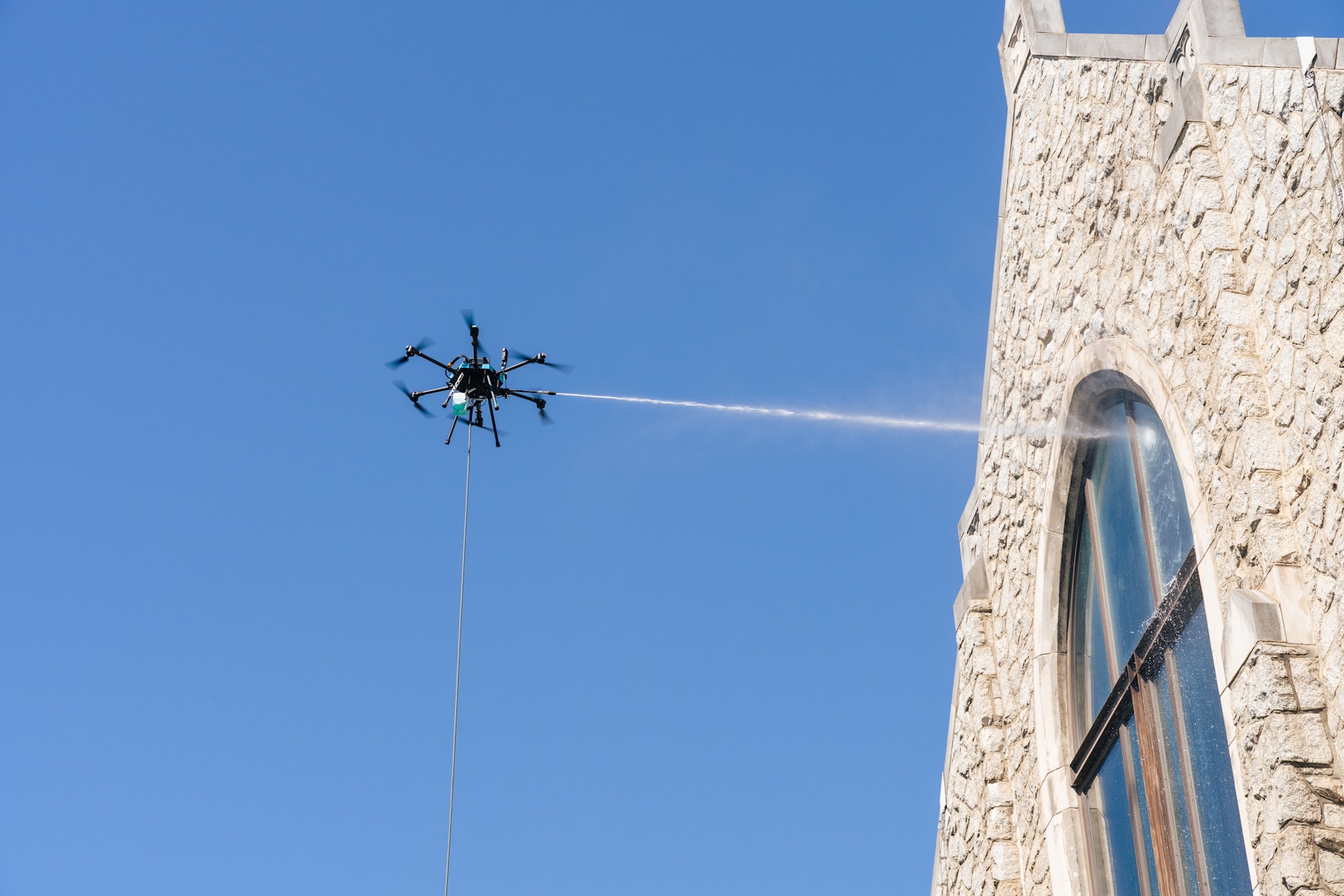
Soft Wash vs Pressure Wash vs Window Cleaning: Choosing the Right Method Every Time
Drone cleaning changes how solutions reach a surface. It does not change the fundamental chemistry and method principles that determine what actually cleans a building. Every exterior cleaning job falls into one of three categories: window cleaning, soft washing, or pressure washing. Each has a different mechanism, different pressure and flow parameters, a different set of surfaces it is suited for, and a different set of surfaces it will damage if misapplied. This post breaks down all three methods in practical detail and walks through a surface-by-surface guide covering glass and glazed surfaces, stucco and EIFS, brick and masonry, metal panels, and concrete. It also covers the most common method selection mistakes in each category and explains why organic growth requires chemical treatment rather than mechanical force regardless of what surface it is growing on. The limestone cautionary story from a real university job illustrates the cost of prioritizing equipment over chemistry knowledge. Built for operators who want to quote and execute with confidence and for buyers who want to understand what separates a professional exterior cleaning vendor from one who causes expensive damage.
This is for drone cleaning operators who want to make confident, well-reasoned method selections on every job, and for property managers and facility directors who want to understand why their cleaning vendor recommends one approach over another. Method selection is one of the highest-stakes decisions in exterior cleaning. The wrong choice does not just produce poor results. It damages surfaces, voids warranties, and destroys client relationships that took significant effort to build. This post gives operators and buyers a clear, surface-by-surface framework for getting it right every time.
The difference between a professional exterior clean and a costly mistake almost always comes down to one decision: choosing the right method for the surface and contamination in front of you. Drone cleaning does not change the fundamentals of exterior cleaning method selection. It makes those decisions more consequential because bad choices executed at height on expensive commercial facades can cause significant damage fast. Every exterior job falls into one of three categories: window cleaning, soft washing, or pressure washing. Each one has different chemistry, different pressure requirements, and a different set of surfaces it works on. Here is how to choose correctly every time.
Soft Wash vs Pressure Wash vs Window Cleaning: Choosing the Right Method Every Time
Drone cleaning does not change what cleans a surface. It changes how safely and efficiently cleaning solutions reach one. The three fundamental exterior cleaning methods still apply to every job, and using the wrong one is one of the most expensive mistakes an operator can make. Here is what each method does, how it works, and when to use it.
Window Cleaning
Window cleaning is designed for glass and glazed surfaces where streak-free results are non-negotiable. The process applies a specialized cleaning solution that breaks down contamination on the glass surface, then rinses with ultra-pure filtered water to prevent mineral deposits and spotting. The critical variable is not pressure. It is water quality. Water that has not been filtered to near-zero parts per million will leave mineral deposits on glass regardless of how well the chemical step performs. Operating pressure for window cleaning typically runs between 800 and 1,200 PSI, which is enough to rinse effectively without risking seal damage or thermal stress on the glass.
The most common mistakes on glass are using unfiltered water, using incorrect chemical ratios, and rushing the rinse step. All three produce spotting and streaking that customers notice immediately and remember for a long time. Streak-free glass comes from chemistry and water quality, not force.
Soft Washing
Soft washing is the correct method for mold, mildew, algae, and organic growth on surfaces that cannot handle high pressure. Stucco, EIFS, painted wood, certain brick types, and most roofing materials all fall into this category. The process applies a chemical solution, typically sodium hypochlorite combined with a surfactant for cling and dwell performance, at low pressure and allows it to sit on the surface for 10 to 15 minutes. During that dwell window, the chemistry kills the organic growth at the root level rather than simply removing what is visible on the surface.
This root-level kill is what makes soft washing results last significantly longer than pressure washing on organically contaminated surfaces. A pressure wash removes the visible growth without treating the root system, which means regrowth begins almost immediately. A soft wash removes both the visible growth and the biological structure underneath it, which extends the clean result substantially. Operating pressure stays under 300 PSI with a flow rate around 10 to 12 gallons per minute. Surface damage risk at those parameters is minimal when dilution is correct and dwell time is respected.
Pressure Washing
Pressure washing uses mechanical force to remove contamination from hard, durable surfaces that can tolerate the pressure involved. It produces immediate visual results and works well on concrete, pavers, and certain metal surfaces. Operating pressure can reach up to 4,400 PSI with flow rates under 8 gallons per minute. The results are visually satisfying and the process is fast.
The limitation is that pressure washing works at the surface level only. It removes what is visible without addressing the biology underneath, which means organic growth returns faster than it would after a soft wash treatment. Pressure washing is the right tool for the right surface and the right contamination type. It is not the right default for every job, and applying it to surfaces that require soft washing can cause real and expensive damage.
Surface by Surface: Matching Method to Material
Glass and Windows
Glass requires window cleaning with filtered water and a specialized cleaning solution at 800 to 1,200 PSI. The single most important variable is water purity. Nothing else matters if the rinse water is leaving mineral deposits. Use deionized or reverse osmosis filtered water and confirm the output reads as close to zero parts per million as possible before starting.
Stucco and EIFS
Stucco and EIFS are among the most damage-prone surfaces in commercial exterior cleaning. They require soft washing at very low pressure, under 200 PSI, with sodium hypochlorite and a surfactant mix that allows proper dwell time. High pressure on these materials strips finish coats, forces water behind the cladding system, and voids manufacturer warranties. There is no job on stucco or EIFS where high pressure is the right answer.
Brick and Masonry
Brick can typically tolerate soft washing or light pressure washing in the 200 to 800 PSI range, but it always deserves a test patch first. Older mortar can be fragile and may not survive even moderate pressure. Acid-based cleaners on brick require careful testing because the wrong acid at the wrong concentration causes permanent discoloration and surface damage. When in doubt, start with soft washing and only introduce pressure if the surface clearly needs it.
Metal Panels
Metal panel cleaning varies significantly based on the finish type and the nature of the contamination. Low to moderate pressure applies in most cases. The critical rule is to avoid chemicals that react with the specific metal finish in use. Sodium hypochlorite on certain metal finishes causes oxidation and discoloration that cannot be reversed. Confirm the panel finish type before selecting chemistry and test in an inconspicuous area first when working with an unfamiliar material.
Concrete
Concrete is the most forgiving surface in exterior cleaning and can handle pressure washing up to around 3,000 PSI in most applications. Soft washing is also effective on concrete when organic growth is the primary contamination type. The key consideration for concrete is sealer compatibility. Decorative concrete finishes and sealed surfaces can be damaged by the wrong chemistry or excessive pressure, so confirm what has been applied to the surface before selecting your approach.
The Core Rule
Match the method to the contamination type and the surface material, not to the equipment you happen to have available. When the contamination is organic growth of any kind, mold, algae, mildew, moss, or lichen, chemistry is the primary weapon. Pressure without chemistry removes the surface appearance of organic growth without treating the biology underneath it. The result comes back faster, the customer is disappointed sooner, and the operator's reputation takes the hit.
Drone cleaning rewards method knowledge because it makes professional execution accessible on surfaces and heights where traditional methods create too much risk or too much disruption. The technology advantage is real. But it only delivers its full value when the operator behind it knows which chemistry to apply, at what pressure, on which surface, for how long.
The Big Takeaway
Soft washing, pressure washing, and window cleaning each have a purpose and a set of surfaces they are designed for. Choosing correctly every time is what separates operators who build long-term client relationships from those who cause damage and lose accounts. Learn the methods. Know the surfaces. Let the chemistry do the work it is designed to do.
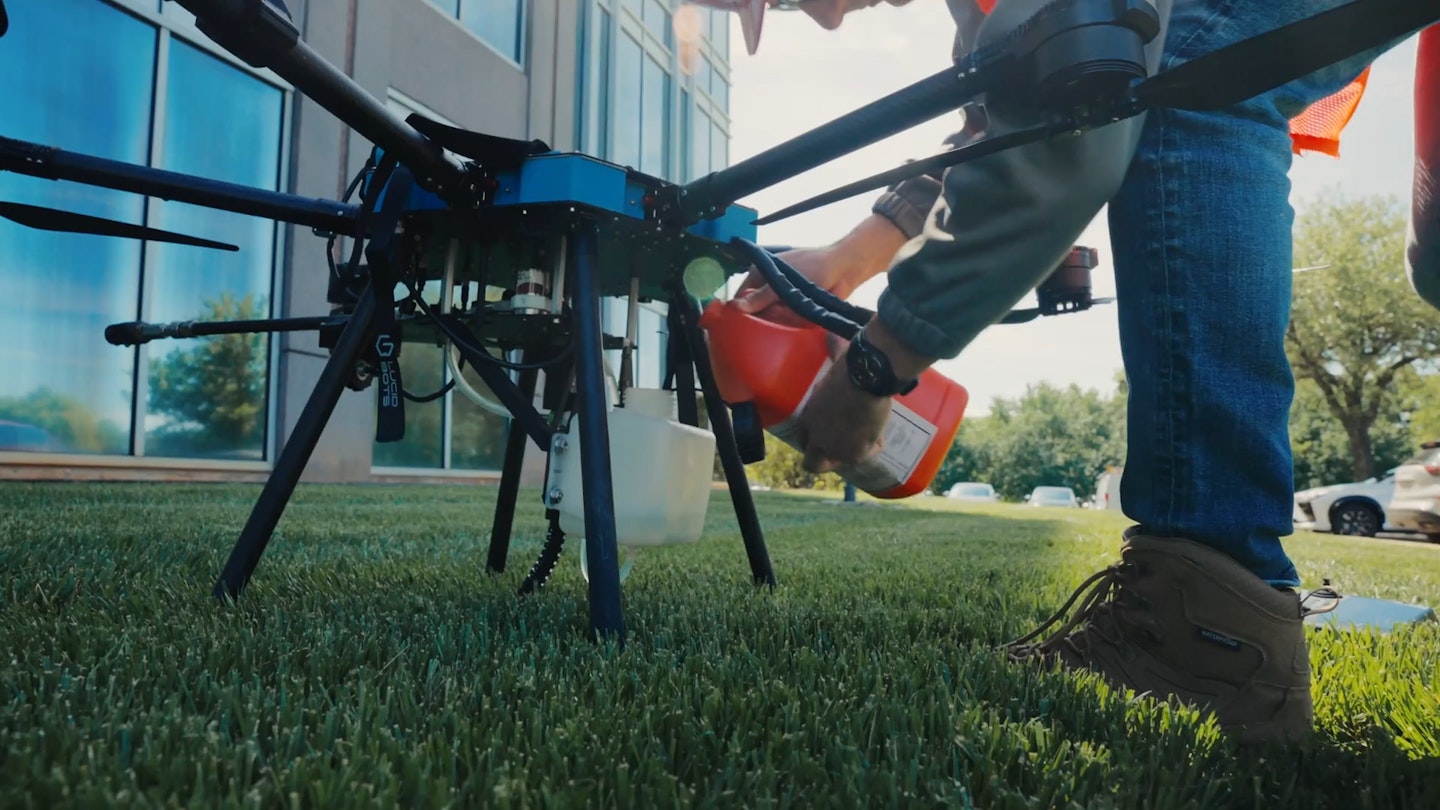
Drone Cleaning Is Chemistry: The Two Analogies That Build Instant Customer Trust
The biggest misconception about drone cleaning is that the technology is the secret ingredient. It is not. The cleaning chemistry used in drone exterior cleaning is identical to the proven methods traditional contractors have used for decades. The drone is simply a safer, more efficient delivery system. The problem is that when customers do not understand this, they approach the service with skepticism that no amount of technical explanation can dissolve. This gives operators two simple analogies that reframe chemical cleaning in terms every prospect already understands. The dishwasher analogy addresses the agitation objection directly by connecting drone cleaning to a process every homeowner trusts. The pool chemistry analogy neutralizes fear of bleach-based solutions by linking sodium hypochlorite to chlorinated pools that customers happily let their families swim in. The post also includes the limestone cautionary story that illustrates what happens when method selection goes wrong, the full customer education framework with tailored language for four distinct customer types, and guidance on what not to lead with in sales conversations. Built for operators who want to close more deals by explaining their service more simply.
This is for drone cleaning operators who struggle to explain their service to skeptical customers in plain language. If you have ever watched a prospect's eyes glaze over during a technical explanation of your cleaning process, or fielded the question 'but how does it actually clean without scrubbing,' this post gives you two simple, field-tested analogies that cut through confusion immediately. Understanding the chemistry behind drone cleaning and knowing how to communicate it simply is one of the most practical sales skills an operator can develop.
When people first encounter drone cleaning, they often assume the drone is doing something special to the surface: scrubbing, blasting, or using some new futuristic method. That assumption creates immediate skepticism. How does it clean without brushing? Is it strong enough? Is it safe? The fastest way to overcome those objections is not a technical explanation of your equipment. It is a familiar analogy that connects chemical cleaning to something the customer already understands and trusts. This post walks through the two analogies that drone cleaning operators use to build instant customer confidence, and the customer education framework that turns those analogies into closed deals.
Drone Cleaning Is Chemistry: The Two Analogies That Build Instant Customer Trust
"The expert in anything was once a beginner." - Helen Hayes
The biggest misconception about drone cleaning is that the drone is the secret sauce. It is not. After thousands of successful jobs across hundreds of operators, one truth becomes clear: the cleaning chemistry is identical to traditional exterior cleaning methods. The drone is simply a safer, more efficient delivery system that gets proven solutions exactly where they need to go.
The challenge is that customers do not know this. And when they do not understand how chemical cleaning works, skepticism fills the gap. The answer is not a more technical explanation. It is a simpler language.
The Dishwasher Analogy
When a customer asks how drone cleaning works without scrubbing, this is the response that lands every time:
"There are no scrub brushes in your dishwasher. The detergent is specially designed to break down food and bacteria chemically, and water flow rinses it away. Exterior cleaning works exactly the same way."
This analogy works for several reasons. Everyone understands how dishwashers clean without scrubbing, so the concept requires no technical education. It normalizes chemical-based cleaning as proven, familiar technology rather than something experimental. It addresses the agitation objection directly without being defensive. And it shifts the customer's attention from the mechanism to the outcome, which is a clean surface, which is all they actually care about.
Once a customer accepts that their dishwasher cleans without brushes, the logic of drone cleaning follows naturally. Chemistry breaks down contamination. Dwell time allows it to work. Rinsing removes the residue. The drone just delivers the chemistry more safely and efficiently than a crew on a lift.
The Pool Chemistry Analogy
Some customers hear the word bleach and immediately become concerned. Sodium hypochlorite sounds industrial and dangerous to people who have not worked with it professionally. The pool analogy resolves that concern in a single sentence:
"Do you have a pool? Have your kids ever swam in a pool? How do you think that water stays clean? It is chlorine. Sodium hypochlorite is the same family of chemistry, used correctly at the right concentration for the job."
The psychology behind this analogy is straightforward. People who are comfortable with chlorinated pools, which is most people, already trust the chemistry at a personal level. They have made peace with the fact that their families swim in chlorinated water regularly. Connecting sodium hypochlorite to that existing comfort immediately reframes the conversation. The chemical is no longer scary industrial bleach. It is a familiar cleaning agent they already accept in their daily lives.
The Limestone Story: Why Method Matters More Than Equipment
Understanding chemistry is not just a sales tool. It is what protects customers from expensive mistakes. One of the clearest illustrations of this comes from a real job at a university.
The building had beautiful limestone trim that was heavily stained with mold. A previous contractor had approached it with a lift, high pressure, and hot water at 4,000 PSI. They literally ate away a quarter inch of the limestone trying to clean it with mechanical force.
The correct approach had nothing to do with pressure. Mold is an organic compound with root systems. If you do not treat it chemically, you are not truly removing it. You are just abrading the surface. The right solution was a soft wash pump running around 150 PSI with proper chemistry and dwell time. The pressure was almost irrelevant. The chemistry did the work.
The principle applies to every job: match the method to the contamination type and the surface material, not to the equipment you happen to have available. Operators who understand this protect their customers from exactly the kind of expensive damage that makes property managers distrust contractors for years.
How to Explain Drone Cleaning to Any Customer
Not every customer cares about the same thing. The operators who communicate most effectively tailor their explanation to what the specific customer values. Here is the framework that works across four common customer types.
For Safety-Focused Customers
"We use the same proven cleaning chemistry that traditional contractors use. The difference is that our drone keeps workers safely on the ground throughout the entire job. No lifts, no ladders, no workers at height."
For Quality-Focused Customers
"Our window cleaning works like a dishwasher. Specialized chemistry breaks down dirt without physical scrubbing, and we use ultra-pure filtered water to prevent any spotting or streaking. The result is consistent, streak-free glass every time."
For Cost-Focused Customers
"Chemical cleaning kills organic growth at the root level, which means buildings stay clean longer after a soft wash than after a pressure wash. Fewer cleanings per year translates directly into lower total annual maintenance costs."
For Skeptical or Technical Customers
"The chemistry is identical to what traditional exterior cleaning contractors have used for decades. We are not doing anything experimental. We are just delivering proven solutions more safely and efficiently using a drone as the delivery system instead of a crew on a lift."
What Not to Lead With
When introducing drone cleaning to a new prospect, resist the urge to open with equipment specifications. Flight time, battery capacity, payload engineering, and drone model numbers do not answer the questions customers are actually asking. They want to know whether it works, whether it is safe, and whether it will damage their building. Lead with the analogies. Let technical details come out naturally if the customer is curious, not as your opening pitch.
The operators who explain drone cleaning most effectively do not sound like engineers. They sound like trusted professionals who happen to use a smarter tool.
The Big Takeaway
Drone cleaning is not magic. It is proven chemistry delivered more safely and efficiently. The dishwasher analogy explains how chemical cleaning works without scrubbing. The pool analogy neutralizes fear of bleach-based solutions. The limestone story illustrates what happens when operators prioritize equipment over chemistry knowledge. And the customer education framework gives you the right language for any prospect you sit across from.
Master the simple explanation. Use the analogies. Let the chemistry do the work it has always done.

.svg)
.avif)



.avif)