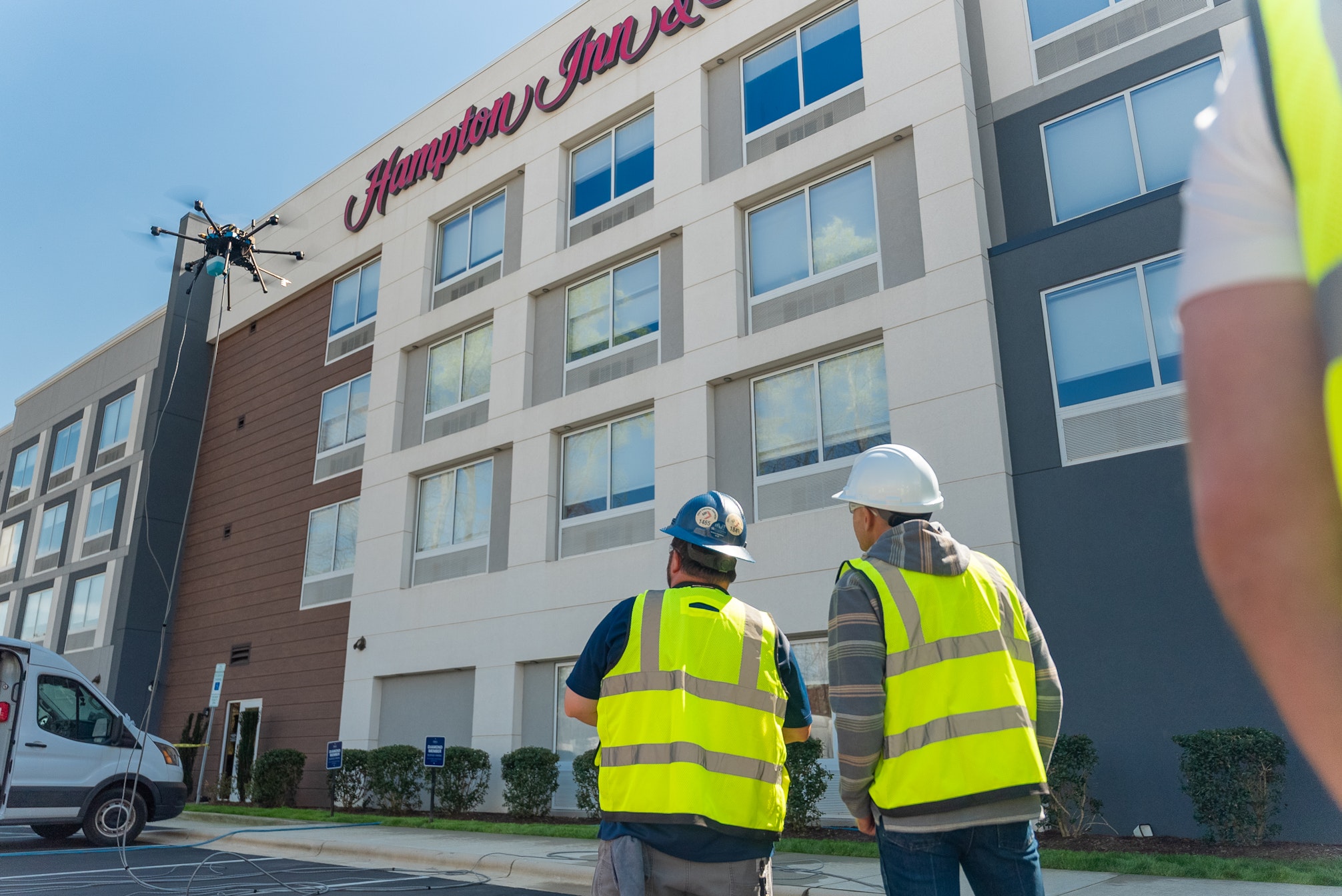
How to Close Drone Cleaning Contracts: From Demo to Signed Deal
Great demos don't automatically become signed contracts. Use this repeatable drone cleaning sales process — objection scripts, documentation tips, follow-up structure, and win/loss learning — to close more deals consistently.
This is for drone cleaning operators who can run a great demo but aren't always converting it into a signed contract. If you've had prospects go quiet after a quote, struggled with pricing objections, or just want a more consistent sales process, this post gives you a repeatable system — from documentation and objection handling to follow-up and recurring contract structure — so more demos turn into real revenue.
Drone cleaning is one of the few services where the product can genuinely sell itself — but only if you have a process that captures that momentum and turns it into a signed contract. A great demo without a strong follow-up system is a missed opportunity. The best drone cleaning operators don't rely on charm or luck to close deals. They follow a repeatable sales process: demo, document, quote, follow up, and learn. This post breaks down each step of that drone cleaning sales process so you can convert more demos into paying customers and recurring contracts.
From Demo to Signed Contract: Objections, Proof, and a Repeatable Close
Drone cleaning is one of the rare services where the product can sell itself—if you put it in front of the right prospect.
But closing still requires structure.
The best operators don’t rely on charisma. They rely on a repeatable system:
- demo
- document
- quote
- follow up
- learn
- repeat
Here’s how to turn a demo into a signed contract consistently.
Step 1: Make the Demo “Stick” with Documentation
A demo is powerful in the moment. Documentation makes it powerful later.
Capture:
- before photos from multiple angles
- short video clip (30–120 seconds)
- after photos from the same angles
- time and location notes
- customer reaction quote (with permission)
Then send a same-day recap:
- “Here’s the before/after from today.”
- “Here’s the quote for the full scope.”
- “If you’d like, we can schedule completion next week.”
Fast follow-up signals professionalism.
Step 2: Use Objection Scripts That Reduce Risk
Objection: “How do I know this works as well as traditional cleaning?”
Response: “Great question. The chemistry is identical—we’re simply delivering it more efficiently and safely. We can demo a small section, and I can show you before/after from similar properties.”
Objection: “What if the drone breaks down during the job?”
Response: “We plan for that with backup equipment and support processes. And we avoid many of the mechanical issues that come with lifts.”
Objection: “Your price seems high.”
Response: “I understand. When you factor in speed, reduced disruption, and the lack of lift rentals and liability concerns, our total value is often better. Want me to break down the comparison?”
These responses work because they don’t argue. They clarify.
Step 3: Quote Immediately (While Momentum Is High)
The best time to quote is right after the demo, when the clean section is visible.
Even if you provide a rough range first, do it promptly:
- “To do the full building, you’re looking at approximately $X–$Y depending on final scope.”
Then follow with a formal quote the same day or next morning.
Step 4: Turn “One Job” into “Many Jobs”
Remember the quote:
“You don’t close a sale; you open a relationship.”
Ask discovery questions before you leave:
- “Do you manage other properties?”
- “Do you have a maintenance schedule?”
- “Are there sister buildings that need the same work?”
Then propose:
- a recurring plan (every 3–6 months)
- a multi-building rate
- a prioritized rollout (start with the worst building first)
Step 5: Improve Through Win/Loss Learning
When you lose a bid, ask:
“Would you mind sharing why we didn’t win this one?”
You’ll usually hear one of three things:
- “We’ve used the same vendor for years.” (relationship lock-in)
- “You were higher than expected.” (pricing/value positioning)
- “We weren’t ready yet.” (timing)
Each answer tells you what to do next:
- relationship lock-in → pursue different targets, nurture slowly
- price → adjust range or strengthen value explanation
- timing → schedule a follow-up based on budget cycles
The Big Takeaway
Demos create belief. Proof creates trust. Follow-up creates contracts.
If you treat every demo as:
- a sales moment
- a content asset
- a relationship starter
…you don’t just close deals, you build a pipeline that compounds.
Related Articles
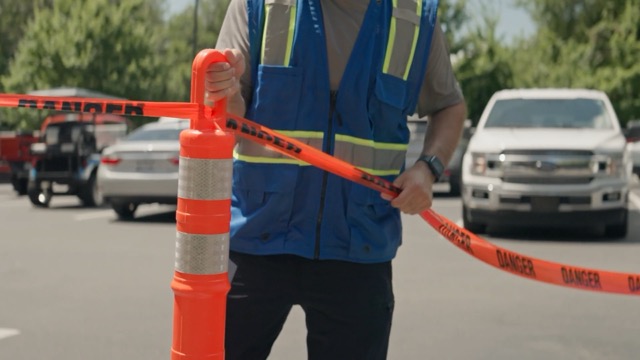
The Checklist Mindset: Why Pros Don't Wing It in Drone Cleaning
The difference between professional drone cleaning operators and amateurs is not technical skill or expensive equipment. It is systematic execution. This post makes the case for the checklist mindset as the single most important operational habit a drone cleaning operator can build, and then delivers the practical framework for applying it across every phase of a job. Topics covered include the four psychological reasons why experienced operators make field mistakes even when they know better: excitement kills execution, memory fails under pressure, small mistakes cascade into large problems, and inconsistency erodes customer trust. The post walks through the complete pre-job checklist structure covering core equipment, cleaning system components, safety and documentation items, and the night-before routine that prevents morning scrambles. It also addresses why the value of a checklist is not just in what it catches but in what it signals to customers who can see a systematic, visible process happening in front of them. Built for operators who want to stop relying on memory and start running operations that are predictable, professional, and scalable.
This is for drone cleaning operators at any experience level who want to run tighter, more professional job sites with fewer mistakes, fewer surprises, and more consistent results. If you have ever arrived at a job missing something important, started a cleaning run only to realize a step got skipped, or felt the gap between how prepared you meant to be and how prepared you actually were, this post gives you the mindset framework and the practical checklist structure to close that gap permanently.
Most field mistakes in drone cleaning are not caused by a lack of knowledge. They are caused by skipped steps. Operators arrive at a job site excited to fly and eager to impress, and that excitement is exactly what causes problems. Professional athletes use pre-game routines for a reason: adrenaline makes people skip fundamentals. Drone cleaning is no different. When you are managing customer expectations, weather windows, equipment, and a chemical-based workflow at the same time, your brain prioritizes whatever feels urgent. Checklists protect you from that dynamic by moving critical decisions out of the moment and into a system that runs before the pressure starts.
The Checklist Mindset: Why Pros Don't Wing It in Drone Cleaning
"Excellence is never an accident. It is always the result of high intention, sincere effort, and intelligent execution." - Aristotle
The difference between professional drone cleaning operators and amateurs is almost never equipment quality or flight skill. It is systematic execution. Professionals follow checklists. Amateurs rely on memory and hope. And the operators who document their processes and build repeatable systems consistently outperform those who wing it, regardless of how experienced or talented they are.
Here is why that is true, and what the checklist mindset looks like in practice.
Why Even Experienced Operators Make Field Mistakes
Excitement Kills Execution
One of our senior operators puts it plainly: you get to the site, you get excited, and then you start missing steps. That is not a character flaw. It is human nature. Adrenaline and anticipation redirect attention toward what feels important right now and away from the systematic preparation that prevents problems later. Professional athletes use pre-game routines for exactly this reason. The routine runs whether the athlete feels ready or not, because feelings are not a reliable signal for execution quality. Drone cleaning is the same.
Memory Fails Under Pressure
When you are simultaneously managing customer expectations, watching a weather window, monitoring equipment, and running a chemical-based workflow, your brain prioritizes immediate problems over systematic preparation. That is how small things get forgotten. And in drone cleaning, small things forgotten at the start of a job have a way of becoming large problems by the middle of one.
Small Mistakes Cascade
Forgetting a water key seems like a minor oversight until you are trying to open a hose bib with pliers while a customer watches. Missing a battery charger seems inconsequential until it costs you half a day driving back to base. Skipping a pre-flight spray test seems fine until you are aloft and discover the nozzle is partially blocked. Small mistakes in field operations do not stay small. They cascade into delays, rework, equipment damage, and customer experiences that undercut everything else you did well on that job.
Consistency Builds Trust
Customers cannot evaluate your chemical ratios or nozzle selection. They can evaluate whether you look prepared. A visible, systematic process communicates competence in a way that no amount of verbal reassurance can match. Operators who follow checklists in front of customers are sending a signal: we have done this before, we have thought through what can go wrong, and we are not improvising. That signal builds the kind of trust that generates referrals and repeat contracts.
The Pre-Job Checklist: What to Never Leave Without
The most valuable checklist in drone cleaning is the one you run the night before a job, not the morning of. By the time you are loading the van at 6am, the decisions should already be made. Everything on the list should already be charged, mixed, packed, and confirmed. The morning is for execution, not preparation.
Core Equipment
The drone should be inspected and confirmed ready before it goes in the vehicle. Bring a minimum of three fully charged batteries, the charger and all power cables, the controller with charged batteries, at least two sets of spare propellers, a basic tool kit covering screwdrivers, hex keys, and pliers, and a water key. The water key deserves special mention because it is small, easy to forget, and completely irreplaceable on site. If you do not have one, you cannot connect to most commercial hose bibs.
Cleaning System Equipment
The pump and hoses should be pressure tested before leaving base. Cleaning chemicals should be identified and dilution ratios calculated in advance, not improvised on site. Bring spray nozzles and quick-connect fittings, chemical mixing containers and measuring tools, and hose weights and routing guides. Knowing your ratios before you arrive means you are mixing with intention rather than guessing under time pressure.
Safety and Documentation
Every job requires PPE including goggles, chemical-resistant gloves, a respirator appropriate for the exposure level, and protective clothing. A first aid kit and eyewash solution should be in the vehicle on every job without exception. Bring a phone or camera ready for before-and-after documentation, the job scope and customer contact information, and the emergency procedures relevant to the site. A weather monitoring app should be open and checked before departure and again on arrival.
The Night-Before Routine
The night before a job is when professional operators do their real preparation work. Review the job scope and the weather forecast together so you know what conditions you are walking into and whether any adjustments are needed. Inspect and charge all equipment so nothing is scrambling for power in the morning. Calculate your chemical dilution ratios in advance and write them down. Pack the vehicle using the checklist rather than from memory. Plan your route and identify backup water sources in case the primary source is unavailable. Set your alarm early enough to account for traffic and setup time without rushing.
Five minutes of checklist discipline the night before prevents hours of firefighting the day of. That is not an exaggeration. It is the consistent experience of operators who have built this habit versus those who have not.
What Checklists Signal to Customers
There is a sales dimension to operational discipline that operators often overlook. When a customer watches you arrive, work through a visible setup sequence, brief bystanders on safety procedures, and operate with obvious systematic structure, they are forming an impression that no proposal or testimonial can fully create on its own. They are watching professionalism in real time. That impression is what makes them comfortable signing a recurring maintenance contract, what makes them confident referring you to colleagues, and what makes them less likely to shop your next renewal on price alone.
The checklist mindset is not just about preventing mistakes. It is about building the kind of operation that customers trust and competitors cannot easily replicate.
The Big Takeaway
Every mistake you can make in the field has already been made by someone else. Every efficiency you can gain has already been discovered. The operators who document those lessons and build them into repeatable checklists consistently outperform those who rely on memory and improvisation, regardless of talent or experience. Build the checklists. Run them every time without exception. Let the system protect the job so you can focus on the work.
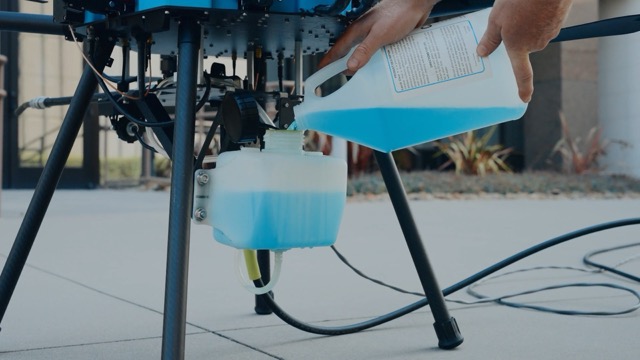
Chemical Safety, Dilution, and Environmental Protection in Drone Cleaning
The most powerful tool in exterior cleaning is chemistry. And chemistry handled without discipline creates consequences that outlast any single job: surface damage from incorrect dilution, operator injuries from skipped PPE, landscaping damage from runoff or drift, and the reputational harm that follows all of these. This gives drone cleaning operators a complete practical framework for working with exterior cleaning chemistry safely and responsibly on every job. Topics covered include sodium hypochlorite dilution guidelines for heavy growth and light growth applications with specific mix ratios and dwell time requirements, the full PPE kit every operator should have on every job site and the reasoning behind each piece of equipment, and a complete landscaping protection protocol organized across the three phases of every job: pre-treatment, during application, and post-treatment. The post also covers chemical neutralization basics for both sodium hypochlorite and acid-based cleaners, and the post-cleaning documentation practices that protect operators from liability when customers follow up with concerns about plant health. Built for operators who want to run professional job sites that clients trust, refer, and return to.
This is for drone cleaning operators who want to handle chemistry professionally on every job and for property managers who want to understand what responsible chemical handling looks like before they bring a new vendor onto their property. Getting the chemistry right is what produces consistent results. Getting the safety and protection protocols right is what makes those results repeatable without incident, liability, or the kind of landscaping damage that turns a satisfied client into a former one.
The most powerful tool in exterior cleaning is not pressure. It is chemistry. And chemistry handled without discipline creates consequences that extend well beyond the job itself: surface damage from incorrect dilution, operator injuries from skipped PPE steps, and landscaping damage from runoff or drift that turns a satisfied client into one who never calls back. Professional drone cleaning operators do not treat chemical handling as a secondary concern. They build it into the job from the first site assessment to the final post-treatment rinse. This post covers the complete framework for doing that correctly on every job.
Chemical Safety, Dilution, and Environmental Protection in Drone Cleaning
Professional drone cleaning results come from professional chemistry. Not from the drone, not from pressure, and not from the equipment. From using the right solution at the right concentration on the right surface, with the discipline to protect operators, clients, and job sites throughout the process.
Here is the complete framework for handling chemistry safely and responsibly on every commercial exterior cleaning job.
Sodium Hypochlorite Dilution: Getting the Concentration Right
The goal with sodium hypochlorite dilution is always to use the minimum effective concentration for the contamination and surface in front of you. Using more chemistry than the job requires does not produce better results. It increases surface damage risk, creates more runoff to manage, and raises cost without a corresponding benefit.
For heavy growth on brick, stone, or stucco, a concentration of approximately 4 percent sodium hypochlorite is the appropriate starting point. To achieve this from a 12.5 percent bleach concentrate, mix one part bleach to three parts water and apply with a soft wash system and surfactant. Allow 15 to 20 minutes of dwell time before rinsing. The dwell time is not optional. It is what gives the chemistry enough contact time to kill organic growth at the root level rather than just removing the surface appearance.
For light growth on siding, wood, or surfaces with less severe contamination, a concentration of 1 to 2 percent is typically appropriate. Mix one part 12.5 percent bleach to between 6 and 12 parts water depending on the severity of the contamination. Dwell time for light growth applications runs 10 to 15 minutes. Exact ratios will vary based on surface type, ambient temperature, and local practices. Always test in an inconspicuous area and dial in your mix before committing to a full application.
PPE: What Every Operator Needs on Every Job
Personal protective equipment is not optional and it is not just about regulatory compliance. It is about making sure every operator on the job site goes home the same way they arrived. The consequences of a chemical splash to the eyes or sustained respiratory exposure to sodium hypochlorite vapor are serious enough that no time saved by skipping a step is ever worth the risk.
Eye Protection
Chemical splash goggles are the minimum standard for any job involving sodium hypochlorite or other cleaning chemicals. A full face shield is required for overhead work where chemical drift and drip are more likely. Standard safety glasses are not adequate protection for liquid chemical exposure.
Respiratory Protection
An N95 respirator is the minimum for outdoor applications with adequate ventilation. Chemical cartridge respirators are required for enclosed or poorly ventilated areas and for applications involving heavy mist or prolonged exposure. A full-face respirator is appropriate for extensive exposure scenarios. Match the respirator to the actual exposure level rather than defaulting to the minimum.
Skin Protection
Chemical-resistant gloves in nitrile or neoprene are required for all chemical handling. Long sleeves and pants protect skin from incidental contact and drift. A chemical-resistant apron is appropriate for mixing operations where spill risk is higher. Closed-toe shoes with chemical resistance protect against ground-level spills and runoff.
Landscaping Protection: Before, During, and After
Chemical runoff and drift are among the most common sources of client complaints and liability exposure in exterior cleaning. Landscaping damage is visible, emotional, and memorable in a way that property managers do not forget. A thorough protection protocol eliminates that risk and demonstrates a level of professionalism that most competitors do not bother to show.
Before the Job
Identify all sensitive plants, ornamental shrubs, and ground cover in the treatment zone before setting up. Pre-water all vegetation thoroughly with clean water before any chemistry is applied. Saturating plants before exposure dilutes any chemical contact that occurs and significantly reduces uptake. Cover delicate plants with plastic sheeting where practical. Identify the location of all storm drains in or adjacent to the treatment area and protect them if runoff could reach them during the application.
During the Job
Monitor wind direction continuously throughout the application. Chemical drift from drone operations at height can carry further than operators expect, particularly in light crosswinds that are not strong enough to suspend operations. Use targeted application patterns that keep overspray away from landscaping and unintended surfaces. Keep a continuous water supply available throughout the job for immediate dilution response if drift occurs. Adjust drone positioning and application angles when wind conditions shift.
After the Job
Rinse all vegetation in the treatment zone immediately after the application is complete, regardless of whether visible chemical contact occurred during the job. Remove any protective coverings once the chemistry has been neutralized or rinsed away. Monitor plant health for 24 to 48 hours after completion and document your observations. If a client contacts you about plant stress during that window, a documented post-job monitoring record turns a potential dispute into a manageable conversation.
Chemical Neutralization Basics
Sodium hypochlorite neutralizes naturally over time with dilution and exposure to sunlight. For most soft wash applications on exterior surfaces, thorough rinsing and natural neutralization are sufficient. Acid-based cleaners require specific neutralizing agents that must be confirmed before the job and applied deliberately after cleaning. Never leave a job site with active chemistry on a surface or in runoff channels without confirming neutralization. Provide the client with post-cleaning care instructions that cover any monitoring they should do in the hours following the job.
Documentation: Your Protection When Questions Arise
Even when a job is executed flawlessly, clients sometimes follow up with concerns about plant health or surface appearance in the days after cleaning. Documentation is what protects operators in those conversations. Log the chemicals used, the concentrations applied, and the surfaces treated on every job. Note the landscaping protection steps taken and the condition of the plants at the time of the post-treatment rinse. If you monitored plant health in the 24 to 48 hours after completion, record what you observed. That documentation turns a vague complaint into a specific, documented conversation where you can demonstrate exactly what was done and when.
The Big Takeaway
Professional chemical handling is not overhead. It is the foundation of results that are consistent, repeatable, and safe. Get the dilution right. Wear the PPE every time without exception. Protect the landscaping before, during, and after every job. Document what you did. The operators who do all of this build the kind of client relationships that generate referrals and recurring contracts for years. The ones who skip steps spend their time managing complaints instead.
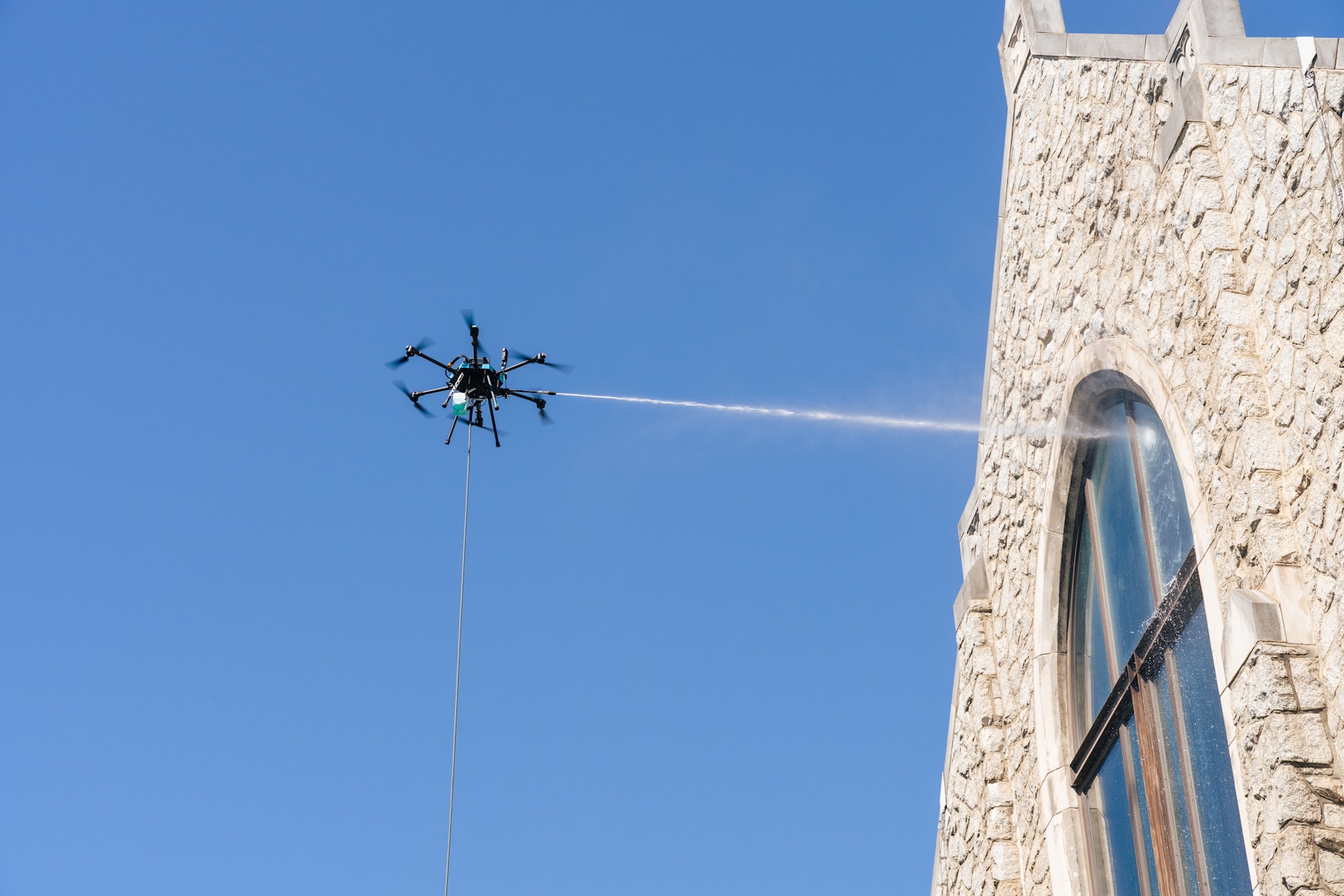
Soft Wash vs Pressure Wash vs Window Cleaning: Choosing the Right Method Every Time
Drone cleaning changes how solutions reach a surface. It does not change the fundamental chemistry and method principles that determine what actually cleans a building. Every exterior cleaning job falls into one of three categories: window cleaning, soft washing, or pressure washing. Each has a different mechanism, different pressure and flow parameters, a different set of surfaces it is suited for, and a different set of surfaces it will damage if misapplied. This post breaks down all three methods in practical detail and walks through a surface-by-surface guide covering glass and glazed surfaces, stucco and EIFS, brick and masonry, metal panels, and concrete. It also covers the most common method selection mistakes in each category and explains why organic growth requires chemical treatment rather than mechanical force regardless of what surface it is growing on. The limestone cautionary story from a real university job illustrates the cost of prioritizing equipment over chemistry knowledge. Built for operators who want to quote and execute with confidence and for buyers who want to understand what separates a professional exterior cleaning vendor from one who causes expensive damage.
This is for drone cleaning operators who want to make confident, well-reasoned method selections on every job, and for property managers and facility directors who want to understand why their cleaning vendor recommends one approach over another. Method selection is one of the highest-stakes decisions in exterior cleaning. The wrong choice does not just produce poor results. It damages surfaces, voids warranties, and destroys client relationships that took significant effort to build. This post gives operators and buyers a clear, surface-by-surface framework for getting it right every time.
The difference between a professional exterior clean and a costly mistake almost always comes down to one decision: choosing the right method for the surface and contamination in front of you. Drone cleaning does not change the fundamentals of exterior cleaning method selection. It makes those decisions more consequential because bad choices executed at height on expensive commercial facades can cause significant damage fast. Every exterior job falls into one of three categories: window cleaning, soft washing, or pressure washing. Each one has different chemistry, different pressure requirements, and a different set of surfaces it works on. Here is how to choose correctly every time.
Soft Wash vs Pressure Wash vs Window Cleaning: Choosing the Right Method Every Time
Drone cleaning does not change what cleans a surface. It changes how safely and efficiently cleaning solutions reach one. The three fundamental exterior cleaning methods still apply to every job, and using the wrong one is one of the most expensive mistakes an operator can make. Here is what each method does, how it works, and when to use it.
Window Cleaning
Window cleaning is designed for glass and glazed surfaces where streak-free results are non-negotiable. The process applies a specialized cleaning solution that breaks down contamination on the glass surface, then rinses with ultra-pure filtered water to prevent mineral deposits and spotting. The critical variable is not pressure. It is water quality. Water that has not been filtered to near-zero parts per million will leave mineral deposits on glass regardless of how well the chemical step performs. Operating pressure for window cleaning typically runs between 800 and 1,200 PSI, which is enough to rinse effectively without risking seal damage or thermal stress on the glass.
The most common mistakes on glass are using unfiltered water, using incorrect chemical ratios, and rushing the rinse step. All three produce spotting and streaking that customers notice immediately and remember for a long time. Streak-free glass comes from chemistry and water quality, not force.
Soft Washing
Soft washing is the correct method for mold, mildew, algae, and organic growth on surfaces that cannot handle high pressure. Stucco, EIFS, painted wood, certain brick types, and most roofing materials all fall into this category. The process applies a chemical solution, typically sodium hypochlorite combined with a surfactant for cling and dwell performance, at low pressure and allows it to sit on the surface for 10 to 15 minutes. During that dwell window, the chemistry kills the organic growth at the root level rather than simply removing what is visible on the surface.
This root-level kill is what makes soft washing results last significantly longer than pressure washing on organically contaminated surfaces. A pressure wash removes the visible growth without treating the root system, which means regrowth begins almost immediately. A soft wash removes both the visible growth and the biological structure underneath it, which extends the clean result substantially. Operating pressure stays under 300 PSI with a flow rate around 10 to 12 gallons per minute. Surface damage risk at those parameters is minimal when dilution is correct and dwell time is respected.
Pressure Washing
Pressure washing uses mechanical force to remove contamination from hard, durable surfaces that can tolerate the pressure involved. It produces immediate visual results and works well on concrete, pavers, and certain metal surfaces. Operating pressure can reach up to 4,400 PSI with flow rates under 8 gallons per minute. The results are visually satisfying and the process is fast.
The limitation is that pressure washing works at the surface level only. It removes what is visible without addressing the biology underneath, which means organic growth returns faster than it would after a soft wash treatment. Pressure washing is the right tool for the right surface and the right contamination type. It is not the right default for every job, and applying it to surfaces that require soft washing can cause real and expensive damage.
Surface by Surface: Matching Method to Material
Glass and Windows
Glass requires window cleaning with filtered water and a specialized cleaning solution at 800 to 1,200 PSI. The single most important variable is water purity. Nothing else matters if the rinse water is leaving mineral deposits. Use deionized or reverse osmosis filtered water and confirm the output reads as close to zero parts per million as possible before starting.
Stucco and EIFS
Stucco and EIFS are among the most damage-prone surfaces in commercial exterior cleaning. They require soft washing at very low pressure, under 200 PSI, with sodium hypochlorite and a surfactant mix that allows proper dwell time. High pressure on these materials strips finish coats, forces water behind the cladding system, and voids manufacturer warranties. There is no job on stucco or EIFS where high pressure is the right answer.
Brick and Masonry
Brick can typically tolerate soft washing or light pressure washing in the 200 to 800 PSI range, but it always deserves a test patch first. Older mortar can be fragile and may not survive even moderate pressure. Acid-based cleaners on brick require careful testing because the wrong acid at the wrong concentration causes permanent discoloration and surface damage. When in doubt, start with soft washing and only introduce pressure if the surface clearly needs it.
Metal Panels
Metal panel cleaning varies significantly based on the finish type and the nature of the contamination. Low to moderate pressure applies in most cases. The critical rule is to avoid chemicals that react with the specific metal finish in use. Sodium hypochlorite on certain metal finishes causes oxidation and discoloration that cannot be reversed. Confirm the panel finish type before selecting chemistry and test in an inconspicuous area first when working with an unfamiliar material.
Concrete
Concrete is the most forgiving surface in exterior cleaning and can handle pressure washing up to around 3,000 PSI in most applications. Soft washing is also effective on concrete when organic growth is the primary contamination type. The key consideration for concrete is sealer compatibility. Decorative concrete finishes and sealed surfaces can be damaged by the wrong chemistry or excessive pressure, so confirm what has been applied to the surface before selecting your approach.
The Core Rule
Match the method to the contamination type and the surface material, not to the equipment you happen to have available. When the contamination is organic growth of any kind, mold, algae, mildew, moss, or lichen, chemistry is the primary weapon. Pressure without chemistry removes the surface appearance of organic growth without treating the biology underneath it. The result comes back faster, the customer is disappointed sooner, and the operator's reputation takes the hit.
Drone cleaning rewards method knowledge because it makes professional execution accessible on surfaces and heights where traditional methods create too much risk or too much disruption. The technology advantage is real. But it only delivers its full value when the operator behind it knows which chemistry to apply, at what pressure, on which surface, for how long.
The Big Takeaway
Soft washing, pressure washing, and window cleaning each have a purpose and a set of surfaces they are designed for. Choosing correctly every time is what separates operators who build long-term client relationships from those who cause damage and lose accounts. Learn the methods. Know the surfaces. Let the chemistry do the work it is designed to do.

.svg)
.avif)



.avif)