From a ladder fall to a six-figure contract pipeline
.jpg)
David Wheeler was a white-collar career professional who landed on his hip from 8 feet up. That injury didn't just change his body — it changed his business. Here's how Drone Clean USA went from residential soft washing to major commercial jobs on the calendar.
What has the Sherpa Drone actually done for Drone Clean USA?
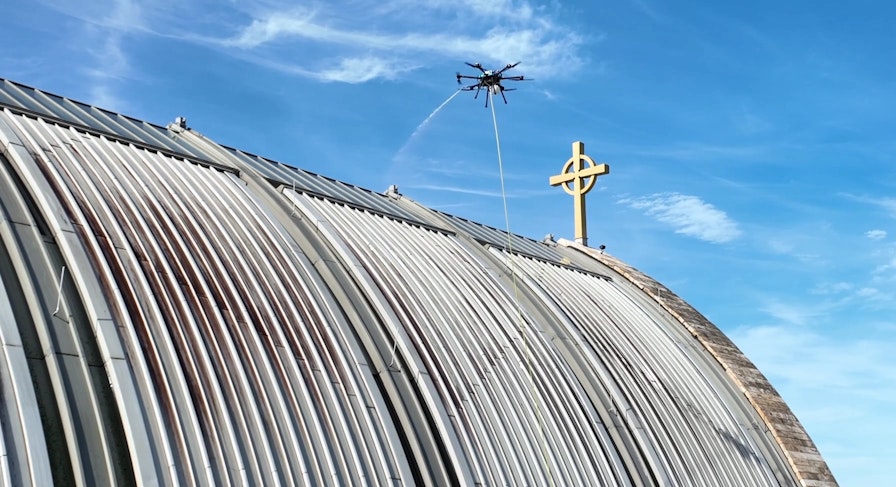
Before the drone, David was doing $20,000–$30,000 per month as a residential soft washer. He can now hit that same number in a single week. He's also targeting increasingly complex commercial projects, and revenue has grown 200% — and he's quick to point out that the quality-of-life gains have grown alongside the money.
"I can hit in a single week what used to take me a month."
An 8-foot fall and a company that actually answered the phone
David's entry into drone cleaning wasn't strategic — it was survival. He fell off an 8-foot ladder and landed hard on his hip, damaging it significantly. The experience made one thing clear: there had to be a safer way to do this work.
He researched drone cleaning companies and reached out to four of them. One was out of business. One emailed him back two weeks later. One never responded at all. Lucid Bots answered the phone.
That responsiveness was enough. He bought the Sherpa Drone, became a strategic partner, and has been an active feedback contributor ever since. Years later, he's getting that same hip replaced — but he's not climbing ladders anymore.
Residential soft wash, a dissolved partnership, and a slow pivot
David started in residential soft washing with a partner. After the partnership dissolved, he launched Drone Clean USA. The first two years with the Sherpa Drone were spent trying to make it work primarily for roof cleaning — a high-demand service that he eventually found was lower profitability than it appeared after careful analysis.
Year three was the turning point. He made the deliberate choice to focus residential work only on high-margin roofs, drop house washes entirely, and shift serious energy toward commercial acquisition. He calls it the best business decision he's ever made.
"The best business decision I've ever made was going all-in on commercial."
$20–30K per month to $20–30K per week
The revenue math for Drone Clean USA is straightforward. What used to be a solid month is now a strong week. Average per-job revenue has climbed to approximately $10,000 and is growing as David deliberately pursues more complex, higher-value commercial projects.
More notable to him than the revenue growth is what came with it: time. Time to volunteer. Time to rest. Time to do things outside of work that matter to him.
Minimum two people, maximum preparation, early starts on the coast
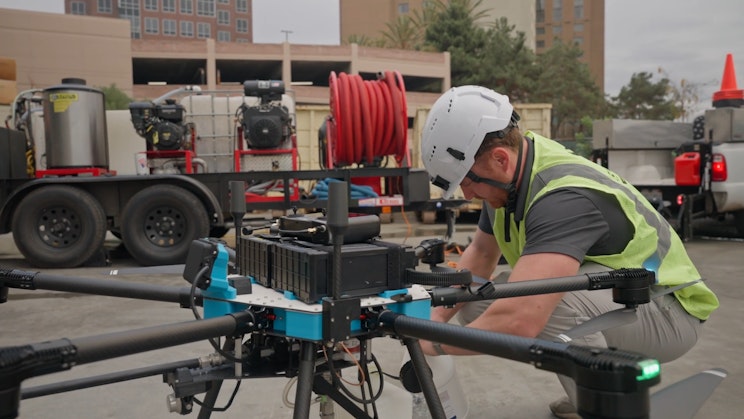
Drone Clean USA runs a minimum crew of two, scaling with job complexity. Critically, the job planning happens offsite — site visits are done in advance, SOPs are reviewed, and the crew knows exactly what to do when they arrive. Onsite setup is minimal by design.
When working on the coast, David prefers early morning starts before afternoon winds pick up. The team works opposite the sun to prevent solution drying on windows. Weather and wind contingencies are built into the schedule based on season. The crew often skips lunch to finish early, but hydration stays non-negotiable throughout the day.
Entire commercial portfolios — and a team being built to go get them
David's next move isn't another job type. It's building the infrastructure to own entire commercial portfolios. He's developing a team with dedicated acquisition, service delivery, and account management capacity. Portfolio-based pricing is available, but only with signed agreements — a policy that keeps the pricing structure sustainable and filters out uncommitted prospects.
A six-figure job is already on the calendar. Another commercial contract, if it closes fully, would be in a different category altogether.
60 years old, a brand new hip, and one clear regret
David Wheeler is 60. He spent most of his career in white-collar work before switching to the trades five years ago — two years before the Sherpa Drone, three years with it. He recently got a hip replacement on the same hip he damaged in that 8-foot fall. The injury that brought him to the Sherpa Drone has been corrected. He's not climbing ladders regardless.
What does he wish he'd known? That drone cleaning was even a category. He would have gotten into it sooner — and he says it plainly, without qualification.
"I didn't know this existed. If I had, I would have started sooner."
From Lucid Bots
David's story is one we think about when someone asks what kind of company Lucid Bots is trying to be. Not because of the pipeline or the revenue growth — though those numbers matter. Because of what happened after he bought the Sherpa Drone.
He didn't just use the product. He called us when something wasn't right. He shared what he was learning in the field. He gave feedback that shaped how the product developed. And he trusted that we were actually listening.
If you're running a Sherpa Drone and you haven't connected with the Client Success team, that's the first thing to fix. And if you're considering the Sherpa Drone and want to talk to someone who's been in the field with it for three years — David is the kind of operator who picks up the phone too.
— The Lucid Bots Team
.jpg)