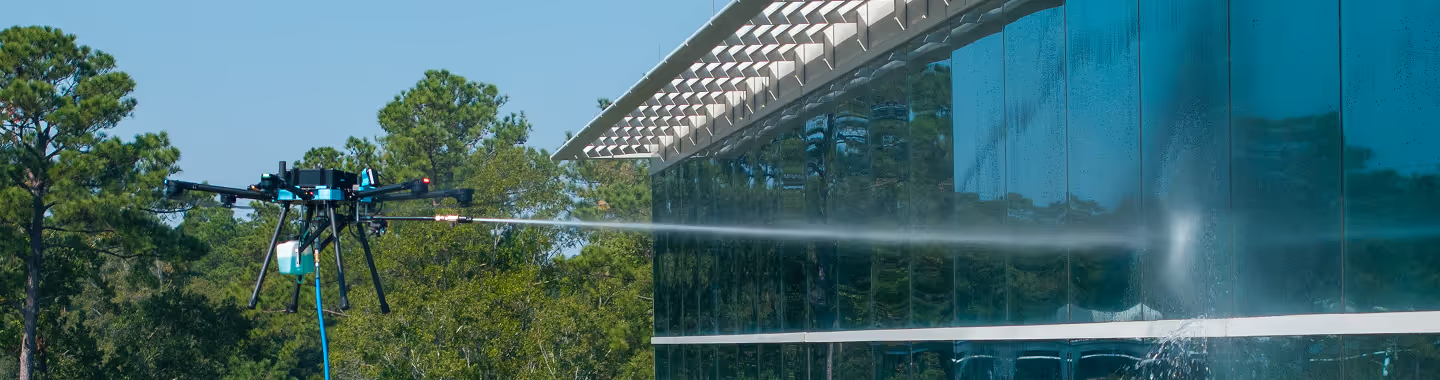
Experience Lucid Bots.
Discover a small sampling of what can be accomplished with Lucid Bots. The Lucid Bots resources page offers a comprehensive collection of case studies, videos, e-books, and more.
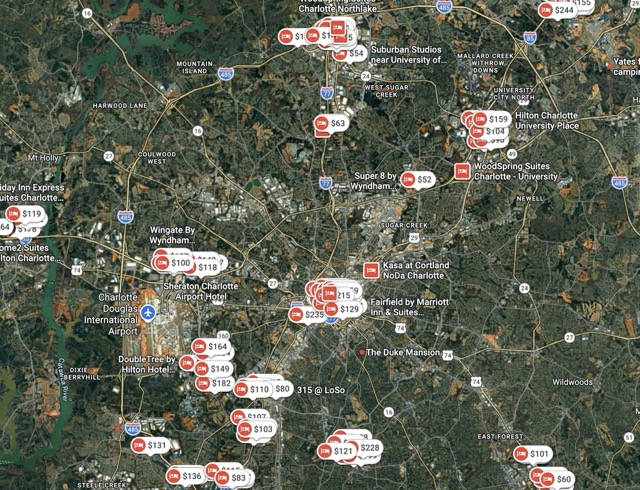
The Google Maps Method — How to Uncover Millions in Local Drone Cleaning Revenue
Turn Google Maps into your market-sizing tool. Learn the simple method that reveals millions in potential drone cleaning contracts around your city.
This is for drone cleaning operators who want a simple, free, and fast way to understand the size of their local market before they spend a dollar on marketing. Whether you're validating a new territory or trying to build a credible pipeline for your first year, this method turns a casual search into a concrete revenue estimate — no expensive research reports required.
What if your next million-dollar opportunity was already sitting inside Google Maps? One Lucid Bots sales rep decided to find out. He drew a 60-mile circle around Charlotte, NC and searched for "Hilton." Twenty-five properties came back. At an average of $25,000 per property in annual cleaning value, that's $625,000 of potential revenue from a single hotel brand. He kept going — Marriott, Holiday Inn, Hampton Inn — and the total grew into the millions before he even searched for office buildings or hospitals. This post walks you through the same exercise so you can run it in your own market today.
The Power of Local Data
That quick exercise revealed a simple truth: you don't need expensive research reports to measure your drone cleaning market — just curiosity and a map.
Here's what a single metro area looks like when you run the full exercise:
- Office Buildings: 500 x $15,000 = $7.5M
- Medical Facilities: 150 x $50,000 = $7.5M
- Industrial Sites: 800 x $10,000 = $8M
Total addressable market in one metro area: over $20 million. That's before you've knocked on a single door.
Try It Yourself — Step by Step
- Open Google Maps and set your base location
- Search for key property types: "hotel," "office building," "warehouse," "hospital," "medical center"
- Log the number of results within your target radius (start at 60 miles)
- Estimate average annual cleaning value by property type
- Multiply and total — that's your addressable market
- Highlight properties within easy driving distance — those are your first-contact targets
Why This Matters
Mapping your market gives you three things most operators lack: confidence, focus, and a measurable opportunity. When you can see the potential in black and white, growth stops feeling hypothetical — it becomes inevitable.
You stop chasing any lead that comes in and start building a prioritized target list. You stop underpricing because you're afraid of losing a job and start quoting with the confidence of someone who knows there's plenty more pipeline behind it.
The Bottom Line
You don't need a research firm. You need an afternoon and a browser tab.
Run this exercise in your market this week. Write down the number you get. That's your opportunity — and it's already waiting.
Next: we'll compare traditional cleaning methods with drone cleaning to show exactly where that opportunity becomes profit.

Think Bigger - The Hidden $10 Billion Opportunity in Exterior Drone Cleaning
Most cleaning companies think too small. Discover why the exterior cleaning market is a unified, multi-billion-dollar opportunity waiting for innovators with drone technology.
This is for drone cleaning operators, entrepreneurs, and exterior cleaning professionals who feel like they're working hard but not growing fast enough. If you've been thinking of your business as a window cleaning company or a pressure washing company, this will reframe how you see the entire market — and show you why the opportunity is dramatically larger than most operators realize.
Most operators in the exterior cleaning industry make one critical mistake before they even fly their first job: they think too small. Window cleaners focus on glass. Pressure washers stick to concrete. Interior janitorial teams never look outside. Each sees only their narrow lane and assumes that's the entire opportunity. But here's what they're missing: the exterior drone cleaning market isn't divided into niches — it's one massive, interconnected system worth billions of dollars. And operators who understand that are poised to dominate it. This post shows you exactly how large the opportunity really is, and why now is the moment to act.
The Unified Market
The U.S. commercial cleaning market tops $60 billion annually, and the exterior segment alone accounts for $9-12 billion of that total.
Unlike interior cleaning — now dominated by large national players — exterior work remains fragmented, inefficient, and dangerous. Thousands of independent contractors handle the work manually, using outdated methods that haven't changed in decades.
In a mid-size U.S. city, there are thousands of buildings over three stories that require regular exterior maintenance, each representing $2,000 to $50,000 in annual cleaning revenue. That's not a niche — that's a goldmine hiding in plain sight.
Customers don't think in niches either. A property manager doesn't say, "I need a window vendor and a facade vendor and a pressure washing crew." They want a single, reliable solution that keeps the whole building clean and safe.
That's exactly where drone cleaning creates a bridge — serving both glass surfaces and durable facades with one platform, one operator relationship, and one recurring contract.
From Fragmentation to Integration
Stop thinking in service silos. Start seeing the full skyline.
The exterior cleaning market isn't just large — it's wide-open for operators willing to rethink what's possible. Traditional competitors are locked into single-service models, single methods, and single property types. Drone cleaning operators can serve all of it.
Every mid-size U.S. city has thousands of buildings over three stories, each worth $2,000 to $50,000 in annual exterior cleaning revenue. Multiply that across hotels, offices, warehouses, hospitals, and campuses — and the math speaks for itself.
The Bottom Line
The biggest room in the world is the room for improvement — and in exterior cleaning, that room is enormous.
Stop thinking in service silos. Start seeing the full skyline. The exterior cleaning market isn't just large — it's wide-open for those willing to rethink what's possible.
Next up: we'll show you how to find that opportunity in your own backyard using nothing but Google Maps.
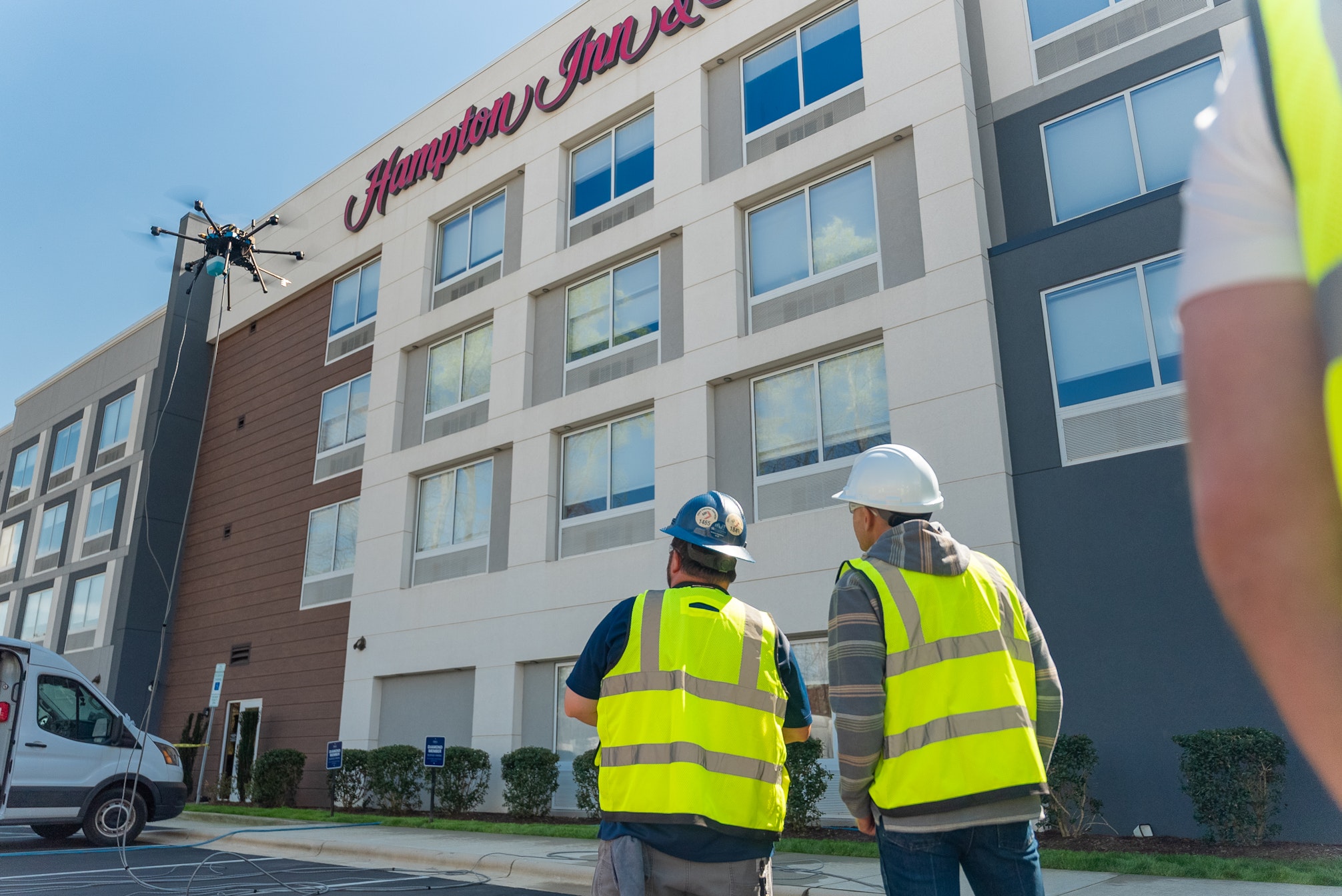
How to Close Drone Cleaning Contracts: From Demo to Signed Deal
Great demos don't automatically become signed contracts. Use this repeatable drone cleaning sales process — objection scripts, documentation tips, follow-up structure, and win/loss learning — to close more deals consistently.
This is for drone cleaning operators who can run a great demo but aren't always converting it into a signed contract. If you've had prospects go quiet after a quote, struggled with pricing objections, or just want a more consistent sales process, this post gives you a repeatable system — from documentation and objection handling to follow-up and recurring contract structure — so more demos turn into real revenue.
Drone cleaning is one of the few services where the product can genuinely sell itself — but only if you have a process that captures that momentum and turns it into a signed contract. A great demo without a strong follow-up system is a missed opportunity. The best drone cleaning operators don't rely on charm or luck to close deals. They follow a repeatable sales process: demo, document, quote, follow up, and learn. This post breaks down each step of that drone cleaning sales process so you can convert more demos into paying customers and recurring contracts.
From Demo to Signed Contract: Objections, Proof, and a Repeatable Close
Drone cleaning is one of the rare services where the product can sell itself—if you put it in front of the right prospect.
But closing still requires structure.
The best operators don’t rely on charisma. They rely on a repeatable system:
- demo
- document
- quote
- follow up
- learn
- repeat
Here’s how to turn a demo into a signed contract consistently.
Step 1: Make the Demo “Stick” with Documentation
A demo is powerful in the moment. Documentation makes it powerful later.
Capture:
- before photos from multiple angles
- short video clip (30–120 seconds)
- after photos from the same angles
- time and location notes
- customer reaction quote (with permission)
Then send a same-day recap:
- “Here’s the before/after from today.”
- “Here’s the quote for the full scope.”
- “If you’d like, we can schedule completion next week.”
Fast follow-up signals professionalism.
Step 2: Use Objection Scripts That Reduce Risk
Objection: “How do I know this works as well as traditional cleaning?”
Response: “Great question. The chemistry is identical—we’re simply delivering it more efficiently and safely. We can demo a small section, and I can show you before/after from similar properties.”
Objection: “What if the drone breaks down during the job?”
Response: “We plan for that with backup equipment and support processes. And we avoid many of the mechanical issues that come with lifts.”
Objection: “Your price seems high.”
Response: “I understand. When you factor in speed, reduced disruption, and the lack of lift rentals and liability concerns, our total value is often better. Want me to break down the comparison?”
These responses work because they don’t argue. They clarify.
Step 3: Quote Immediately (While Momentum Is High)
The best time to quote is right after the demo, when the clean section is visible.
Even if you provide a rough range first, do it promptly:
- “To do the full building, you’re looking at approximately $X–$Y depending on final scope.”
Then follow with a formal quote the same day or next morning.
Step 4: Turn “One Job” into “Many Jobs”
Remember the quote:
“You don’t close a sale; you open a relationship.”
Ask discovery questions before you leave:
- “Do you manage other properties?”
- “Do you have a maintenance schedule?”
- “Are there sister buildings that need the same work?”
Then propose:
- a recurring plan (every 3–6 months)
- a multi-building rate
- a prioritized rollout (start with the worst building first)
Step 5: Improve Through Win/Loss Learning
When you lose a bid, ask:
“Would you mind sharing why we didn’t win this one?”
You’ll usually hear one of three things:
- “We’ve used the same vendor for years.” (relationship lock-in)
- “You were higher than expected.” (pricing/value positioning)
- “We weren’t ready yet.” (timing)
Each answer tells you what to do next:
- relationship lock-in → pursue different targets, nurture slowly
- price → adjust range or strengthen value explanation
- timing → schedule a follow-up based on budget cycles
The Big Takeaway
Demos create belief. Proof creates trust. Follow-up creates contracts.
If you treat every demo as:
- a sales moment
- a content asset
- a relationship starter
…you don’t just close deals, you build a pipeline that compounds.
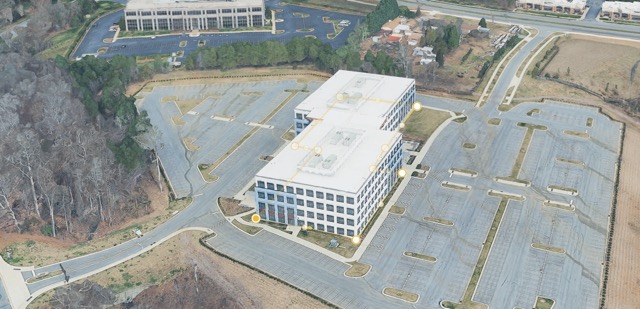
Drone Cleaning Pricing: The $0.25–$0.45 Per Square Foot Framework
Stop overthinking drone cleaning pricing. Use this proven $0.25–$0.45 per square foot framework, plus adjustments for market size, surface type, and complexity, to quote confidently from day one.
This is for drone cleaning operators who are trying to price their services confidently without overcomplicating it. Whether you're quoting your first commercial job or recalibrating after losing a few bids, this post gives you a proven starting framework — plus practical adjustments for market size, surface type, and complexity — so you can walk into any estimate with a number that makes sense.
Drone cleaning pricing is one of the first things new operators get stuck on — and one of the easiest to overthink. Before you build a complex spreadsheet, start here: most operators price drone exterior cleaning between $0.25 and $0.45 per square foot. That range isn't arbitrary. It reflects real market data from operators across different regions, property types, and experience levels. This post walks you through how to choose your starting point based on your market, how to measure square footage quickly using Google Earth, and when to adjust your drone cleaning pricing up for complexity or access challenges.
Pricing Drone Cleaning Simply: The 25–45 Cents Per Square Foot Framework
If you’re brand new to drone cleaning, pricing can feel like the hardest part.
It shouldn’t.
The biggest mistake new operators make is trying to build a perfect pricing model before they’ve sold anything. In the real world, pricing is a market-testing process, not a spreadsheet contest.
A proven simple starting range:
✅ $0.25 to $0.45 per square foot
It’s not a permanent rule. It’s a starting framework that lets you enter the market and refine quickly.
Why This Range Works
Drone cleaning changes the economics of exterior cleaning:
- less setup
- smaller crews
- fewer delays
- faster completion
So you can often offer customers a better deal while maintaining healthier margins.
This range keeps you competitive while you learn your market.
How to Choose Your Starting Point (By Market)
High-cost markets
Boston, NYC, San Francisco-style pricing tends to land near:
- $0.40–$0.45/sq ft
Lower-cost markets
Smaller cities often start:
- $0.25–$0.30/sq ft
Most markets
A common entry zone is:
- $0.30–$0.40/sq ft
If you don’t know where to start, start at $0.30–$0.35 to win early jobs and build proof.
How to Measure Square Footage Quickly
You don’t need architectural drawings to price.
Google Earth measuring tool
Use the measurement feature to estimate:
- length × height of each facade you’ll clean
- then total the cleanable square footage
Practical notes:
- exclude roof
- exclude ground-level areas you won’t clean
- use repeatable assumptions (consistency matters more than precision early)
The “Simple Adders” That Keep You Profitable
Square footage gets you close. Adders make sure you don’t underbid.
1) Dirtiness factor
Heavy contamination can turn a 2-day estimate into 4 days if it requires:
- multiple chemical passes
- longer dwell time
- additional rinsing
Rule: If it’s heavily stained or organic growth is thick, price higher.
2) Material factor
Different surfaces change speed:
- Metal panels: runoff is faster → higher coverage rate
- Stucco/EIFS: porous → slower, more dwell time
- Brick: often needs testing and controlled pressure
- Windows: may need separate window cleaning pricing logic
3) Access premium
If you look at the site and think:
“Traditional methods would be a nightmare here…”
That’s often a reason to price toward the upper end, because your service has unique value.
Examples:
- steep slopes
- lakes or landscaping constraints
- tight setbacks
- limited lift access
Market Testing: The Easiest Way to Know If You’re Priced Right
A simple rule from experienced teams:
- If everyone says yes immediately, you may be too low.
- If everyone says no way, you may be too high.
Win-rate guidance
- >80% win rate: raise prices 10–15%
- 50–70% win rate: probably about right
- <40% win rate: adjust pricing or improve value positioning
Don’t Forget the “Same Price, Higher Profit” Strategy
In many cases, customers don’t care about your internal math—they care about:
- reliability
- safety
- disruption
- outcomes
If a customer has historically paid $20K for a building cleaning, many will keep that mental anchor.
Drone cleaning can let you deliver at the same price with:
- fewer people
- fewer days
- fewer rentals
- higher margins
The Big Takeaway
Start simple. Use a range. Measure consistently. Add for complexity. Then learn from feedback.
Pricing isn’t something you perfect in isolation—it’s something you sharpen in the field.
Why Live Demos Beat Digital Funnels for Drone Cleaning Lead Generation
Tired of waiting on ads to generate drone cleaning leads? Learn why live demos outperform digital funnels, how to find targets daily, and how to turn every demo into multiple leads and fast revenue.
This is for drone cleaning operators — new or experienced — who are tired of waiting on ads and email sequences to generate leads. If you're launching in a new market, expanding to commercial properties, or just looking for a faster way to win jobs, this post lays out why showing up in person consistently outperforms digital marketing for drone exterior cleaning businesses.
Most service businesses can rely on digital marketing — ads, SEO, email funnels — to generate leads. Drone cleaning lead generation works differently, especially when you're entering a market that hasn't seen the service in action. No ad can replicate the moment a property manager watches a grimy building facade transform in 10 minutes. That's why the most effective drone cleaning operators skip the funnel — at least early on — and lead with live demonstrations instead. This post breaks down exactly why demo-first lead generation outperforms traditional digital marketing, and how to build a repeatable system around it.
That isn’t anti-digital marketing. It’s just reality: for new service categories, trust is visual.
Why Traditional Marketing Often Falls Short (At First)
1) The credibility gap
If your service is unfamiliar, your customer is being asked to “believe” in something they haven’t witnessed. Even the best email copy can’t close that gap the way a 10-minute demo can.
2) The results are dramatic, but hard to describe
Exterior cleaning transformations are immediate and high-contrast. But text alone can’t recreate the moment when a grimy wall suddenly looks new.
3) Drone cleaning is naturally viral
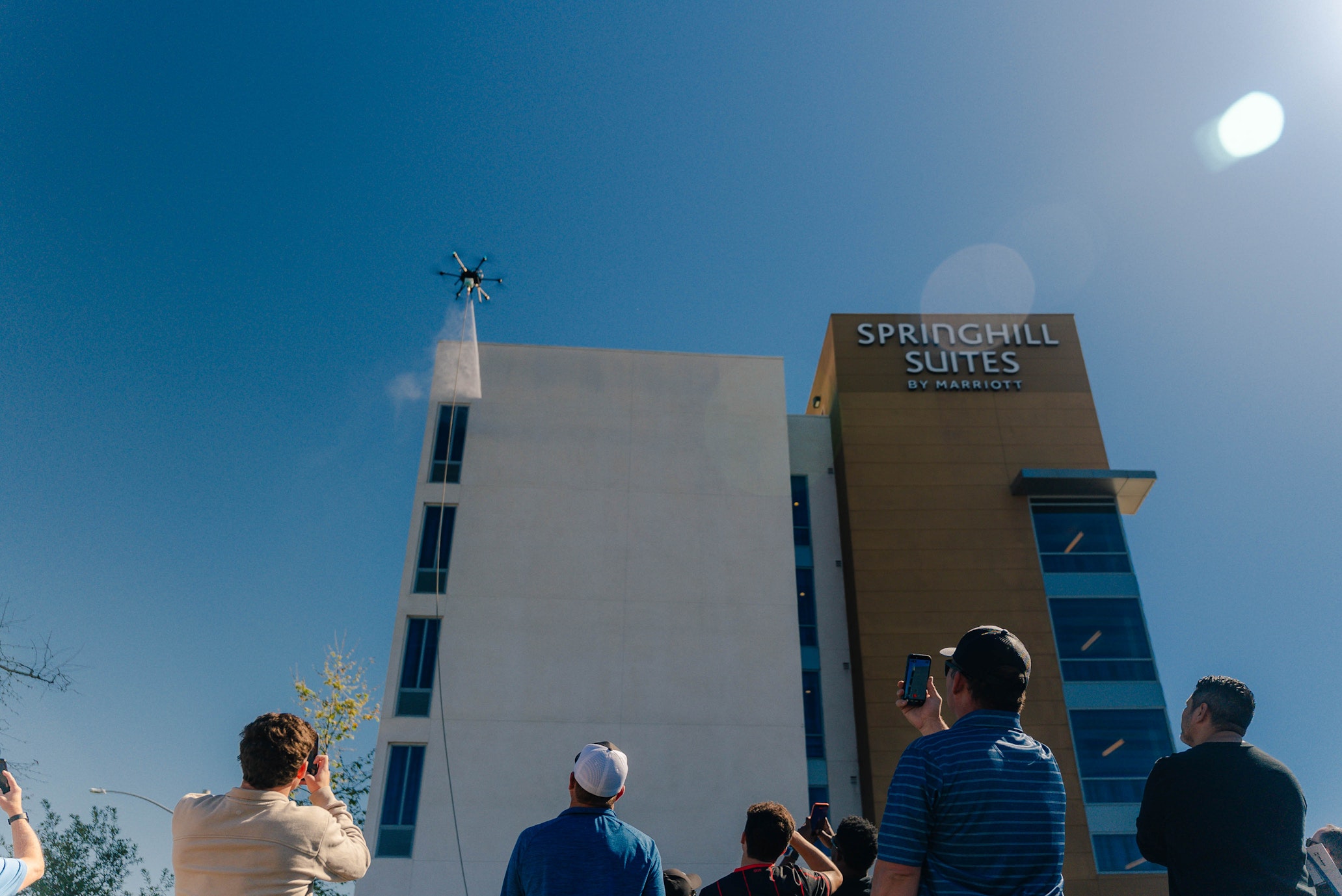
Operators describe it as a spectator sport. People come outside. Phones come out. Conversations start without you trying.
4) A demo reverses risk
Instead of asking a property manager to take a chance, you let them see the results first. That reduces hesitation and accelerates decisions.
The Economics of Demo-First Lead Gen (Why It’s So Efficient)
Most operators are shocked by how favorable the math is.
Low customer acquisition cost
A demo typically costs:
- your time
- a small amount of chemical
- fuel and setup
In many cases that’s under $50 in consumables.
High conversion rate once a demo happens
This is the key: a demo isn’t a casual lead—it’s a buying signal. If someone agrees to see it, they’re already open to solving the problem.
Every demo can create more leads
It’s common to get:
- a decision maker request (“Can you price the full building?”)
- plus an onlooker lead (“Can you look at our property too?”)
A demo is rarely just one conversation.
A Simple “Viral Demo” Routine That Works
1) Target identification
Drive commercial areas (lunch hours are ideal) and look for:
- visible mold, algae, streaking, staining
- buildings with white trim that has gone dark
- long mid-rise buildings (4–10 stories)
- hotels, office parks, medical facilities, campuses
2) The door-knock approach
Walk in during business hours and ask:
“Who handles exterior maintenance decisions here?”
Then:
“We clean commercial building exteriors using drone technology. I have the equipment with me and can show you how it works right now—no cost, takes about 10–15 minutes.”
3) The demo execution
Pick a section that:
- is clearly dirty
- is visible from the ground
- will show contrast quickly
Explain while working:
- the chemistry is the same as traditional cleaning
- the drone is a safer delivery system
- you’re reducing disruption and liability
4) The “clean patch close”
After the demo, the close is almost built-in:
“Would you like us to clean the rest of the building to match this section?”
Turn Every Demo Into Marketing Without Feeling Salesy
Even if the demo doesn’t close immediately, you win if you document it.
Capture:
- before photos (multiple angles)
- a 30–60 second video clip
- after photos
- location + property type notes
- a quote/reaction (with permission)
Then use that content for:
- LinkedIn (local keywords + property type)
- your website case study library
- future bid credibility (“Here’s a similar property”)
- follow-up emails (“Here’s what it looked like after”)
The Big Takeaway
Funnels are great once a market understands what you do.
But demos create understanding—fast.
If you’re starting or expanding in a new territory, you don’t need a perfect ad campaign. You need consistent, repeatable reps of this:
Find dirty buildings → demo immediately → document → quote → follow up
.jpg)
How Pressure Washing Drones Actually Work: A Complete Guide
Step-by-step breakdown of how pressure washing drones clean commercial buildings. Methods, equipment, flight operations, and what operators experience on real job sites.
How Pressure Washing Drones Clean Commercial Buildings
Pressure washing drones have moved from experimental prototypes to revenue-generating tools for building service contractors across the U.S. If you're a pressure washing business owner wondering how drone cleaning actually works on a real job site, this guide walks through the process from setup to final rinse.
No marketing fluff. Just the mechanics, methods, and operational reality that over 500 active Sherpa Drone operators deal with every week.
The Basic Setup: What Arrives on the Job Site
A pressure washing drone operation is simpler than most people expect. The operator shows up with the drone, a water tank (typically 50 to 200 gallons depending on the job), cleaning chemicals, a controller, and batteries. Some operators tow a trailer rig with everything integrated.
Setup takes 15 to 30 minutes. Compare that to scaffolding (1-3 days of setup) or boom lifts (2-4 hours of positioning). The drone goes from truck to flying in the time it takes a traditional crew to finish their safety briefing.
No sidewalk closures. No blocked loading docks. No parking lot access requirements. The building stays fully operational while the drone works overhead.
Three Cleaning Methods, One Platform
The Sherpa Drone platform supports three distinct cleaning approaches through interchangeable payloads:
Soft Washing (Low Pressure)
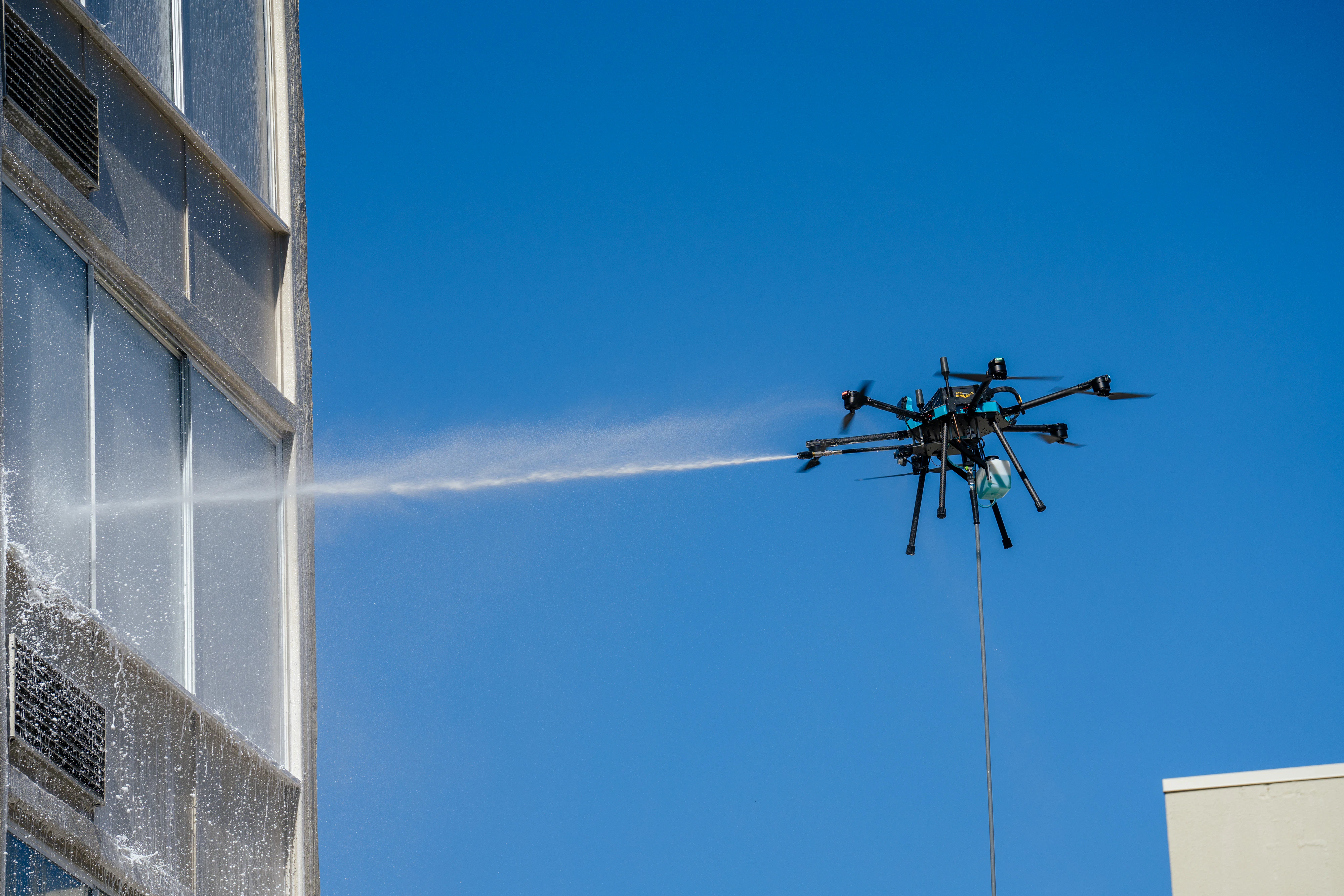
Soft washing applies chemical cleaning solution at approximately 300 PSI to delicate surfaces: EIFS, synthetic stucco, Dryvit, painted facades, and composite cladding. The drone sprays the solution, allows dwell time for the chemicals to break down organic growth (mold, mildew, algae), then rinses. This is the most common method, representing the majority of operator jobs.
Property managers working with sensitive building materials often prefer soft washing because it eliminates the risk of pressure damage that traditional crews can cause from boom lifts, where operator fatigue and angle inconsistency lead to uneven cleaning.
Pressure Washing (High Pressure)
For tougher surfaces like concrete parking structures, brick facades, precast panels, and masonry, the Sherpa Drone delivers up to 4,500 PSI. The drone-mounted nozzle provides consistent pressure across the entire surface without the fatigue and inconsistency that comes with manual pressure washing from an elevated platform.
Window Cleaning
A specialized window payload enables on-demand chemical injection using Lucid Clear window cleaning solution. Operators switch between DI water and a water/chemical mix while the drone stays in the air. One system handles both high-pressure facade work and delicate glass cleaning, eliminating the need for swing stages, rope access, or other methods that cost $40 to $60 per hour per technician.
What a Typical Job Looks Like
Here's the real operational flow on a mid-rise commercial building (5-10 stories):
Pre-flight planning (day before): The operator reviews building blueprints or photos, identifies surface types, selects the appropriate payload and chemical mix, and files any required flight notifications.
Site arrival and setup (15-30 min): Position water supply, connect hoses to the drone's pump system, install the correct payload, run pre-flight checks, and establish the ground control station.
Flight operations (4-8 hours): The operator flies the drone in systematic passes across the building face. Each flight covers approximately 5,700 square feet at over 300 sqft per minute. Battery sets provide up to 19 minutes of flight time. Between battery swaps (5-10 minutes), the operator repositions the water supply or adjusts chemical mix as needed.
For unlimited flight time: The optional power tether eliminates battery limits entirely. The drone stays airborne for the entire job, connected to ground power.
Cleanup (15-30 min): Pack equipment, document work with photos/video for the client, and move to the next job.
A single operator handles the entire process. No crew coordination. No shift rotations. No workers at height.
The Economics That Matter
If you're running a pressure washing business, here's what drone cleaning changes about your cost structure:
- Eliminate equipment rental: No more scaffolding ($2,000-$5,000/week) or boom lifts ($500-$2,000/day)
- Reduce crew size: 1 operator and 1 hose manager frees up a team of 4-8 workers for more jobs
- Cut job time: 1-2 days instead of 3-5 days on a typical mid-rise building
- Lower insurance costs: Ground-level operations dramatically reduce workers' comp premiums
The Sherpa Drone starts at $2,950/month through Lucid Refresh with no upfront purchase. At average job revenue of $13,500 (based on 189 jobs in Q3 2025), a single job covers a full month of equipment costs.
For the complete cost breakdown and operator revenue data, read our guide to commercial drone building cleaning.
Getting Started: What You Need
Three things stand between you and your first drone cleaning job:
- FAA Part 107 certification: $175 exam fee, most pass first attempt. Study materials provided.
- Equipment: Sherpa Drone system via Refresh subscription ($2,950/month).
- Training: Sherpa Academy online modules plus optional 1-day or 3-day hands-on training in Charlotte, NC. Included with purchase or subscription.
Most operators complete their first paying job within 30-60 days of receiving their equipment.
Frequently Asked Questions
How much area can a pressure washing drone clean per hour?
The Sherpa drone covers over 300 square feet per minute, approximately 5,700 sqft per flight. On a full job day with battery swaps and repositioning, operators typically clean 15,000 to 25,000 sqft.
Can a drone pressure wash windows without breaking them?
Yes. The window cleaning payload uses adjustable pressure and on-demand chemical injection. Operators switch between high-pressure facade work and gentle glass cleaning without landing or swapping payloads.
Do I need a drone license to start a pressure washing drone business?
Yes. You need an FAA Part 107 Remote Pilot Certificate. The exam costs $175, and Lucid Bots provides prep materials through Sherpa Academy. Most people pass on the first attempt.
Ready to add drone cleaning to your business? Book a demo and see the Sherpa in action.
How Lucid Bots is Helping Concrete Curing with Smart Robotics
How Lucid Bots is Helping Concrete Curing with Smart Robotics
Drone Cleaning at Cajundome
Drone cleaning at Cajundome
The Era of AI Entrepreneurship | An Unfiltered Conversation with Victorio Pellicano
Hear insights from Andrew Ashur and Victorio Pellicano in this special episode!
Drone Clean USA Revolutionizes Soft Washing with Drone Technology
In this case study, we explore how Drone Clean USA, led by founder David Wheeler, is using drone technology to revolutionize soft washing. Discover how they tackled a challenging six-story apartment complex in Charleston, South Carolina—an area inaccessible by traditional methods. With their innovative Sherpa drone, they completed the job more safely, efficiently, and effectively than ever before. See how this veteran-owned business stands out in a crowded market by combining technology with a commitment to safety, client trust, and efficiency. Drone Clean USA is setting new standards in the cleaning industry and aiming for national expansion.
Drone Roof and Building cleaning at The Inn on Biltmore Estate July 2022 Full Video
Baker SoftWash was contracted to clean the front half of the concrete tile roof and all the windows on the customer entrance side of the Inn on Biltmore Estate in Asheville NC. The Inn is a seven-stories tall and they were able to utilize the Sherpa drone to safely apply a soft washing solution to the roof to get rid of the GleoCapsa Magma on the roof and bring the true beauty of this concrete tile roof back. They were able to clean the roof with the drone while other crews cleaned the Inn and the windows.
Lucid Bots Acquires AI Powerhouse Avianna
Andrew Ashur shares Lucid's news of purchasing AI company Avianna.
Lucid Bots Podcast
How Ryan Godwin is Transforming Exterior Cleaning with the Sherpa Drone
Dive into the future of exterior cleaning with Ryan Godwin, the visionary behind Lucid Bots. Discover how Ryan is leveraging cutting-edge robotics to revolutionize cleaning for buildings and outdoor surfaces—boosting efficiency, safety, and sustainability.
.avif)



.avif)