Latest report recommends that all new Part 107 certificates include provisions for beyond visual line of sight (BVLOS) operation.
January 18, 2023
|
3 MIN READ
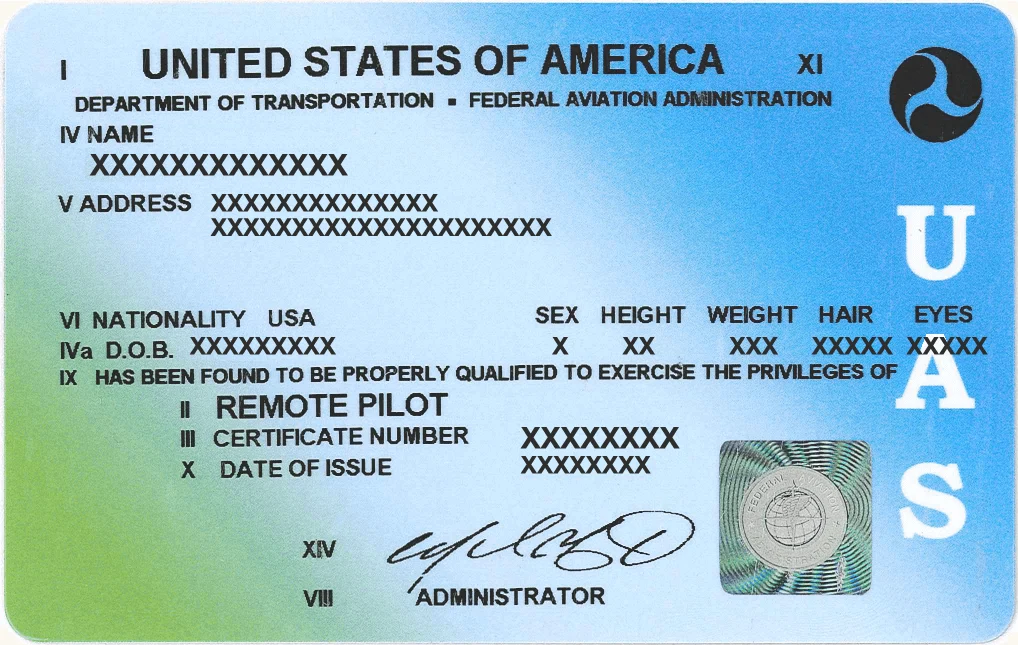
Do you have your Part 107 certificate? If you're a drone pilot, the answer had better be yes. But what if you're not a drone pilot? Well, the BVLOS ARC has something to say about that. Their latest report recommends that all new Part 107 certificates include provisions for beyond visual line of sight (BVLOS) operation. If you want to get your Part 107, you need to be prepared to fly your drone beyond your line of sight. Here's what you need to know.
The BVLOS ARC is a committee of aviation experts formed in 2016 to study the usefulness of drone operations beyond visual line of sight. Their latest report recommends that the FAA include BVLOS provisions in all new Part 107 certificates. This would require all current and future drone pilots to be trained and certified to fly their drones beyond their line of sight.
The BVLOS ARC is recommending this change because they believe it will make drone operations safer and more efficient. Currently, drone pilots are only allowed to fly their drones within their line of sight. Meaning that you need to keep your drone in view at all times, which can be difficult, especially if the drone is flying at a distance.
If pilots were able to fly their drones beyond their line of sight, they would be able to use visual aids, such as First Person View (FPV) goggles, to keep track of the drone. This would make it much easier for pilots to see and avoid obstacles, and it would also allow them to fly the drone for longer periods of time.
The BVLOS ARC's recommendation is just that, a recommendation. It's up to the FAA to decide whether or not to include BVLOS provisions in the Part 107 certificate.
So what would this mean if the FAA made these recommended changes?
This new level of Part 107 certification would require pilots looking to fly beyond line of sight operations to attend online training and then take an online exam to earn a new certificate. This certificate would be an advanced form of Part 107 operations. With this new certificate, the need to have a CFI (Certified Flight Instructor) for beyond line of sight operations would disappear. Which is good news because it's not economically viable to obtain a manned certificate, let alone a CFI certificate.
It's important to remember that these are recommendations and are currently not being enforced by the FAA. If you have any questions about getting your Part 107 or if you would like more information on what a Part 107 license is, you can click here for more info or call and speak to a Lucid Bots rep today.
Related Articles
November 3, 2025
|
1 MIN READ
The “Big Beautiful Bill” Explained and Why 2025 Is the Smartest Year to Invest in Your Drone Fleet
Discover how the One Big Beautiful Bill Act (OBBBA) lets small businesses deduct 100% of drone equipment costs in 2025. Learn how investing in Lucid Bots’ Sherpa Drones this year can maximize your tax savings and boost your cleaning business growth.
If you’re running a small building-services or cleaning business, you’ve probably heard some buzz about the “One Big Beautiful Bill Act” (OBBBA).
You don’t need to be a tax expert to understand it. This bill is a big win for small business owners investing in equipment that helps them grow.
Here’s what it means in simple terms, and how it could save you thousands when you buy a Sherpa Drone before the end of 2025.
What the Big Beautiful Bill Does
According to EisnerAmper’s Contractor’s Cheat Sheet, the OBBBA makes several long-term updates to U.S. tax law designed to boost construction, maintenance, and building upgrades.
Here are the two most important changes for small business owners buying tools or equipment:
Permanent 100% Bonus Depreciation
Contractors and building-services companies can now deduct the full cost of qualifying equipment immediately, starting January 2025.
That means if you buy a Lucid Bots Sherpa Drone, a Sherpa Drone and Tethered system, or our Lavo Bot and Sherpa Drone combo, you could potentially write off the entire amount this year and not spread it over 5 or 7 years like before.
EisnerAmper notes that this provision now applies to both new and used assets, and it’s permanent, so you get the deduction right away, improving your cash flow.
Section 179 lets small businesses deduct equipment purchases that are actively used for work. So this is your trucks, pressure washers, and yes even our drones.
As EisnerAmper’s Real Estate update explains, this expansion makes Section 179 far more powerful for smaller operators, especially those upgrading tools, vehicles, or building systems.
How This Works in Real Life
Let’s say you run a small exterior-cleaning or maintenance company and earned $300,000 in profit this year.
You decide to purchase a Lucid Sherpa Drone for $90,000 in November 2025.
If you qualify under Section 179 or 100% bonus depreciation, you can deduct that full $90,000 from your taxable income lowering your taxable earnings to $210,000.
That could translate to tens of thousands of dollars in tax savings, depending on your state and filing status.
Why Timing Matters
Many of these incentives like 100% bonus depreciation and the higher Section 179 limits are tied to equipment placed in service after January 2025.
But here’s the key:
Projects and purchases made before the end of 2025 are best positioned to take full advantage of the bill before any future tax adjustments or sunsets kick in.
So, if you’ve been planning to expand your cleaning fleet, the 2025 tax year is your window to buy and deploy your equipment.
Why It’s Perfect for Lucid Bots Customers
Lucid Bots builds robots that help you do more with less. Our Sherpa Drones replace risky, slow manual cleaning work letting you take on bigger jobs with the same crew.
Because drones like Sherpa qualify as business equipment, they can be deducted under the same rules outlined in EisnerAmper’s OBBBA analyses. That means your investment could reduce your tax bill while expanding your capacity.
And if you’re planning to grow your business in 2026, now might be the perfect time to purchase more than one drone to take more advantage of 2025’s powerful tax incentives before they change.
Important Note
This article is for informational purposes only.
It is not financial or tax advice.
Tax laws can change, and your business situation is unique. Always check with your licensed accountant or tax advisor to confirm eligibility before making purchasing decisions.
Bottom Line
The Big Beautiful Bill was designed to reward small businesses that invest in American infrastructure and that includes companies keeping our buildings clean, bright, and safe.
By purchasing your Lucid Bots drone before December 31, 2025, you can:
Save big on taxes
Boost cash flow
Get to work faster with safer, smarter tech
In short: make 2025 the year your business takes flight and let the Big Beautiful Bill help fund your future.
Lucid Bots and NVIDIA: Riding the Next Industrial Revolution
NVIDIA is laying the foundation for the next industrial revolution with over 2 million developers building robotics on its platforms. From Isaac Sim for digital twins and testing, to Isaac ROS GEMs for advanced autonomy, and Jetson for real-time edge AI — NVIDIA is the backbone of embodied intelligence. At Lucid Bots, we’re harnessing this ecosystem to build robotic systems that take on the world’s dirtiest, most dangerous jobs — transforming industries with safer, faster, and smarter automation.
NVIDIA just announced a milestone that signals more than progress — it signals a shift in history. Over 2 million robotics developers are now building on its platforms, from Isaac Sim for simulation to Jetson for edge AI computing. This isn’t just a developer count; it’s the early scaffolding of the next industrial revolution.
The first industrial revolution mechanized human labor. The second scaled it with electricity and assembly lines. The third digitized it with computing and the internet. Now, the fourth industrial revolution is physical again — driven by embodied AI and robotics that can perceive, decide, and act in the real world.
At Lucid Bots, we are building for this moment. Our focus is on developing robotic systems that take on dangerous, dirty, and time-intensive jobs and preserve human value. We’re pushing forward technologies that protect people while scaling efficiency — transforming how work gets done in the built world.
NVIDIA as the Backbone of the Revolution
For Lucid Bots, NVIDIA’s ecosystem is more than validation — it’s infrastructure.
Isaac Sim provides photorealistic simulation environments where we maintain digital twins of our Lavo Bot robots and Sherpa Drones. We run software-in-the-loop (SITL) and hardware-in-the-loop (HIL) regression tests with stereo, RGB-D, LiDAR, and IMU sensor models. This tightens the sim-to-real loop and reduces risky, expensive field iterations.
Isaac ROS GEMs are core to our autonomy stack. With Visual SLAM, our drones and ground robots gain a strong sense of position in real time even when GPS is weak or unavailable. For recurring missions, Map Localization enables a robot to recognize a site and align to a saved map within seconds. Together, these capabilities shorten deployment times, reduce operator workload, and ensure consistent, repeatable performance in tasks like high-precision surface cleaning, data capture, and inspection.
Combined with a global community of 2M+ developers, this infrastructure accelerates R&D, de-risks deployment, and ensures Lucid Bots can move faster than the market.
The Market in Transition
We believe this revolution is already underway. Just as factories a century ago transformed productivity with machines, industries today will transform safety and efficiency with intelligent robots.
Property and facilities management is a $1T+ global market, facing rising costs, labor shortages, and regulatory pressure.
Legacy approaches — scaffolding, diesel light towers, and manual cleaning — are relics of the last era.
Robotics doesn’t just replace these methods; it leapfrogs them, delivering safer, cleaner, and more cost-effective outcomes at scale.
Why Lucid Bots, Why Now
The industrial revolutions of the past favored companies that seized the moment when the right infrastructure converged with unmet demand. That’s exactly where we are today. NVIDIA’s milestone proves the infrastructure is here. The demand for safer, more efficient operations is only accelerating.
Lucid Bots is positioned at this intersection. Our systems are not science projects — they are field-tested, revenue-generating platforms, designed for immediate deployment at scale.
For investors and pioneers, the story is clear: the fourth industrial revolution is no longer on the horizon. We’re building it — and delivering it — now.
Professional Window Washing & Cleaning Tools (Equipment)
Explore the tools and equipment used by professional window cleaners. Elevate your window cleaning skills with insights from Lucid Drone Tech.
Are you playing around with the idea of starting your own professional window cleaning service? Perhaps you’re looking for equipment for your future cleaning business and want to make sure it’s as effective as possible.
In the commercial window cleaning business, your profits are directly linked with your team’s efficiency. It’s only with the best window cleaning tools that your team can work faster and without any or minimal mistakes.
Below, we explore the basic necessities for a window cleaning company from equipment to solutions, as well as introduce the most effective piece of equipment for washing windows today—implementing drones.
But first, we’ll jump into the traditional solutions.
The traditional window cleaning kit has everything you need to take on large residential and commercial glass cleaning tasks. Here’s the list of window washing equipment you’ll need.
Squeegee: You can use a window squeegee blade to remove or control the flow of cleaning solution on the window surface. Choose an Unger squeegee that has a metal frame and a replaceable rubber blade.
Sponge: You can use a sponge, washer, or scrubber to apply your cleaning products to the window. Like squeegees, they also come in different types and sizes to help with the job at hand. If required, you can purchase sleeves (either with general cotton, abrasive scrubbing pads, or microfiber) and T-bars apiece.
Bucket: An obvious tool, but you must pay attention to get the right bucket. You cannot go with a bucket of any shape or depth. The Ettore super bucket is an optimal choice—it is durable and of accurate dimensions to fit all your window cleaning equipment.
Dish soap: It’s best to rely on a simple solution to clean the window glass. You can mix Dawn or Palmolive with water for a cost-effective yet professional wash.
Towels: If you do not want lint or streaks to appear after washing the window, you must add towels to your window cleaning supply. You can go with either surgical towels or microfiber cloths. The best thing is they are reusable and help you achieve a streak-free glass surface.
Ladder: When you clean windows the traditional way, you’ll need a sturdy ladder. A good choice is to use a standard 3-foot step ladder while covering your bases with a 20-foot Wener extension ladder.
Choosing a Cleaning Solution
You would think you need a bunch of complicated chemicals and solutions for exterior window cleaning, but all you need is water and a mild detergent of some kind. Most industry professionals opt for dish soap.
As an alternative, you could consider Lucid Clear, a solution developed by Lucid Bots that leaves a streak-free, spot-free perfect shine for window cleaning. The best part about this product is that you can essentially clean a window without even touching it, which proves to be a revolutionary feature for commercial window cleaning businesses.
If you own a window washing company, you can simply transition to the Lucid Bots cleaning drone with any chemical that your team already uses! Learn more about the safety features of our drones today.
Alternative Ways to Clean Your Windows
If you’re an exterior cleaner looking to add window washing to your business, you may be considering a host of options, but see below to weigh the pros and cons of each.
When cleaning high-rise windows, water-fed poles are safer than ladders as they allow you to reach and clean inaccessible areas. Many commercial window cleaning companies opt for this option since it does allow workers to stay on the ground.
However, a water-fed pole cleaning system won’t be beneficial in washing oily windows. It also limits the cleaning ability of bird excreta, snail trails, paint, cement, plaster and other stains.
Using water-fed poles means that the job is only as fast as you are using the tool. It’s not necessarily the quickest or most effective way to get the job done.
Using a Drone
Cleaning multi-storied and high-rise building windows can be challenging, even with cleaning platforms like ropes and scaffolding.
Here’s where drones can make a big difference. They are built to carry heavier loads (cleaning equipment and fluids) and are a far quicker and more cost-effective option for commercial cleaning, compared to the traditional cleaning options out there today like lifts and scaffolding. Window washers wanting to add a drone can do so quickly and easily.
Any window washing or exterior cleaning team can use drones to fly to the required height and target all these inaccessible areas that need cleaning without putting any of their cleaners at risk. And the best thing is it isn’t hard to fly these drones. Good initial onboarding is all that your team needs to control the drones and conduct the cleaning operation.
Moreover, drones incorporate the best form of cleaning technique to wash windows: soft wash. Unlike pressure washing, the soft wash cleaning method uses low-pressure water jets, combined with detergents, or our chemical solution like Lucid Clear.
Lucid Clear makes it so that workers do not need to touch the window in order to clean it, meaning that you can get the job done more efficiently by changing your solution. Learn more about Lucid Clear and safe window cleaning with a drone to ensure that all stubborn stains are cleaned safely in a short span of time without leaving behind any streak marks.
Safely Clean Hard-to-reach Windows with Lucid Drones
Commercial window cleaning is a task that requires a good deal of investment in the right set of tools and manual labor. The common thought is that pressure washing and extension pole window cleaning is better than traditional window cleaning (using a ladder and a hose pipe), they aren’t efficient. Either they lead to property/bodily harm or do not deliver the expected cleanliness.
The best alternative for your window washing team is to clean windows using drones like the industry-acclaimed Lucid Bots cleaning drone. It makes your job safe, fast, and cost-efficient with features like:
Urban flight: To fly safely even in areas with poor GPS connection.
Multi-directional spray nozzle: To facilitate upward and downward spray and thus reach and clean hard-to-access sites.
Easy integration: To connect with any soft wash pump.
Connect with Lucid Bots today and take your commercial window cleaning business to the next level.
How Ryan Godwin is Transforming Exterior Cleaning with the Sherpa Drone
Dive into the future of exterior cleaning with Ryan Godwin, the visionary behind Lucid Bots. Discover how Ryan is leveraging cutting-edge robotics to revolutionize cleaning for buildings and outdoor surfaces—boosting efficiency, safety, and sustainability.