Experience Lucid Bots.
Discover a small sampling of what can be accomplished with Lucid Bots. The Lucid Bots resources page offers a comprehensive collection of case studies, videos, e-books, and more.
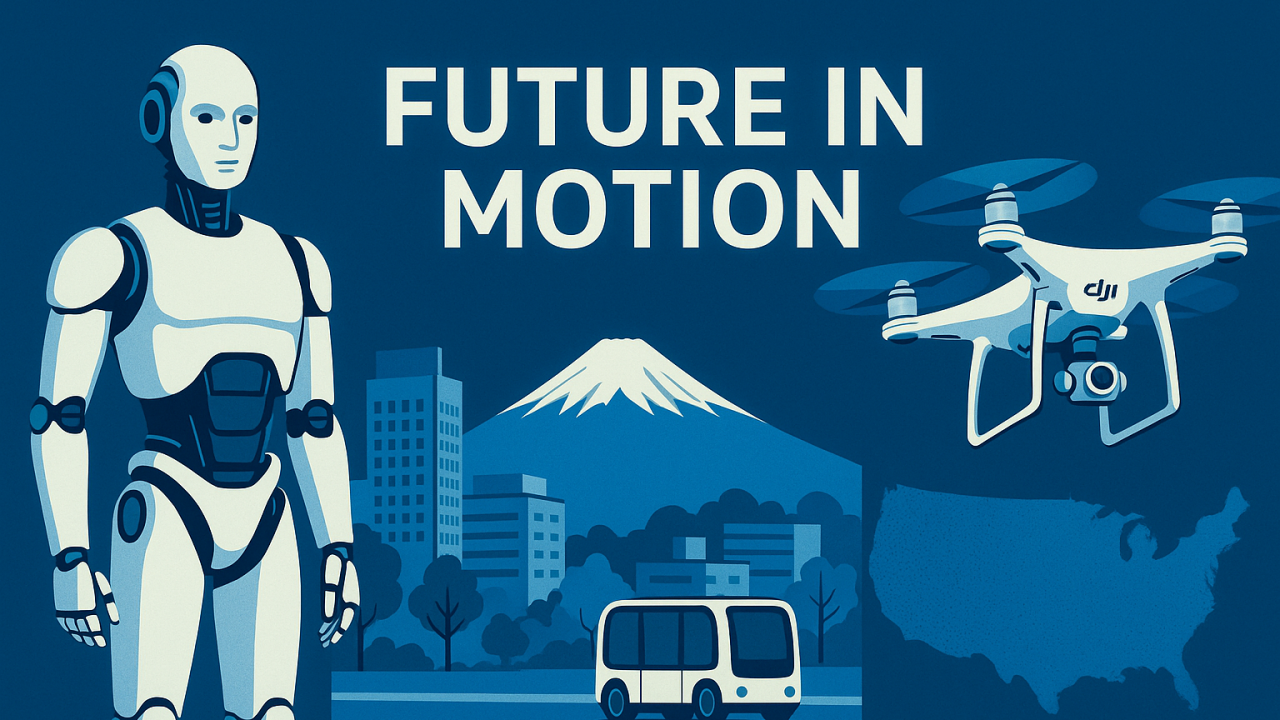
Land Legs, Living Labs, Open Skies: The New Age of Robots Arrives
The robotics revolution is advancing rapidly with South Korea, Toyota, and the U.S. leading innovations on land, in cities, and in the skies.
TL;DR
Chaebol-backed Korea is racing to perfect humanoids, Toyota is turning Mt. Fuji into a living smart-city lab, and new U.S. rules are clearing the skies for home-grown drones—all signs that the robotics revolution is sprinting ahead on land, in cities, and in the air.
How South Korea’s Chaebols Are Pushing The Robotics Revolution
Major Takeaway: South Korea is positioning itself as a global leader in robotics through a powerful alliance between government, academia, and industrial giants.
Summary: South Korea is launching an ambitious national campaign to become a global leader in robotics, fueled by its most powerful conglomerates—Samsung, Hyundai, LG, and more. These companies are making strategic investments in humanoid robotics startups like Rainbow Robotics and collaborating through the newly formed K-Humanoid Alliance. This coalition aims to develop advanced humanoid robots by 2028 that can walk, lift, and operate autonomously across a range of environments. The effort reflects a highly coordinated industrial strategy backed by public-private synergy to dominate the robotics future.
Why It Matters: This is a rare example of a country aligning its corporate and public sectors to win a technological arms race. The level of coordination and capital behind it could set a blueprint for robotics leadership.
Toyota set to launch world’s first robot city at Japan’s Mount Fuji base in 2025
Major Takeaway: Toyota is transforming into a tech-first mobility company by building a smart city to test and scale future technologies in real-world conditions.
Short Summary: Toyota is building Woven City, a 175-acre experimental smart city at the base of Mount Fuji, set to launch in 2025. This “living laboratory” will house real residents—including Toyota engineers—who will live among autonomous vehicles, AI-powered homes, and sustainable energy systems like hydrogen fuel cells. By embedding cutting-edge technologies into everyday life, Woven City offers a bold reimagining of urban living and innovation at scale. It’s not just a testbed for products—it’s a fully functioning urban prototype for the mobility-centric future Toyota envisions.
Why It Matters: Rather than simulate the future, Toyota is building it. Woven City represents a radical approach to innovation where the testing ground is life itself.
Drones will soon be everywhere, as U.S. seeks to lead future of aviation
Major Takeaway: The U.S. is removing major regulatory roadblocks to fast-track drone innovation and reduce reliance on Chinese drone tech.
Short Summary: In a significant policy shift, the United States is removing key regulatory barriers to expand the use of drones and advanced aerial vehicles across industries. President Trump’s executive orders aim to legalize long-distance drone operations beyond visual line of sight (BVLOS), accelerate delivery services, and enable the commercial rollout of eVTOL aircraft. These moves are also designed to reduce U.S. reliance on dominant Chinese manufacturers like DJI. With new FAA rules expected soon, the initiative is poised to unlock innovation in logistics, aviation, public safety, and more.
Why It Matters: This shift will supercharge American drone startups and logistics companies, while reshaping urban air mobility and national security frameworks.
About Lucid Bots:
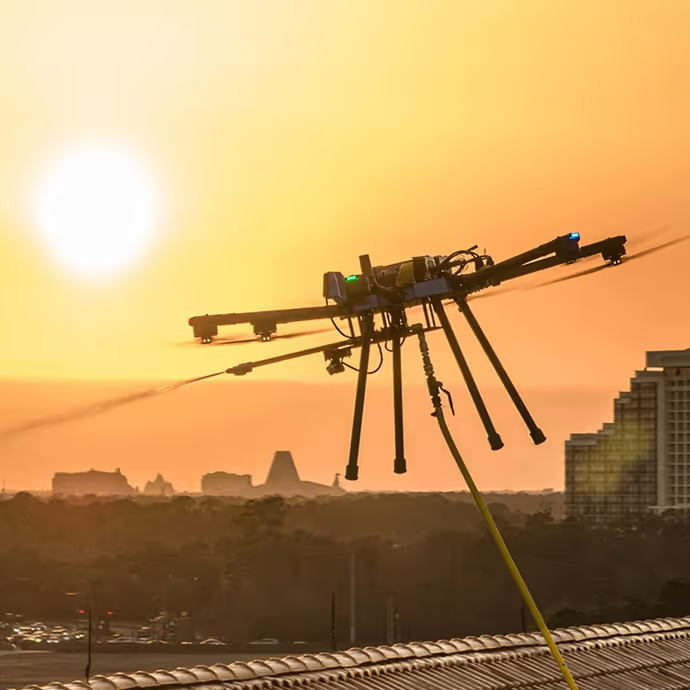
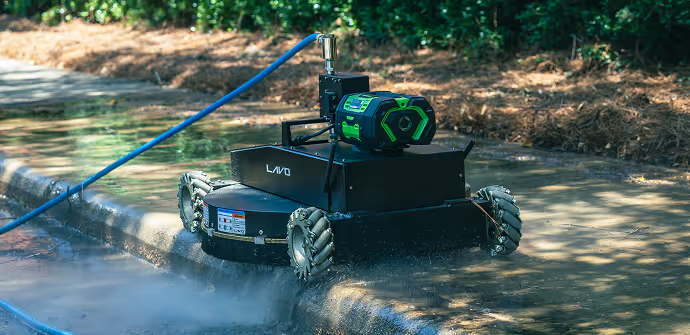
Founded in 2018, Lucid Bots is an AI robotics company that is committed to uplifting humanity by building the world's most productive and responsible robots that can do dangerous and demanding tasks. Headquartered in Charlotte, the company engineers, manufactures, and supports its products domestically, which include the Sherpa, a cleaning drone, and the Lavo Bot, a pressure-washing robot. Lucid Bots' products are elevating safety and efficiency for a growing number of customers around the world. Lucid is a Y Combinator-backed company, with investments from Cubit Capital, Idea Fund Partners, Danu Ventures, and others. Lucid Bots was recently recognized as the fastest growing robotics manufacturer in the United States.

Flying Food, Warehouse Workhorses, and Humanoids on the Job: This Week’s Robotics Revolution
Latest advancements in robotics: humanoid robots, drone deliveries, warehouse automation, and autonomous plant inspections revolutionize industries. Discover how tech is transforming everyday tasks.
TL;DR
This week in robotics: AEON, a full-stack AI humanoid trained in simulation, is stepping into the real world; DoorDash's drones are now dropping off lunch in Charlotte; Gap is arming its largest distribution center with Boston Dynamics bots to unload trucks; and Yokogawa and Shell are teaming up to make plant inspections fully autonomous with robots and computer vision.
Hexagon Robotics Unveils AEON, AI-Powered Humanoid Robot at Scale
Hexagon Robotics has unveiled AEON, a humanoid robot designed for industrial use, powered by NVIDIA’s full-stack AI and robotics platform. AEON performs tasks like asset inspection, part manipulation, and 3D reality capture across sectors including manufacturing and logistics. It’s trained using NVIDIA’s foundation models (like Isaac GR00T) and simulations in Omniverse, allowing it to learn complex skills in weeks instead of months. With advanced sensors and onboard AI, AEON captures spatial data in real time and feeds it back to Hexagon’s HxDR platform for collaborative analysis. Currently in pilot programs with Schaeffler and Pilatus, AEON is targeting deployment within six months.
Major Takeaway: AEON shows how combining simulation training and edge AI can make humanoid robots deployable in real-world industries faster than ever. Read more
DoorDash and Wing Expand Drone Delivery to Charlotte, North Carolina
DoorDash has launched drone delivery in Charlotte through its partnership with Wing, offering residents within a four‑mile radius of The Arboretum Shopping Center access to orders from local favorites like Curry Junction, Matcha Café Maiko, Joa Korean Food—and national partner Panera Bread—delivered within approximately 15–30 minutes by autonomous drones that hover and lower packages via tether. DashMart essentials and special bundles are also available. This expansion builds on pilots in Australia, Virginia, and Dallas–Fort Worth, and leverages North Carolina’s drone-friendly policies ahead of a broader U.S. rollout.
Major Takeaway: Food and retail delivery are going airborne, and DoorDash is one of the first to scale real, working drone logistics in American neighborhoods. Read more
Gap Pours $58 Million into Robotics Automation at Tennessee Distribution Hub
Gap Inc. is investing $58 million to bring robotics and automation to its 1.4 million sq ft distribution center in Gallatin, Tennessee, deploying multiple Boston Dynamics Stretch mobile robots to unload trailers. These bots use advanced vision and vacuum grippers, moving autonomously and syncing wirelessly with conveyor belts. The upgrade has already reduced injuries, boosted morale, and sped up operations—transitioning staff from hard manual labor to managing robot fleets with minimal setup time.
Major Takeaway: Boston Dynamics' warehouse bots are becoming everyday coworkers—offloading boxes and injuries alike. Read more
Yokogawa Collaborates with Shell on Robotics and AI Technology for Plant Maintenance
Yokogawa Electric has partnered with Shell Global Solutions to integrate Shell’s AI-powered “Operator Round by Exception” (ORE) into Yokogawa’s OpreX Robot Management Core. This means robots and drones can autonomously inspect industrial plants—reading gauges, detecting gas leaks, and identifying issues while integrating with existing safety systems. Initial trials at two Shell facilities aim to prove that plants can one day be inspected—and maybe maintained—entirely by autonomous machines.
Major Takeaway: Shell and Yokogawa are betting on a future where robots do the dirty (and dangerous) work of industrial inspections. Read more
About Lucid Bots:
Founded in 2018, Lucid Bots is an AI robotics company that is committed to uplifting humanity by building the world's most productive and responsible robots that can do dangerous and demanding tasks. Headquartered in Charlotte, the company engineers, manufactures, and supports its products domestically, which include the Sherpa, a cleaning drone, and the Lavo Bot, a pressure-washing robot. Lucid Bots' products are elevating safety and efficiency for a growing number of customers around the world. Lucid is a Y Combinator-backed company, with investments from Cubit Capital, Idea Fund Partners, Danu Ventures, and others. Lucid Bots was recently recognized as the fastest growing robotics manufacturer in the United States.
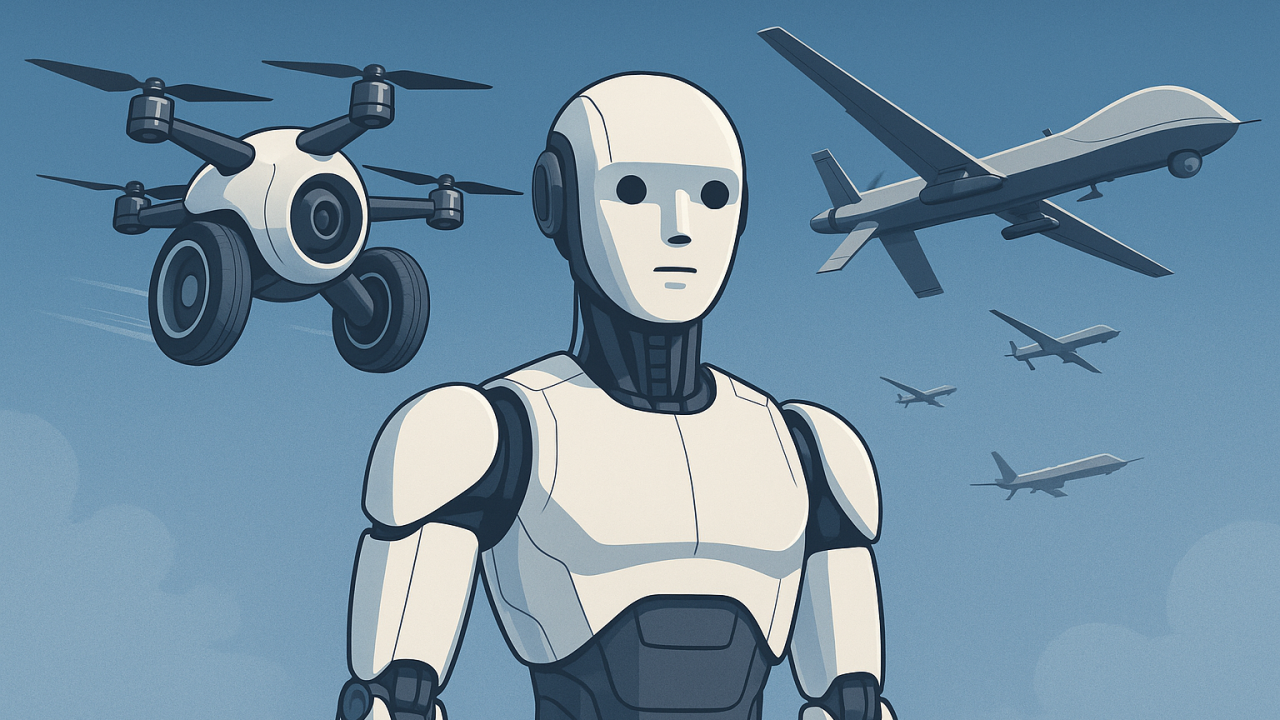
Smarter, Swifter, and Open to All
Robots get smarter and more versatile with new morphing drones, open-source humanoids, and military drone swarms shaping the future of robotics.
TL;DR
From morphing drones and open-source humanoids to scalable military swarms, this week’s breakthroughs show that robots are becoming more adaptable, affordable, and accessible than ever.
Flying robot morphs in mid-air to land and roll on wheels
Major Takeaway: More versatile movement means more real-world applications. Atmo’s dual-mode design points to a future where robots are no longer limited by terrain or task.
Summary: A team from the University of Tokyo and Swiss robotics company Verity have developed Atmo, a compact robot that merges the functionality of a car and a drone. It uses four wheel-arms that can rotate to become quadcopter rotors, allowing it to drive, take off vertically, and fly through the air. More impressively, it can dynamically reconfigure its arm positions mid-flight—optimizing for speed, agility, and stability.
Atmo is built with a lightweight carbon fiber frame and 3D-printed parts, clocking in at just 1.6 kg. It navigates using an onboard camera and processor, making it fully autonomous. This type of robotic mobility isn't just a neat party trick—it's designed for tight, obstacle-filled environments that neither traditional ground bots nor standard drones can easily traverse.
Why it matters: Robots are becoming significantly more versatile in how they move, which dramatically expands where they can operate—and what they can do. Morphing mobility allows a single robot to serve in varied environments: flying over rubble, driving under low-hanging obstacles, or weaving through complex indoor spaces. The more adaptive their movement, the broader their utility across logistics, disaster response, infrastructure inspection, and beyond.
Hugging Face unveils two new humanoid robots
Major Takeaway: Hugging Face is turning humanoid robots into open platforms—bringing the power of collaborative development to embodied AI.
Summary: Hugging Face, the AI company behind popular open-source language models, is entering the robotics space with two humanoids: Leonardo and Shelly. Instead of building the hardware, they’ve partnered with 1X and AgileX to focus on the software layer—using natural language processing and reinforcement learning to make these bots smarter over time. The aim? A developer ecosystem for robots, much like Android for phones.
Why it matters: By open-sourcing the brains of humanoid robots, Hugging Face could dramatically accelerate innovation and accessibility in the space. It shifts robotics from a lab-bound industry to one shaped by global contributors.
US Military is trading tanks in for drones
Major Takeaway: Drones are the future of warfare—more adaptable, scalable, and cost-effective than traditional military hardware.
Summary: Through its Replicator initiative, the U.S. military is moving away from heavy tanks and toward swarms of cheap, autonomous drones. These unmanned systems can be deployed quickly, modified easily, and replaced without breaking the bank. From surveillance to electronic warfare and strike capabilities, drones are proving to be more tactically flexible than legacy equipment.
Why it matters: This marks a major doctrinal shift in military strategy. Instead of a few expensive machines, the future battlefield will be dominated by fleets of intelligent, disposable drones—offering a tech-first edge in both cost and capability.
About Lucid Bots:
Founded in 2018, Lucid Bots is an AI robotics company that is committed to uplifting humanity by building the world's most productive and responsible robots that can do dangerous and demanding tasks. Headquartered in Charlotte, the company engineers, manufactures, and supports its products domestically, which include the Sherpa, a cleaning drone, and the Lavo Bot, a pressure-washing robot. Lucid Bots' products are elevating safety and efficiency for a growing number of customers around the world. Lucid is a Y Combinator-backed company, with investments from Cubit Capital, Idea Fund Partners, Danu Ventures, and others. Lucid Bots was recently recognized as the fastest growing robotics manufacturer in the United States.
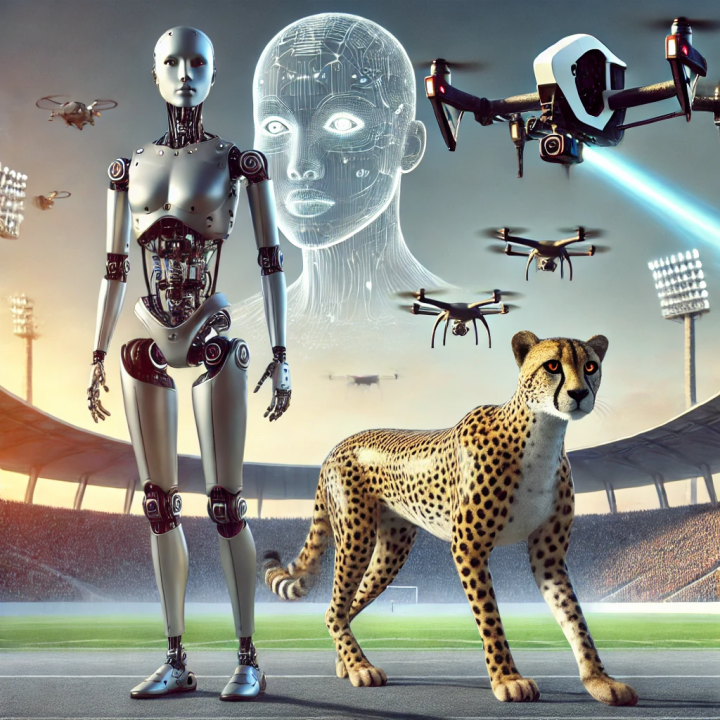
AI Breakthroughs, Robotic Cheetahs, Drone Wars & Stadium Security
Read about recent breakthroughs that enable Figure’s humanoids to complete new jobs with minimal training, making them more useful in manufacturing and logistics.
1. Figure’s AI-Powered Humanoid Takes a Big Step Forward
Figure AI, a humanoid robotics startup, has announced a major advancement in AI: Helix, a new system that allows their robots to understand natural language, reason, and perform real-world tasks more effectively. This breakthrough enables Figure’s humanoids to complete new jobs with minimal training, making them more useful in manufacturing and logistics. With OpenAI’s backing and a recent $675 million funding round, Figure is positioning itself as a serious competitor in the humanoid robotics race.
Major takeaway: Figure’s AI-driven humanoids are inching closer to real-world deployment, proving that general-purpose robots may soon be a reality.
2. The Robotic Cheetah That Sprints Like the Real Thing
Researchers have developed a bionic robot cheetah capable of running with the same energy efficiency as its real-life counterpart. The secret lies in a bio-inspired tendon system that mimics how cheetahs store and release energy while sprinting. This breakthrough could lead to more efficient legged robots for search-and-rescue missions, military applications, and even robotic sports.
Major takeaway: By imitating nature, engineers are unlocking new ways for robots to move efficiently and dynamically—expect legged robots to become much more capable in the coming years.
3. U.S. Lawmakers Want to Ban Drones Over Stadiums
With the rise of unauthorized drones flying over NFL, MLB, NCAA, and NASCAR events, a bipartisan group of U.S. lawmakers is pushing for a new bill that would give law enforcement more power to disable them. Sports leagues support the measure, citing safety concerns and the potential for drones to disrupt games or broadcast feeds. However, drone industry advocates warn that sweeping restrictions could limit beneficial drone applications, such as security monitoring and logistics.
Major takeaway: As drone technology advances, lawmakers are struggling to balance public safety with innovation—expect more legal battles over drone use in public spaces.
4. U.S. Sending 6,000 Drones to Ukraine in Major Military Contract
American company Neros has secured a massive contract to supply Ukraine with 6,000 domestically produced drones. These UAVs will be used for reconnaissance, surveillance, and attack missions, marking one of the largest drone shipments in modern warfare. The move highlights the increasing importance of drones in military strategy and the U.S. government’s continued support for Ukraine’s defense efforts.
Major takeaway: Drone warfare is evolving rapidly, and mass-produced, cost-effective UAVs are becoming a critical tool in modern conflicts.
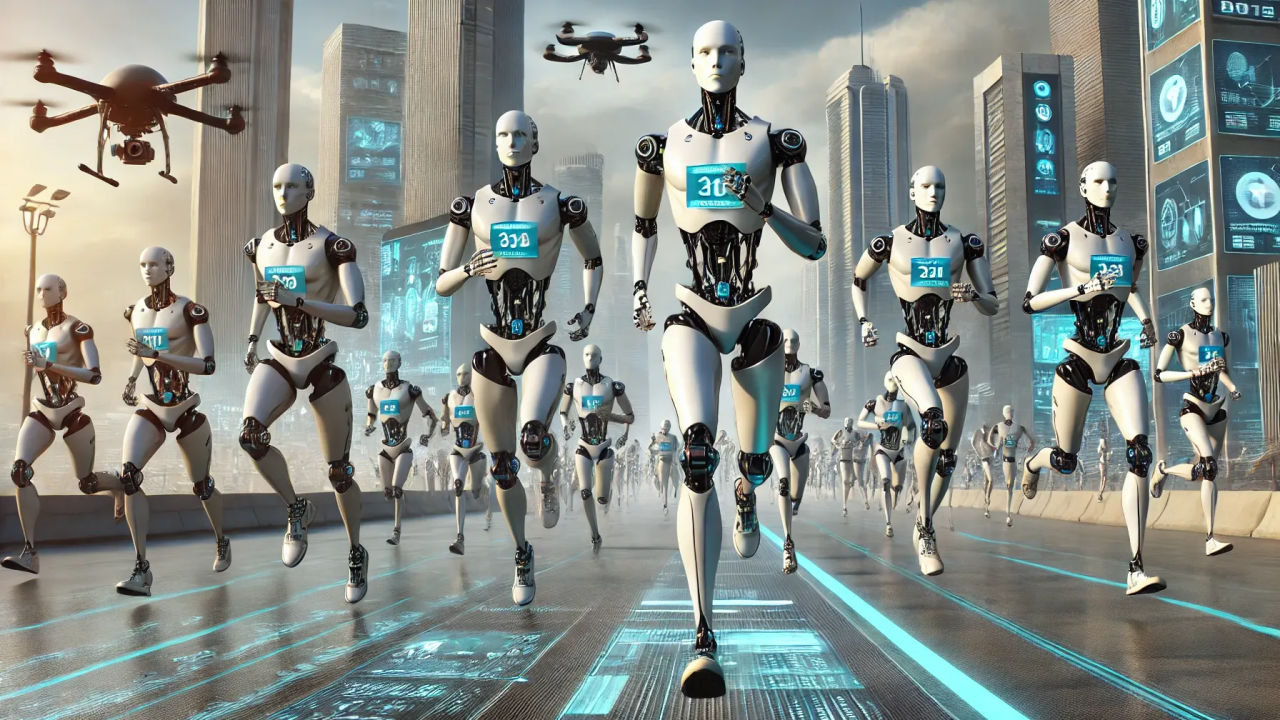
The Future of Human-Robot Synergy
Discover breakthroughs in brain interfaces, robot races, and new U.S. drone laws shaping future innovations.
1. Brain Chips Restore Movement in Paralyzed Patients
A groundbreaking brain-computer interface (BCI) has enabled a paralyzed man to move his arm using thought alone. Researchers implanted electrodes in his brain, which decoded his neural signals and transmitted them to electrodes on his arm, bypassing the damaged spinal cord. While still in early stages, this technology signals a future where BCIs could help millions regain mobility.
Major takeaway: Brain chips are making science fiction a reality, offering hope for restoring movement in people with paralysis. Read more.
2. Humanoid Robots to Compete in Half-Marathon Against Humans
Japan is set to host the first-ever half-marathon featuring humanoid robots racing against human runners. These robots will need to run, balance, and conserve energy over 13.1 miles, pushing the limits of bipedal robotics. While Boston Dynamics' Atlas and Agility Robotics’ Digit have made headlines, endurance remains a major challenge.
Major takeaway: This race isn’t just for fun—it’s a serious test of robotic endurance that could drive innovation in real-world applications like disaster response and logistics. Read more.
3. Congress Revisits Drone Legislation
U.S. lawmakers are once again debating new drone regulations, focusing on issues like airspace safety, security threats, and domestic drone manufacturing. The push comes amid concerns over Chinese-made drones and efforts to boost American drone companies. Striking a balance between security and innovation remains a challenge.
Major takeaway: New drone laws could shape the future of UAV operations in the U.S., with big implications for businesses, security, and air traffic management. Read more.
About Lucid Bots:
Founded in 2018, Lucid Bots is an AI robotics company that is committed to uplifting humanity by building the world's most productive and responsible robots that can do dangerous and demanding tasks. Headquartered in Charlotte, the company engineers, manufactures, and supports its products domestically, which include the Sherpa, a cleaning drone, and the Lavo Bot, a pressure-washing robot. Lucid Bots' products are elevating safety and efficiency for a growing number of customers around the world. Lucid is a Y Combinator-backed company, with investments from Cubit Capital, Idea Fund Partners, Danu Ventures, and others. Lucid Bots was recently recognized as the 4th fastest growing manufacturing company in the United States.
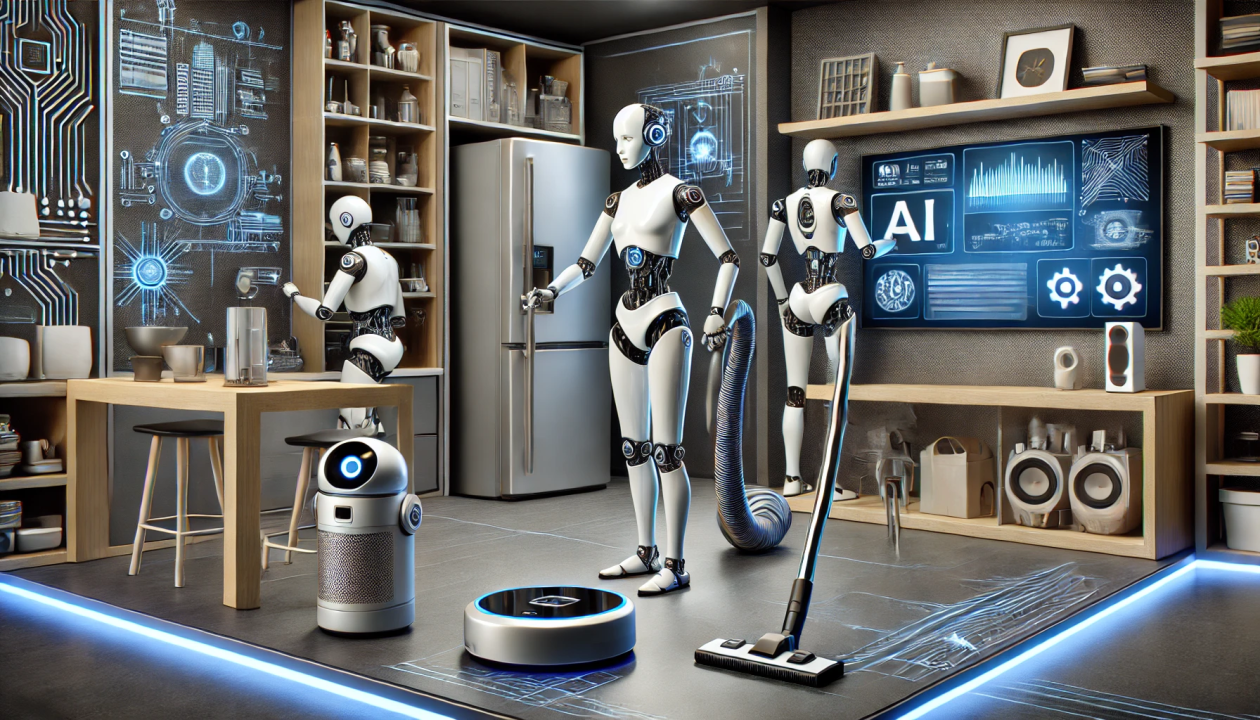
From Housework to the Battlefield: How Robots Are Reshaping Our World
Robots are reshaping business, warfare, and daily life—Ukraine is deploying unmanned ground vehicles for military operations, Israeli defense startups are expanding globally, and Meta is advancing AI-driven household robotics. Read more about the latest innovations in automation.
Robots are transforming daily life, business, and warfare—Meta is refining household AI, Israeli defense startups are going global, and Ukraine is deploying robotic military vehicles.
1. Ukraine to Deploy Robotic Vehicle Units
Ukraine's Defense Minister, Rustem Umerov, announced plans to establish units equipped with unmanned ground vehicles (UGVs) to gain a technological edge in the ongoing conflict. These UGVs, remotely operated via camera feeds, will be utilized for offensive and defensive operations, logistics, casualty evacuation, and mine-related tasks. The initiative builds upon trials conducted with soldiers since mid-2024. Digital Transformation Minister Mykhailo Fedorov noted that Ukraine anticipates needing tens of thousands of these robotic vehicles this year.
Why It Matters
Ukraine is integrating unmanned ground vehicles into its military strategy to enhance operational efficiency and safeguard personnel. Read the full article.
2. Israeli Defense Tech Startups Eye Global Expansion
Israeli startups, fast-tracked by the Defense Ministry, have developed cutting-edge military tech, including AI-powered drones, gaining global traction. Increased international investment, including from U.S. and UAE firms, is fueling their expansion beyond wartime applications.
Why It Matters
Israeli defense tech startups are leveraging wartime innovations to secure global markets and investors. Read the full article.
3. Meta Explores Human-Robot Collaboration in Household Tasks
Meta is delving into the dynamics of human-robot collaboration within domestic settings. The company has developed a comprehensive benchmark comprising 100,000 tasks, focusing on everyday household activities such as tidying dishes and organizing toys. This initiative aims to enhance the synergy between humans and robots in shared environments.
Why It Matters
Meta's extensive task benchmark seeks to improve human-robot collaboration in daily household chores, potentially leading to more intuitive and efficient interactions in domestic environments. Read the full article.
Lucid Bots Podcast
How Ryan Godwin is Transforming Exterior Cleaning with the Sherpa Drone
Dive into the future of exterior cleaning with Ryan Godwin, the visionary behind Lucid Bots. Discover how Ryan is leveraging cutting-edge robotics to revolutionize cleaning for buildings and outdoor surfaces—boosting efficiency, safety, and sustainability.

.svg)

.avif)
.avif)