Sherpa Drone NDAA

Built for the job. Cleared for the facility.

The only purpose-built exterior cleaning drone with a fully audited Bill of Materials: zero components from NDAA-prohibited manufacturers. For operators who need to work where others cannot.

0

Prohibited Components

Full BOM audit complete. Zero components from any NDAA-prohibited manufacturer or subsidiary.
400+

Trusted by Operators

Over 400 operators use Lucid Bots drones across the United States. The Sherpa Drone NDAA brings that same proven platform to secure and government facilities.
USA

Designed, Assembled, Supported

Built in Charlotte, NC. Supply chain reviewed and maintained on an ongoing basis.

Complete NDAA Sections 848 & 889 Compliant System

NDAA stands for the National Defense Authorization Act.
NDAA Section 889 restricts the use of certain telecommunications and surveillance equipment from covered manufacturers, while Section 848 applies to the sourcing of critical drone components. A complete NDAA-compliant system addresses both requirements, not just the country where the drone is assembled.

The Sherpa NDAA UAS has undergone a full Bill of Materials audit.
Zero components from any prohibited manufacturer or subsidiary.
Five prohibited manufacturers
Huawei Technologies
ZTE Corporation
Hytera Communications
Hangzhou Hikvision
Dahua Technology

The Same Sherpa Drone. Purpose-Built for Secure Facilities.

If you are cleaning government buildings, military installations, or federally contracted properties, your equipment needs to be NDAA compliant. The Sherpa 1.5 NDAA UAS meets that standard.

Capabilities

Soft-wash, high-pressure, and protective coatings.
Cleans facades, roofs, windows, and large structures.
Ground-level operation: no lifts, scaffolding, or rope access.

Data & Privacy

The Sherpa Drone's onboard camera is used for operator situational awareness only. It does not record, store, or transmit video or data to any external server or third party.

Operator Requirements

FAA Part 107 Remote Pilot Certificate.
LAANC authorization or Certificate of Authorization.
Site access approval from the facility.

Approved for Secure Facilities.

The Sherpa 1.5 NDAA UAS opens up high-value cleaning contracts at government buildings, military installations, federally contracted campuses, and secure commercial properties where NDAA compliance is a procurement requirement.

Applicable facilities include:
  • U.S. military bases and Air Force installations
  • Federal government buildings and GSA-managed properties
  • DoD-contracted commercial facilities
  • Secure corporate and government campuses
  • State and local government properties subject to drone procurement restrictions
Lucid Bots operators have completed over 6,500 jobs across North America, Europe, and Australia. The NDAA UAS configuration brings that same proven track record to the facilities that demand it.
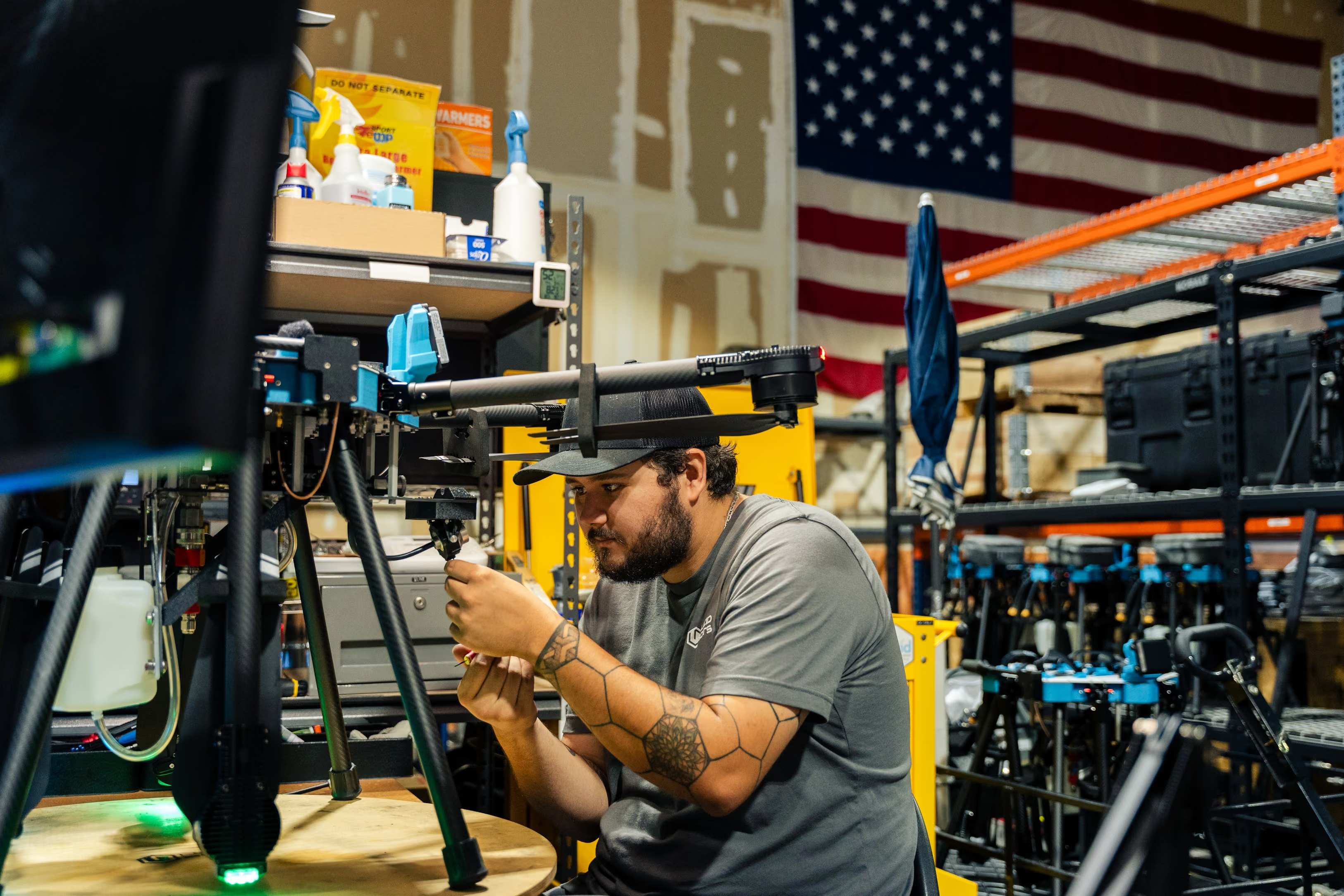
Designed, Assembled, and Supported in Charlotte, NC

Every Sherpa NDAA UAS is built and serviced by the same U.S. team that audits its Bill of Materials. The supply chain is reviewed and maintained on an ongoing basis, not just at point of sale.

FAQs

What is the difference between NDAA Sections 848 and 889?

Both sections are part of the National Defense Authorization Act (NDAA), but they cover different areas. Section 848 focuses on unmanned aircraft systems (UAS) and the sourcing of critical drone components. Section 889 focuses on telecommunications and surveillance equipment, restricting the use of certain covered manufacturers.

In simple terms: Section 848 applies to the drone itself, while Section 889 applies to the communications and surveillance technology used within the system.

Is the Sherpa 1.5 NDAA UAS the same as the standard Sherpa 1.5?

No. The Sherpa 1.5 NDAA UAS is a distinct configuration with a fully audited Bill of Materials verified to contain zero components from NDAA-prohibited manufacturers. If you are working at a government or military facility, confirm your operator owns the Sherpa 1.5 NDAA UAS specifically, not the standard Sherpa 1.5.

Does the Sherpa Drone record or transmit video or data?

The Sherpa Drone's onboard camera is used for operator situational awareness and flight control only. The drone does not store footage on external servers, transmit imagery to third parties, or perform mapping, reconnaissance, or area scanning.

Can the Sherpa Drone operate at a military base or Air Force installation?

Yes, with appropriate approvals in place. Drone operations on military installations require coordination with the installation's airspace authority. The Sherpa 1.5 NDAA UAS meets NDAA Section 889 compliance requirements.

What chemicals does the Sherpa Drone use and are they safe for secure facilities?

The Sherpa Drone applies standard commercial soft-wash chemistry, sodium hypochlorite and surfactant, used by commercial cleaning contractors across the industry.

What happens if the Sherpa Drone experiences a technical issue during operations?

The operator retains full manual control of the Sherpa Drone at all times. If GPS is lost, the drone maintains position using its failsafe systems. If radio contact is lost, the drone will hover for 60 seconds then initiate a controlled vertical descent straight down from its current position.

Ready to Access Facilities Others Can't?

Talk to the Lucid Bots team about the Sherpa 1.5 NDAA and how to get your operation cleared for secure facilities.