The $520M Signal: Humanoids Are Getting Real
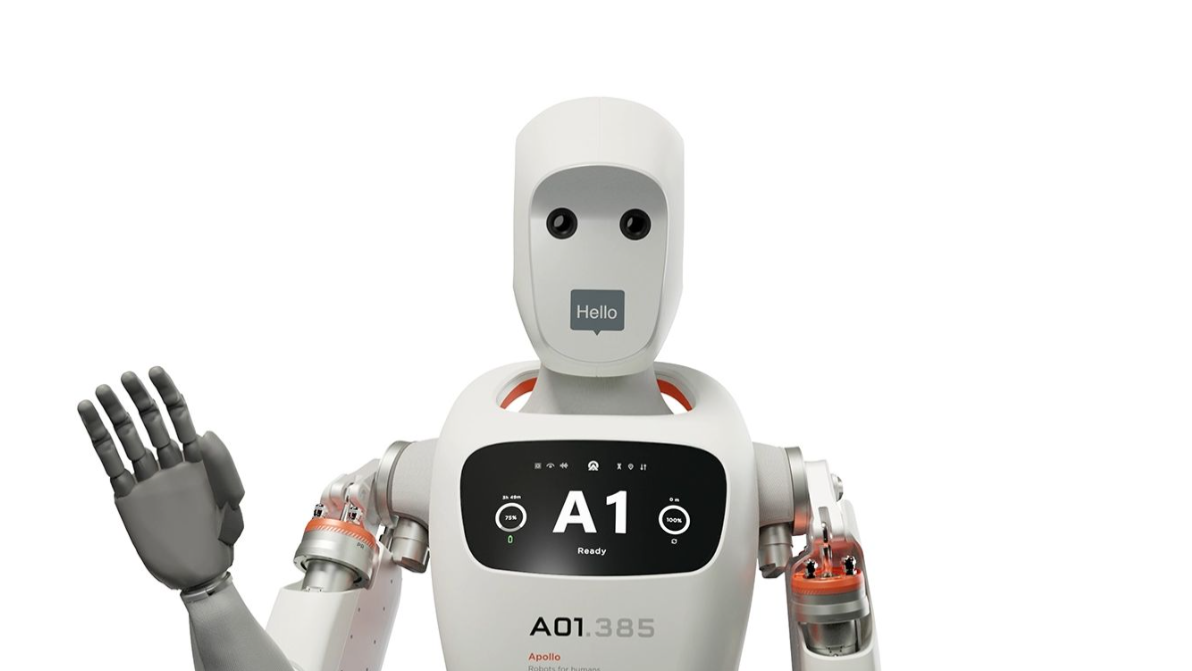
Humanoid robotics is rapidly shifting from futuristic demos to real-world deployment, with massive funding races like Apptronik, safety-first designs like Fauna’s Sprout for everyday spaces, and industrial partnerships like Fincantieri’s shipyard welder proving that the next wave is about scaling robots that can work safely alongside humans.
Apptronik raises $520 million to beat Chinese humanoids, Tesla Optimus to market
Apptronik raised $520M at a $5B valuation as it pushes to commercialize its Apollo humanoid robots and get to market ahead of Chinese competitors and Tesla’s Optimus. The round, co-led by B Capital and Google, brings the company’s Series A total to $935M and signals just how quickly capital is stacking behind humanoids as the next automation platform. Based in Austin, Apptronik says the funding will go toward refining Apollo, scaling production, expanding its footprint in Texas, and opening a new California office. Early versions of Apollo are already being tested in controlled factory and warehouse environments with partners like Mercedes-Benz, GXO Logistics, and Jabil, operating inside sensor-defined zones where the robot pauses if a human crosses a boundary. CEO Jeff Cardenas framed the next step as “collaborative safety,” where humanoids can move alongside people more naturally while handling tasks like transporting, sorting, and lifting. The company is also leaning into AI partnerships, having locked in work with Google DeepMind and Gemini Robotics models to underpin Apollo’s capabilities. While Tesla is planning massive capex and talking big about Optimus, Musk has acknowledged the robots are still early-stage R&D, and Apptronik is positioning itself as the quieter execution-focused player, using pilot deployments to gather fleet data and iterate toward mass production. Investors are already projecting significant demand, with expectations of billion-dollar orders starting in 2027 and Apollo priced around $80K per year, roughly the cost of a luxury car.
Major Takeaway: Humanoid robotics is shifting from hype to a capital-intensive race to production, and Apptronik’s $520M raise, factory pilots, and DeepMind-backed AI stack show the battle is now about who can scale safe, versatile humanoids into real industrial workflows before Tesla and China’s leading developers do. Read More
Humanoid robots are getting smaller, safer and closer
Fauna Robotics is making the case that humanoids do not need to start in factories and work their way outward, they can be designed from the ground up for shared human spaces. The New York-based startup introduced Sprout, a compact 3.5-foot, 50-pound humanoid built specifically to operate safely in homes, schools, offices, retail environments, and entertainment venues. Instead of adapting heavy industrial hardware, Fauna prioritized lightweight materials, soft-touch surfaces, limited pinch points, and quiet motors to reduce kinetic risk and make the robot feel less intimidating in close quarters. Sprout trades complex multi-fingered hands for simple one-degree-of-freedom grippers to improve durability and safety, while maintaining useful capabilities like object hand-offs and fetching. With 29 degrees of freedom, onboard NVIDIA compute, head-mounted RGB-D sensing, and a modular software platform designed for updates over time, Sprout is positioned as a developer-first humanoid platform rather than a finished consumer product. Fauna is targeting service-heavy sectors facing labor shortages, including healthcare, education, hospitality, and eldercare, and argues that trust, safety, and reliability, not spectacle, will determine whether humanoids can move from controlled environments into everyday life.
Major Takeaway: Fauna’s Sprout reflects a shift in humanoid strategy from maximizing strength and complexity to optimizing for safety, simplicity, and developer accessibility, signaling that the next wave of humanoids may win by fitting into human spaces gracefully rather than overpowering them. Read More
Italian firms plan humanoid robot welder to work alongside humans in shipyards
Generative Bionics has partnered with shipbuilding giant Fincantieri to develop an autonomous humanoid robot designed to perform welding tasks alongside human workers in naval manufacturing. The project is focused on deploying Physical AI directly into complex shipyard environments, with the humanoid equipped with advanced manipulation, perception, and vision systems to monitor welding seams and optimize movement in tight, industrial spaces. Unlike traditional automation that restricts work zones, the goal is collaboration and safety, enabling the robot to operate near people while maintaining regulatory compliance and production quality. The four-year partnership will run development and validation at Fincantieri’s Sestri Ponente shipyard, with initial tests expected by the end of 2026 and operational functionality targeted within the first two years. Fincantieri frames the effort as part of its broader Industrial Plan, driven by rising production complexity and shortages of skilled labor, while also positioning the initiative as a step toward stronger European technological sovereignty through domestically rooted robotics capabilities.
Major Takeaway: This partnership signals that humanoid robotics in Europe is moving beyond demos and into heavy industry, with shipyards emerging as a proving ground where Physical AI can directly address labor gaps, safety risks, and demanding repetitive work through true side-by-side human collaboration. Read More
About Lucid Bots
Founded in 2018, Lucid Bots is an AI robotics company that is committed to uplifting humanity by building the world's most productive and responsible robots that can do dangerous and demanding tasks.
Headquartered in Charlotte, the company engineers, manufactures, and supports its products domestically, which include the Sherpa, a cleaning drone, and the Lavo, a pressure-washing robot.
Lucid Bots' products are elevating safety and efficiency for a growing number of customers around the world. Lucid is a Y Combinator-backed company, with investments from Cubit Capital, Idea Fund Partners, Danu Ventures, and others. Lucid Bots was recently recognized as the fastest growing robotics manufacturer in the United States.
🟢 New here?
Love startups, robots, and business growth stories?
Join the 2,000+ readers and subscribe to our Robot Rundown 🚀
.png)
.png)
.png)