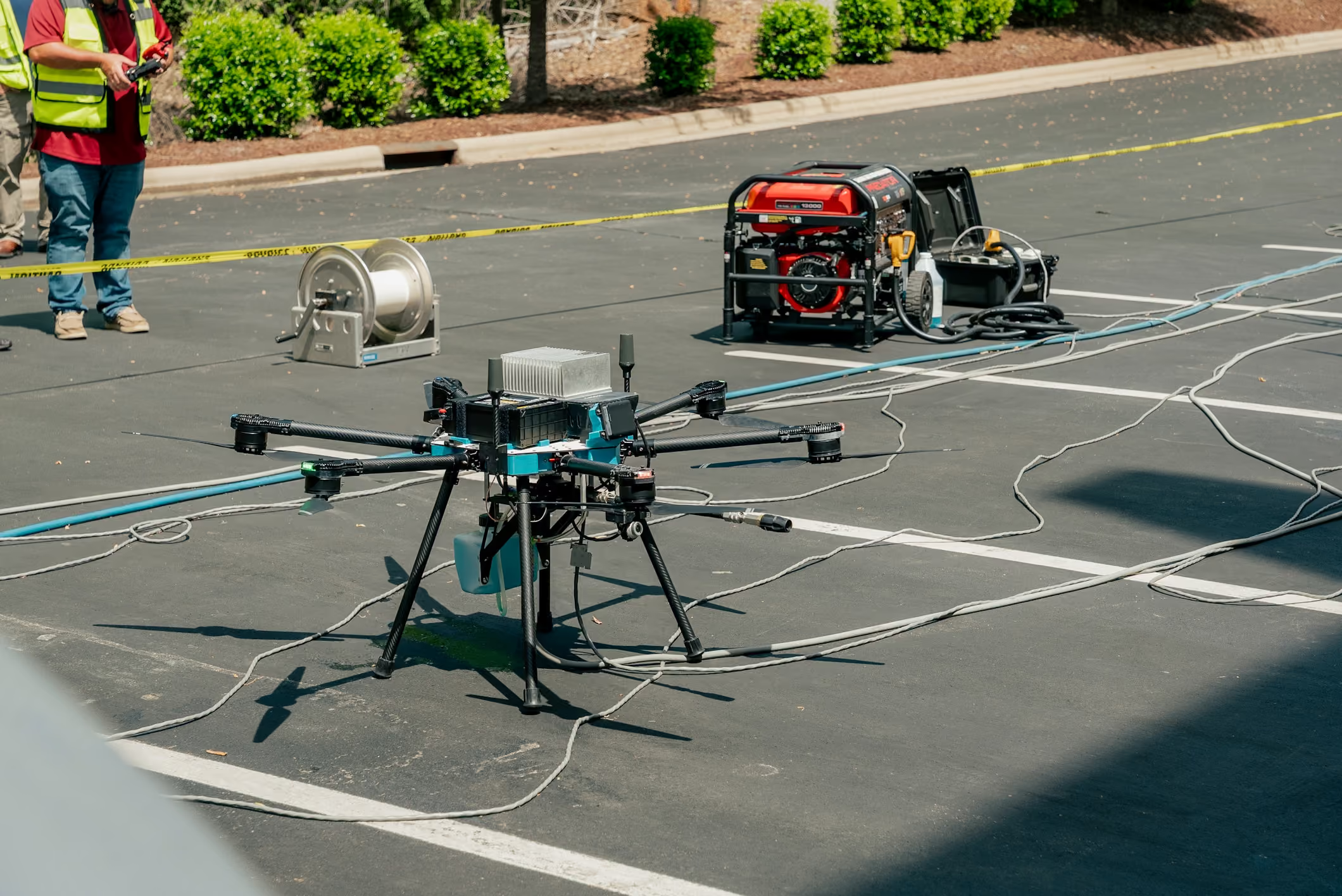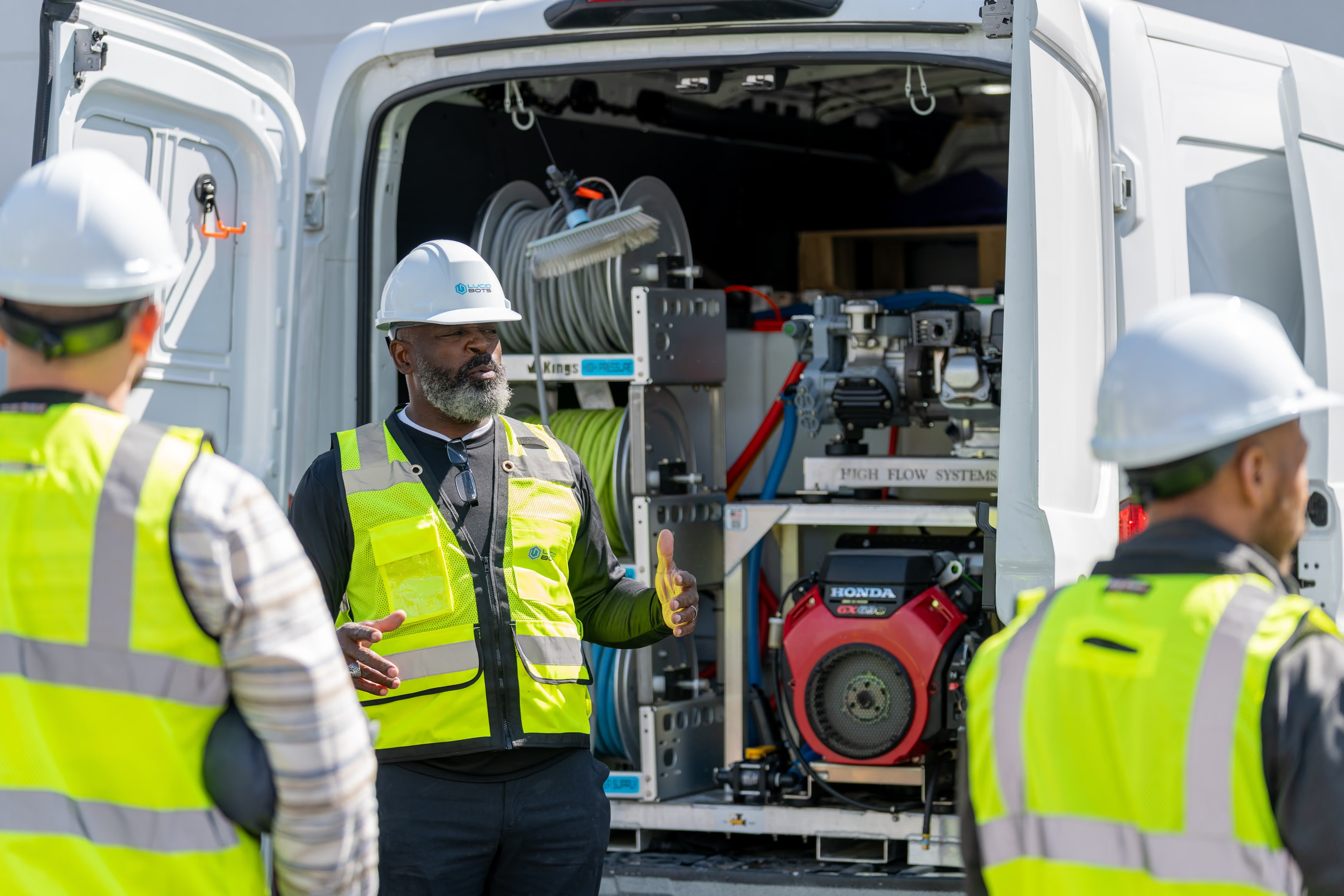
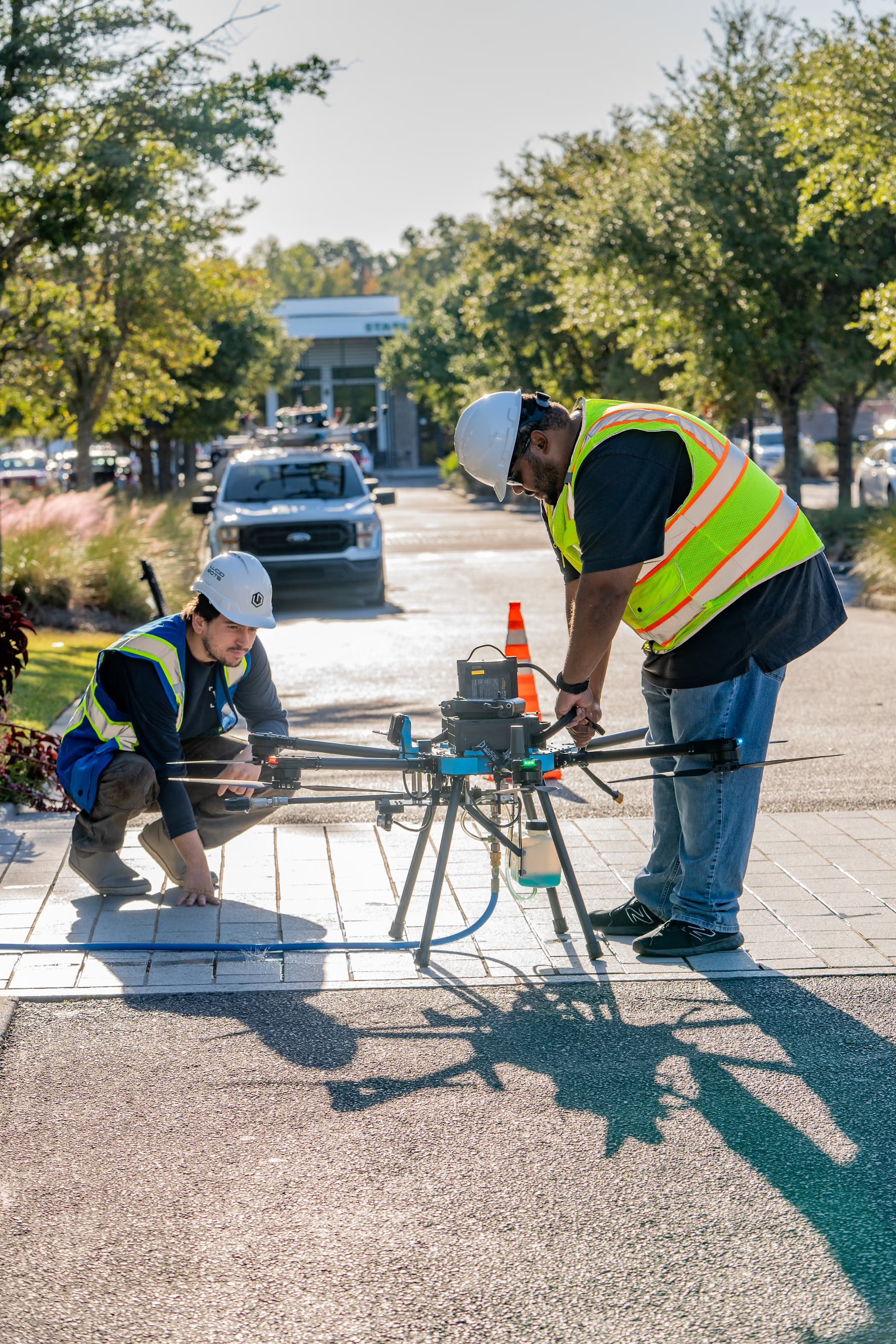
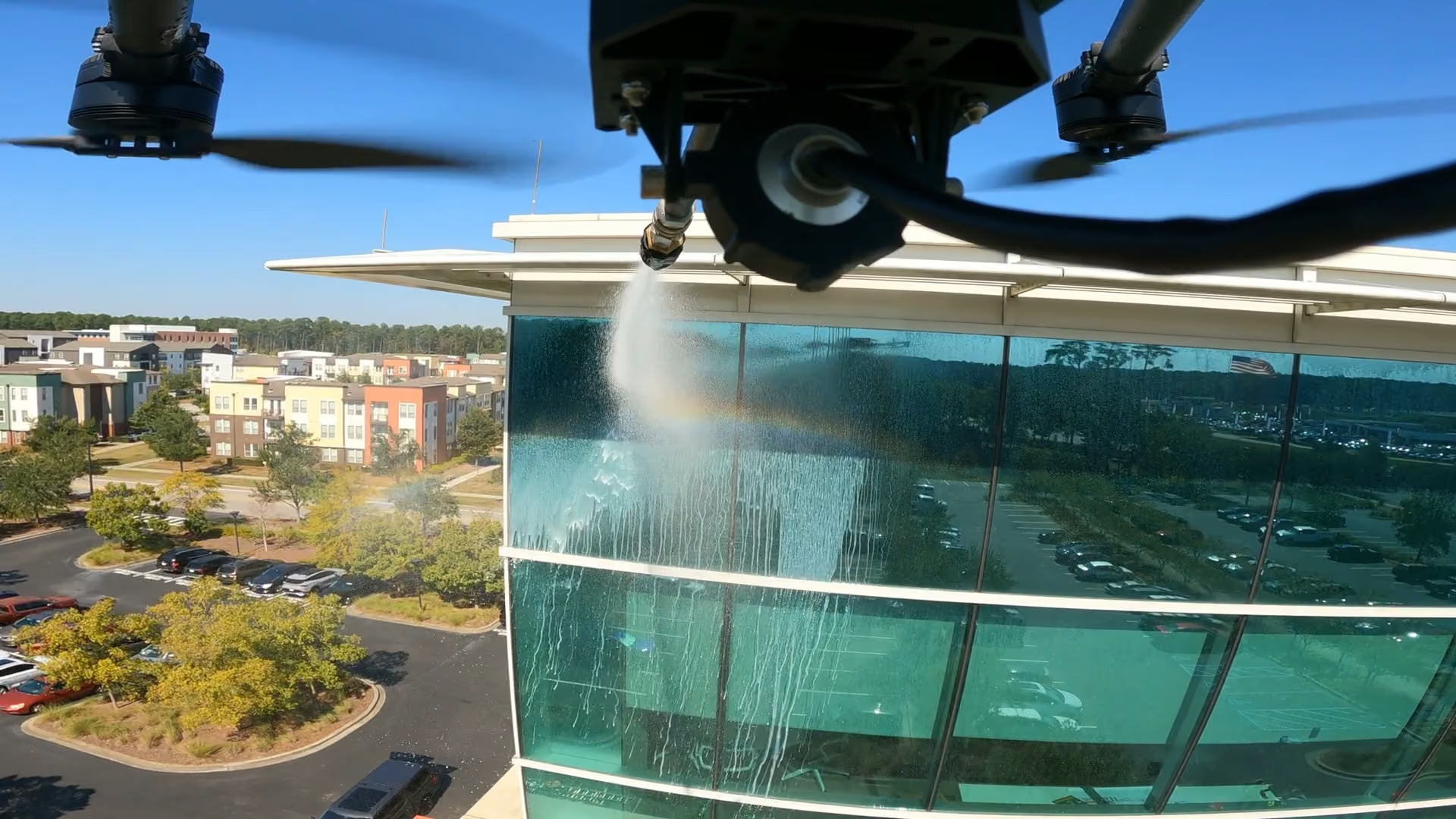
Yes, a working setup typically includes a soft-wash pump, hoses, water supply or tank, chemicals, and supporting plumbing. Existing cleaning companies can often reuse parts of what they already own. Soft washing does not require Window Payload.
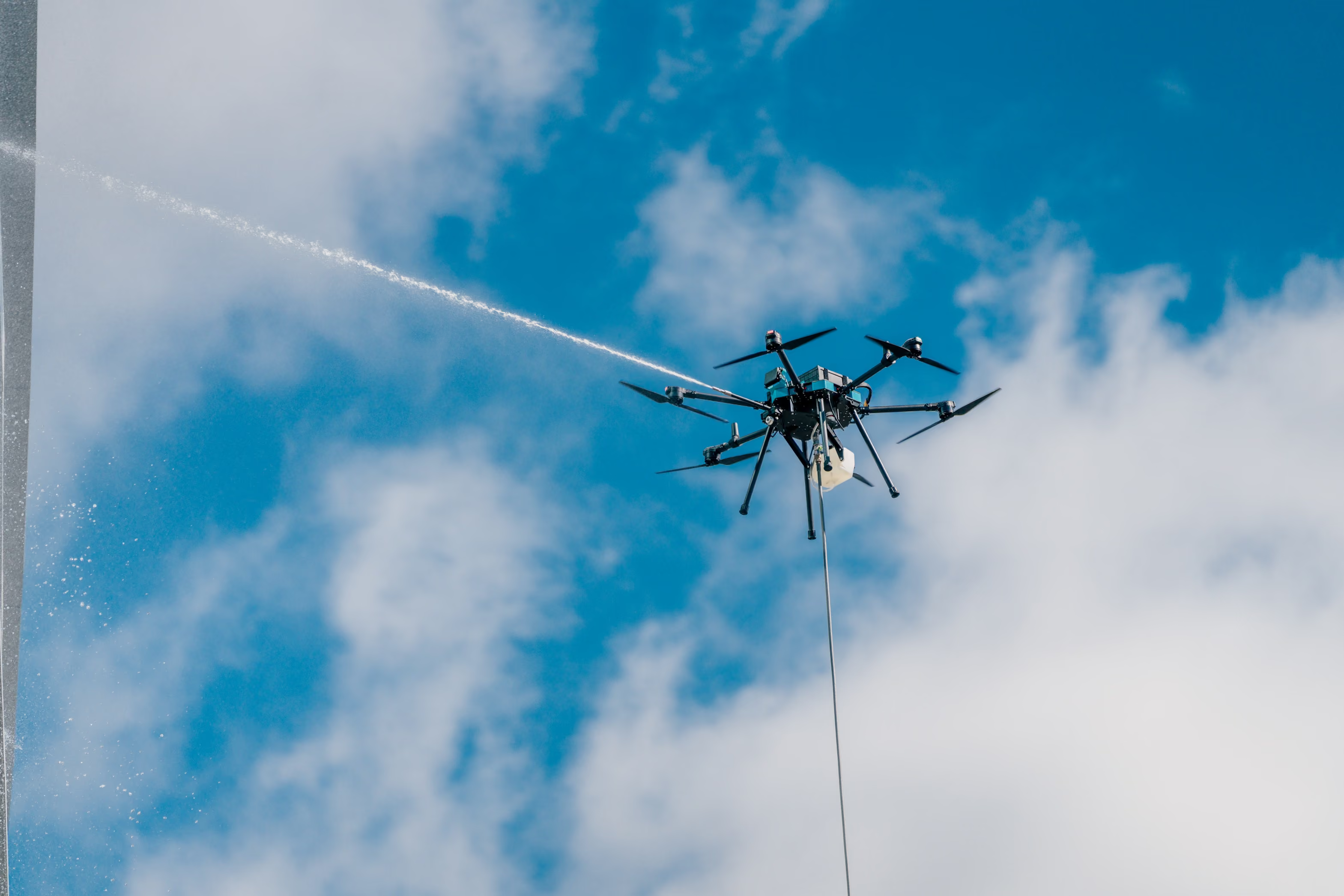
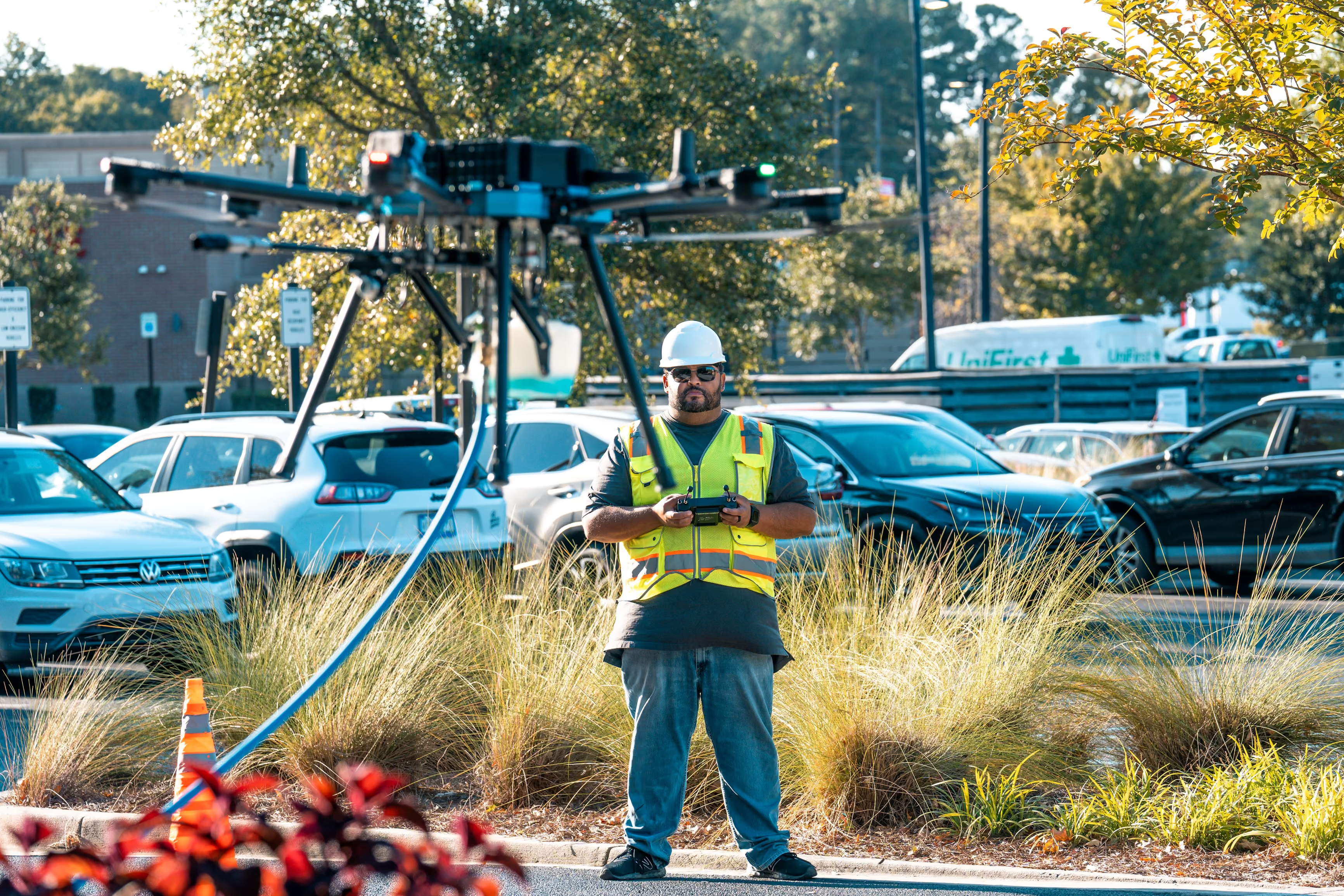
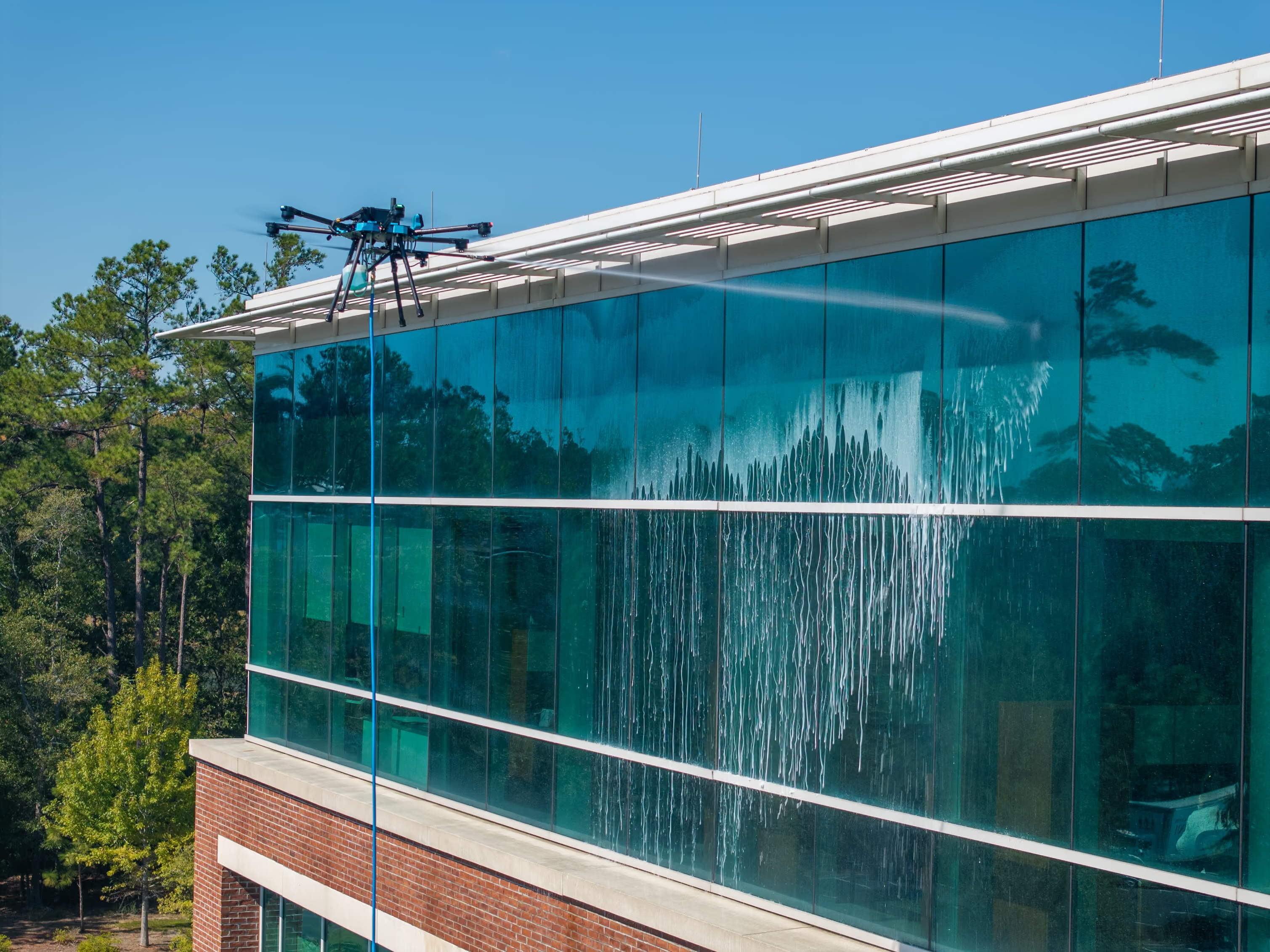
The ground rig handles water, chemistry mixing, pumping, and hose management. The Sherpa drone is the application tool at height: you apply the solution, let it dwell without drying, then rinse and inspect. Stage the rig, set the mixture for the surface, pump it through the hose to the aircraft, apply and dwell, then rinse.
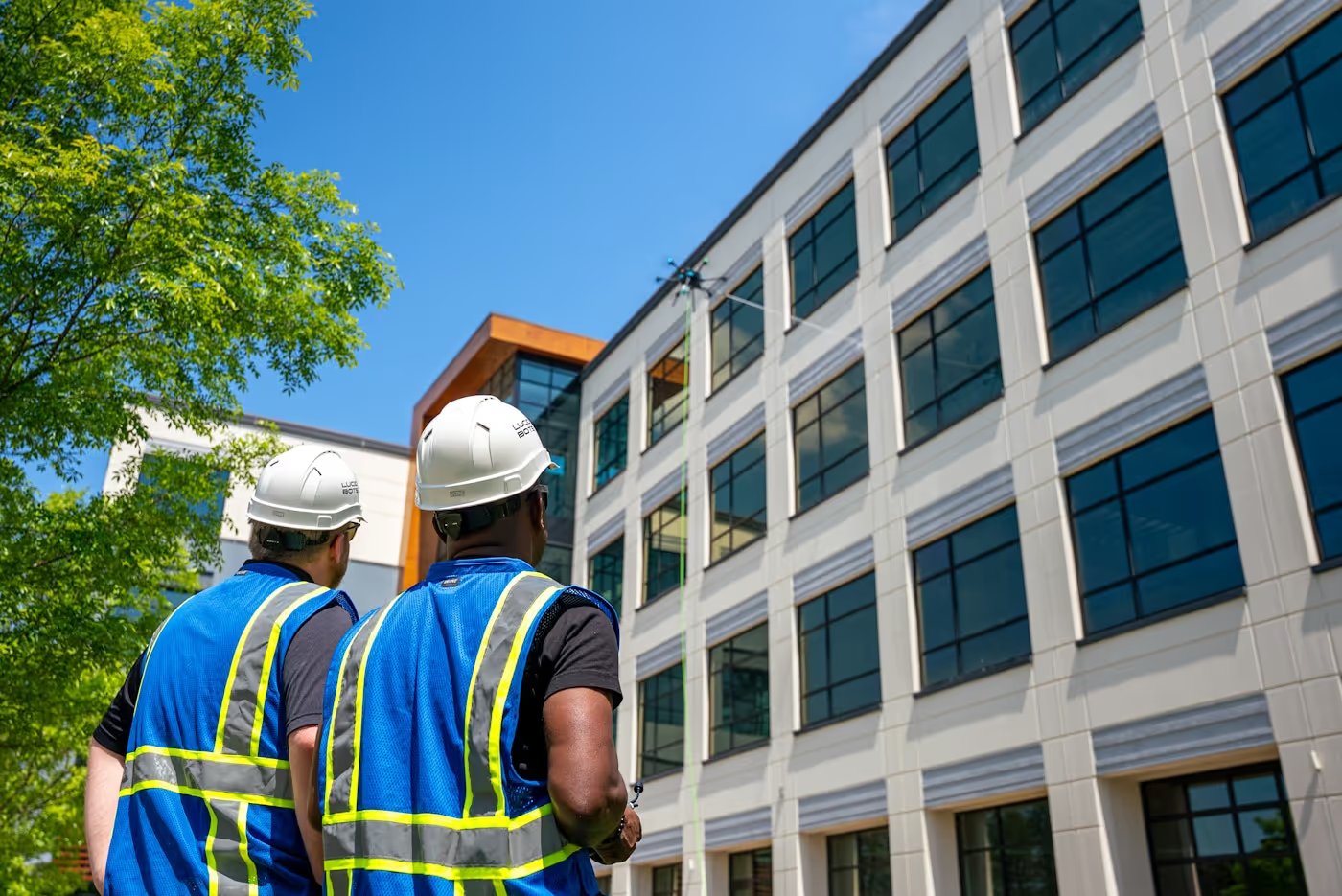
When the work is elevated exterior soft washing where chemistry and controlled spray do most of the cleaning, and you want the operator on the ground instead of on a lift, scaffold, or ropes. It is strongest on repeatable maintenance across large facades. It is usually the wrong primary tool for flatwork, tight interiors, heavy restoration, graffiti, or surfaces that need brushing, scraping, or agitation. Soft washing with the Sherpa drone uses the standard configuration, no specialized payload required.
Soft wash uses low pressure with cleaning chemistry and dwell time to break down organic growth and surface contamination, then you rinse. Pressure washing relies more on high force to knock material off. Soft wash is usually the better fit for porous or delicate exteriors where high PSI can damage the surface; pressure washing fits jobs where mechanical force is what actually removes the soil. The Sherpa can support both approaches depending on pump and nozzle setup (soft wash up to about 12 GPM at 300 PSI; high-pressure configs up to 4,500 PSI).
Lucid Bots is a Charlotte, North Carolina-based robotics company that builds commercial cleaning drones to take on dull, dirty, and dangerous exterior maintenance work.