Join our virtual Webinar on October 13th!Register Now
Window Cleaning

Window cleaning with a Sherpa Drone

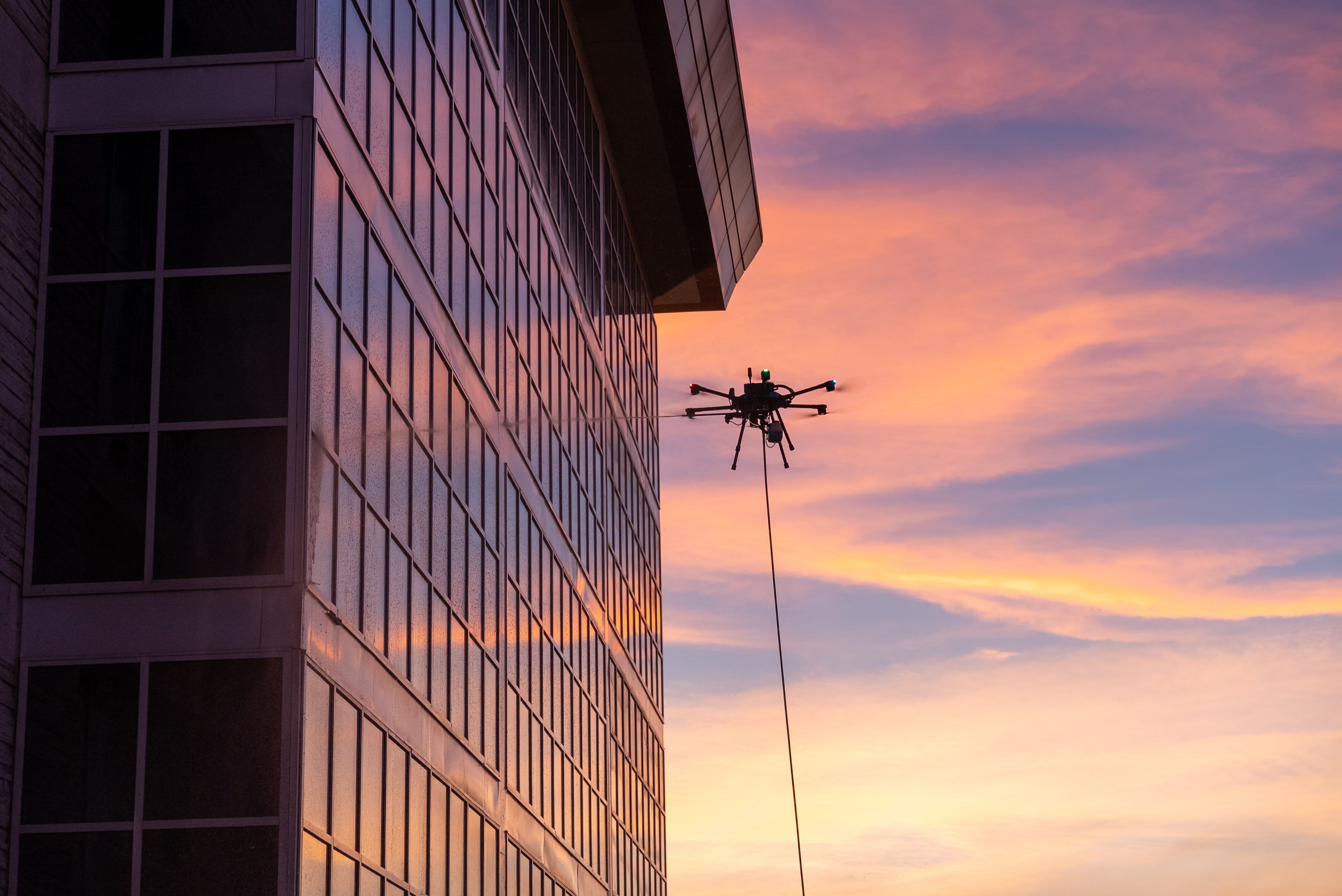
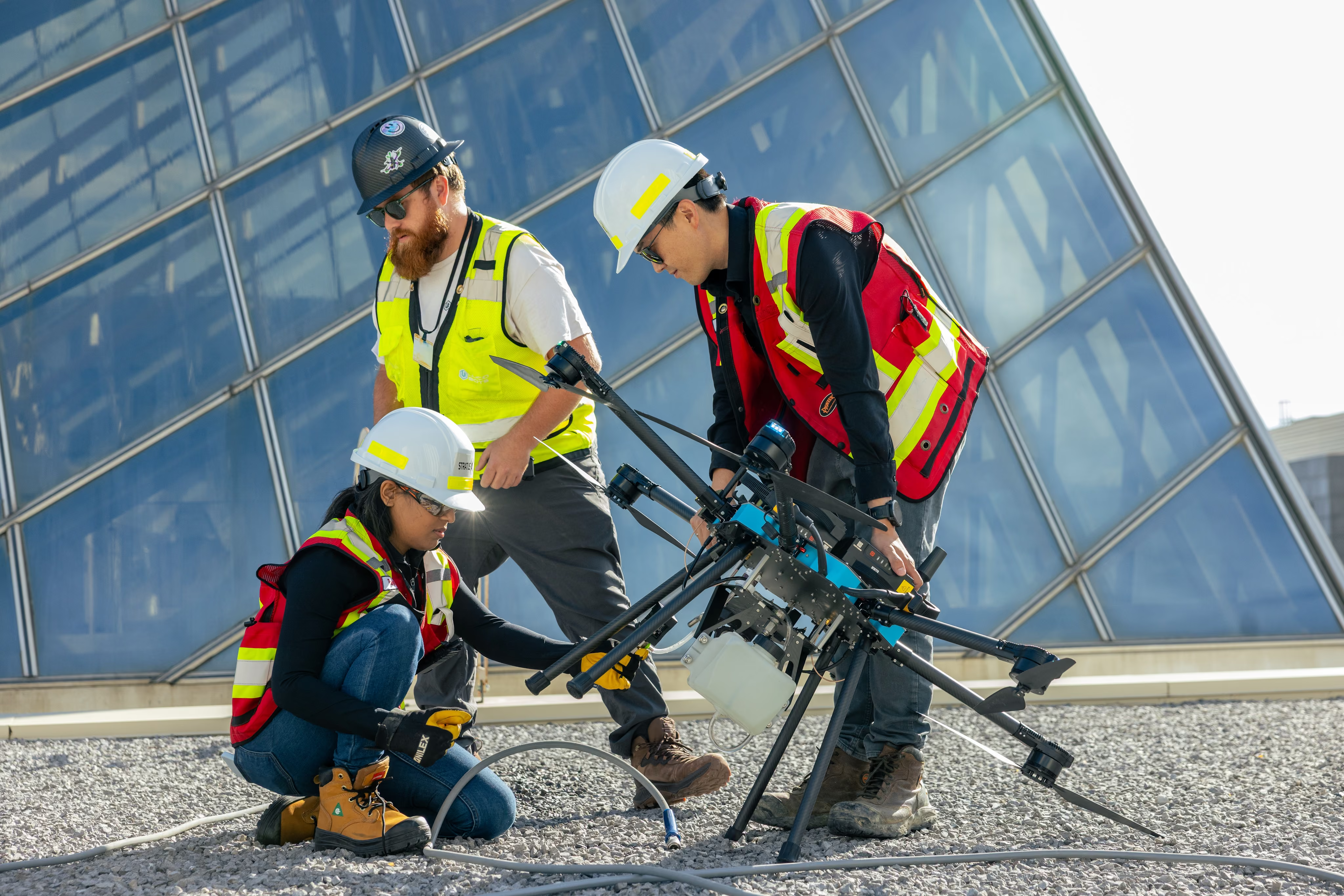
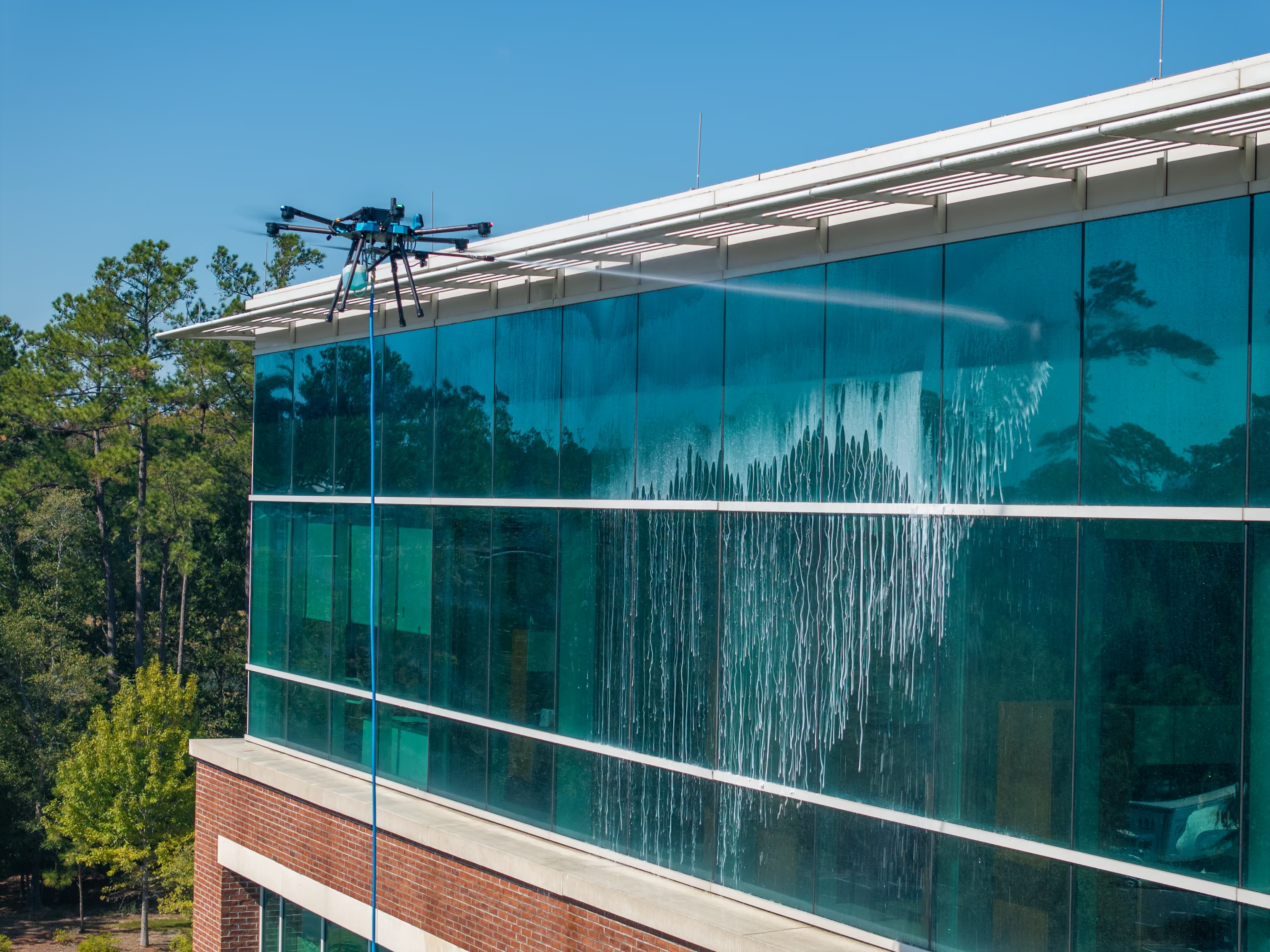
Use the Sherpa drone and Window Payload to bring purified water, cleaning solution, and rinse control to elevated glass while the operator stays on the ground.
A better way to reach the work

Clean glass with less access equipment

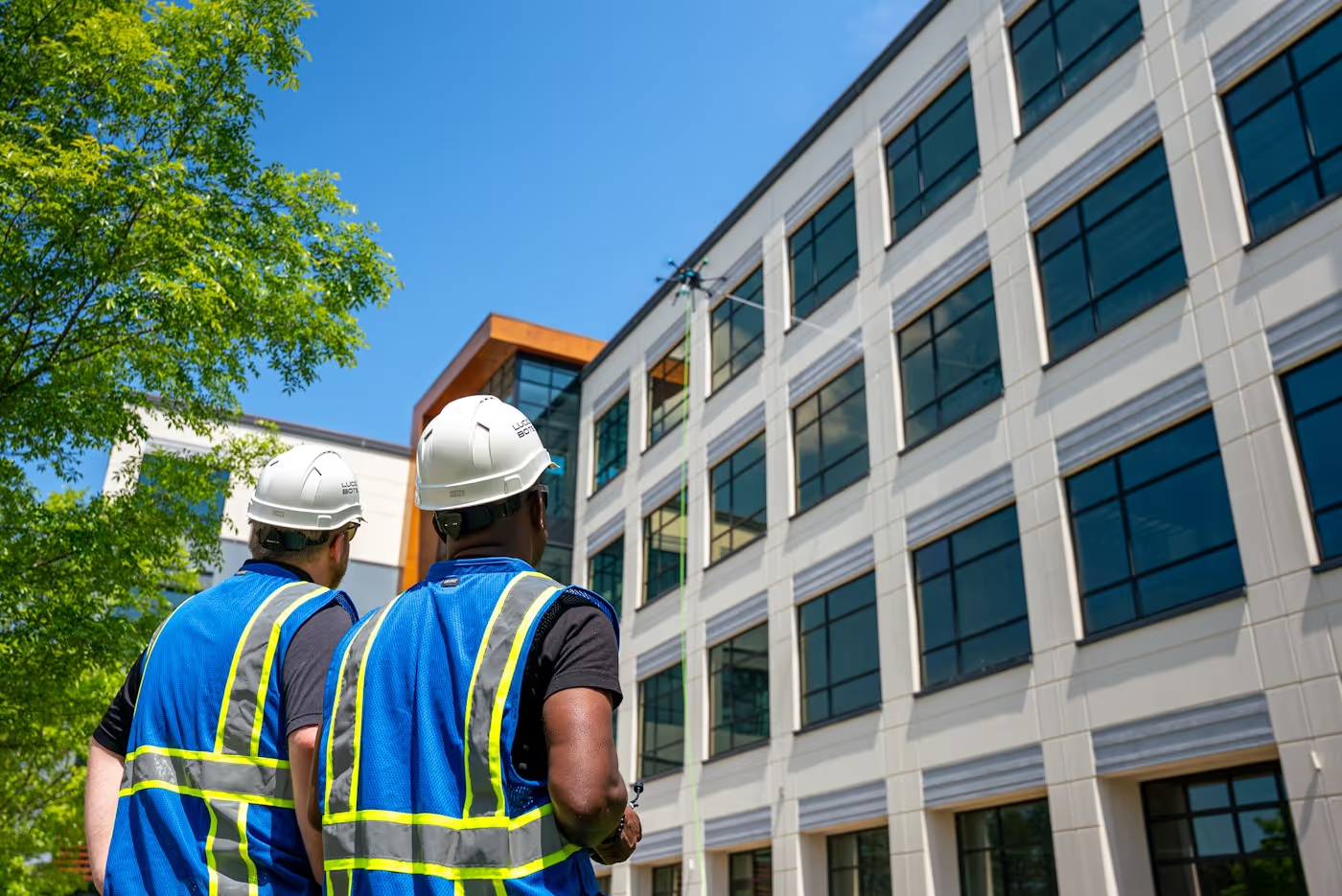
The Sherpa drone keeps the operator on the ground, reduces dependence on lifts, swing stages, and rope access, and creates a smaller operating footprint around the property.
Window cleaning using the Sherpa drone requires the Window Payload attachment.
The honest answer

Does a drone clean as well without a brush or squeegee?

It can on the right job, but touchless cleaning is not universally better at removing every type of contamination. The Sherpa drone with a Window Payload is a flying pressure washer. It offers a better access and delivery method for glass that can be cleaned with the right chemistry, dwell time, and purified-water rinse.
How it works

From the water hookup to finished glass

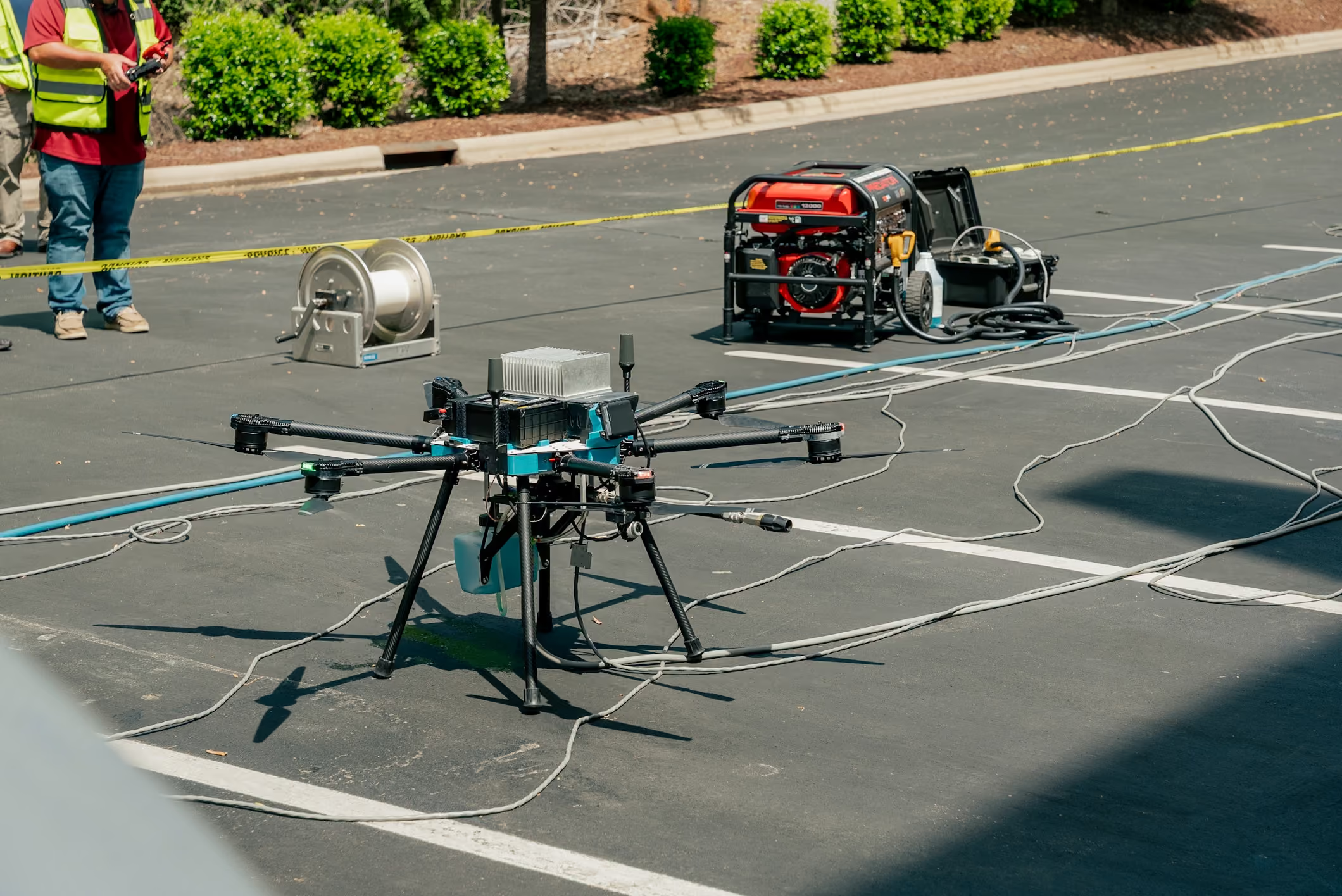
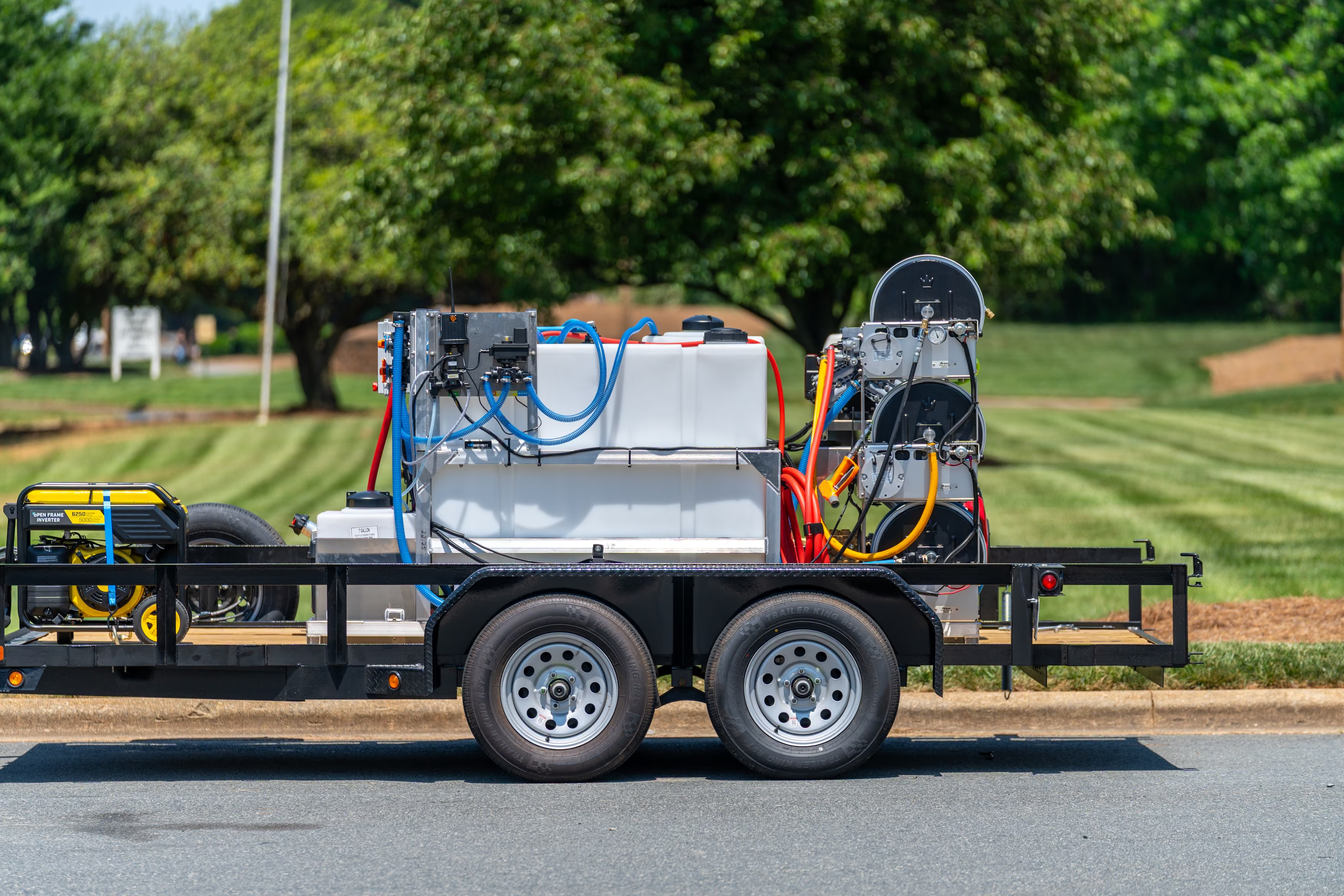
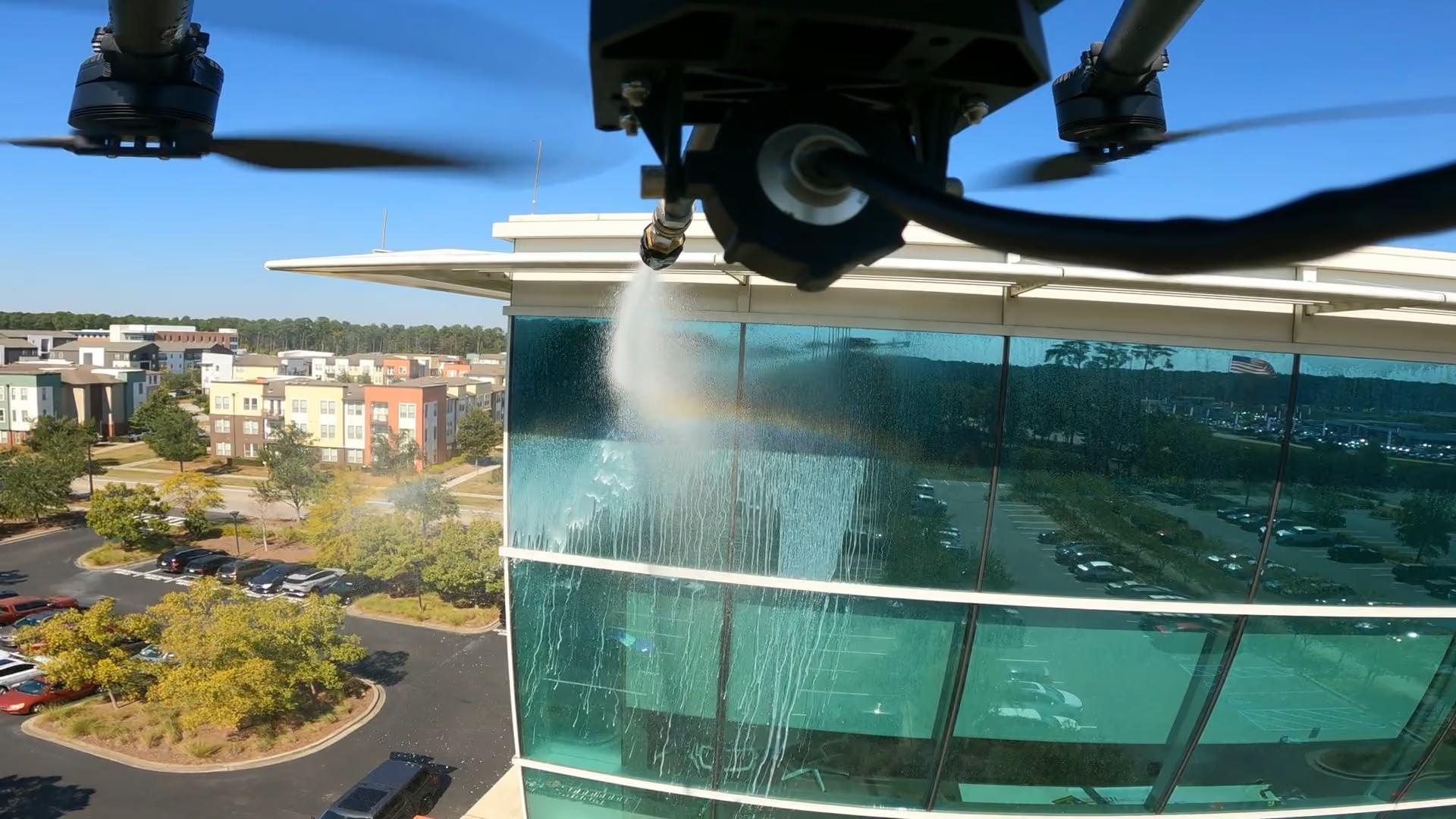
A drone window-cleaning setup is a ground-fed water system with the Sherpa drone at the point of application. Water is supplied, purified, and pumped from the ground before traveling through a hose to Window Payload, where cleaner can be introduced only when needed.

01 Connect the water

Connect the building's water supply to the mobile rig, or draw from an onboard water tank when the job requires it.

02 Purify the rinse water

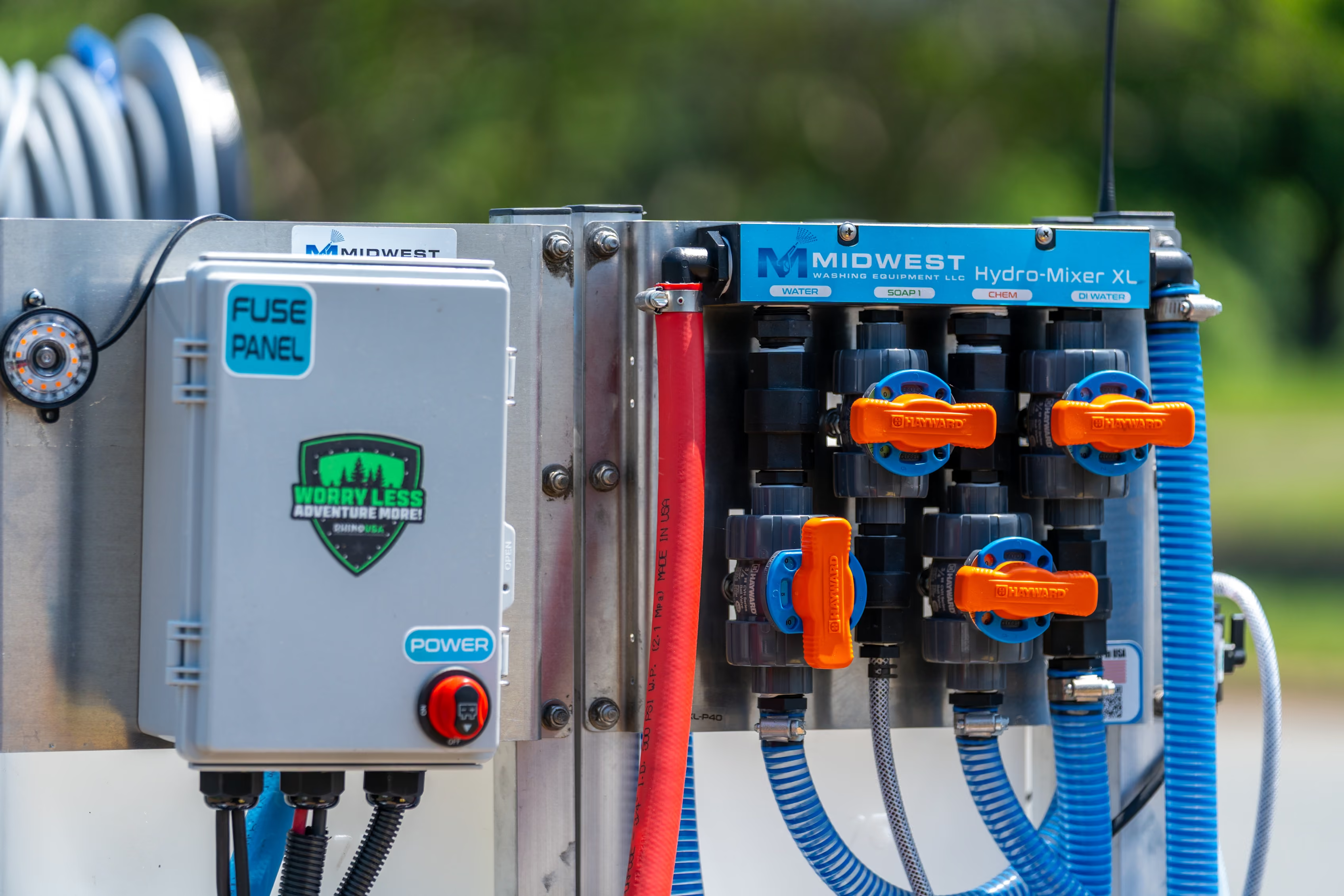
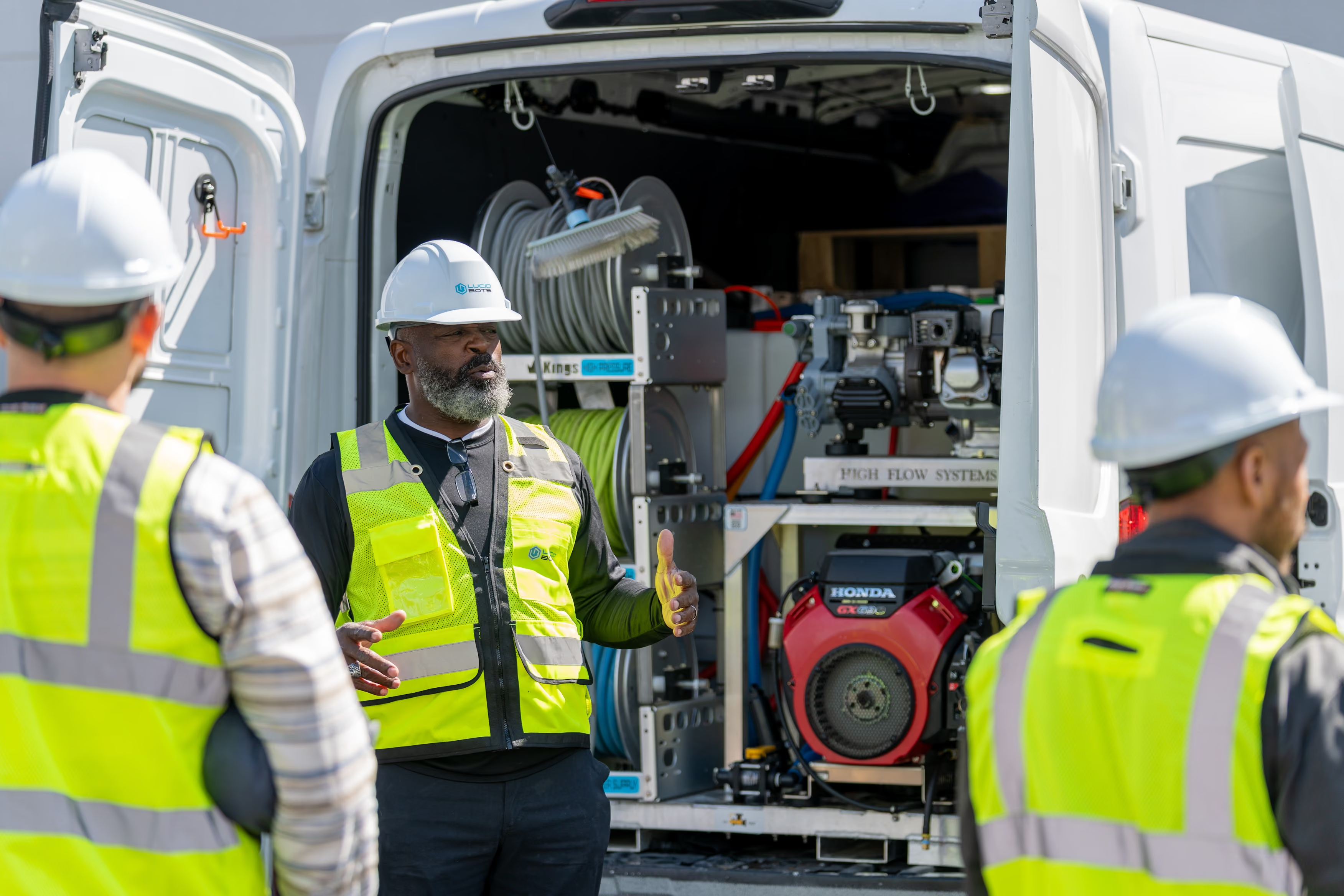
A purification system inside a van, open trailer, or enclosed trailer removes dissolved minerals that could remain on the glass after drying.

03 Build the required flow

A matched pump moves the purified water through the plumbing, hose reel, and delivery hose.

04 Send water to the drone

The hose supplies water to the aircraft while the pilot controls its position and ground support manages the fluid line.

05 Add cleaner to the glass

Window Payload carries cleaning solution onboard and injects it into the water stream on demand. The purified ground-water supply remains separate from the chemistry.

06 Rinse, wash, and rinse

Pre-rinse the glass, activate chemical injection for the wash pass, allow an appropriate dwell, then switch the injection off and complete a thorough purified-water rinse before the cleaner dries.

See how the Window Payload system connects

Explore how the Sherpa drone, power options, fluid-delivery equipment, ground rig, and crew work together.
Common Questions

Frequently Asked Questions

Do I need a Window Payload for drone window cleaning?

Yes. Window cleaning with the Sherpa requires the Window Payload attachment. Soft washing can use the Sherpa’s standard configuration; glass work that needs on-demand chemistry and a controlled rinse uses Window Payload.

How does the Window Payload clean glass?

Water is supplied and purified on the ground, then pumped through a hose to the Window Payload on the Sherpa drone. The payload carries cleaning solution in an onboard tank (about 2 quarts) and injects it into the water stream only when you want it. Typical cycle: pre-rinse, wash with chemistry and dwell, then turn injection off and finish with a thorough purified-water rinse before the cleaner dries. The rinse water stays separate from the chemistry so the final pass stays clean.

Does a drone clean as well without a brush or squeegee?

It can on the right job, but touchless cleaning is not better at removing every type of contamination. The Sherpa drone with Window Payload is a flying pressure washer: it works when the glass can be cleaned with the right chemistry, dwell time, and purified-water rinse. Etched glass, heavy buildup, and jobs that need agitation usually still need another method. A test panel is the honest way to check before you quote the full building.

How does drone window cleaning compare to traditional window washing?

Traditional window washing often puts people on lifts, swing stages, or ropes to reach elevated glass. With a Sherpa drone and Window Payload, the operator stays on the ground and the aircraft brings purified water, cleaning solution, and rinse control to the glass. You still rely on chemistry, dwell time, and a purified-water rinse — the drone changes access and delivery, not the basics of a good clean. Lifts and rope access can still be the better call for tight spaces, heavy restoration, or glass that needs brushing or scraping.
Continue learning

Take your next step into drone cleaning

Learn more about drone cleaning, understand what to evaluate before buying, or see the Sherpa drone in action.
Mockup

Explore training options

Check out the various training options the Lucid Bots team offers in person and online.
Learn More
Mockup

Drone cleaning buyer's guide

Learn what to compare across the payloads, power, service, training, software, and full operating setup.
Learn More
Mockup

Request a demo

Watch the Sherpa drone workflow or request a technical demonstration around your application.
Learn More