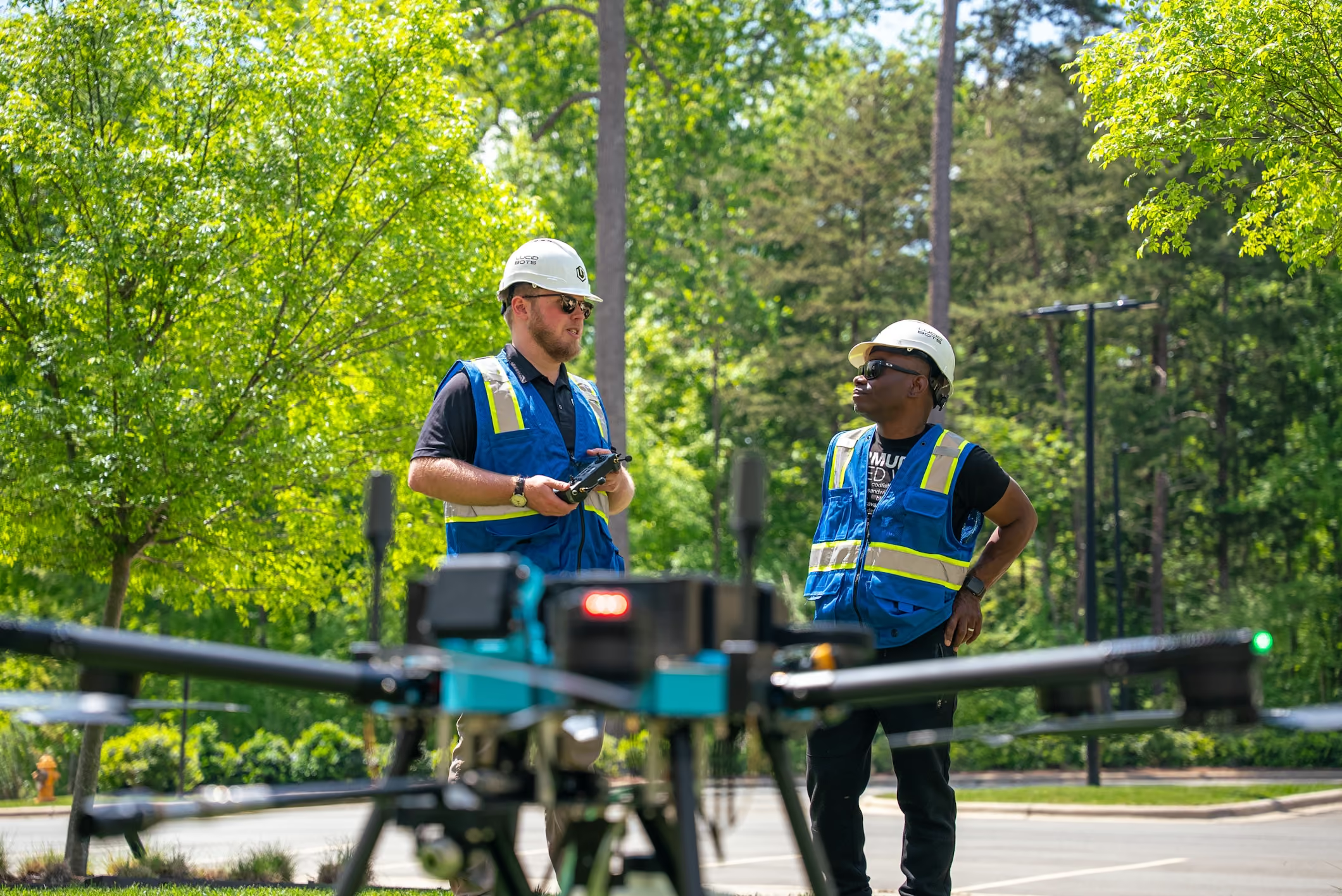


Commercial Sherpa drone operators in the United States need an FAA Part 107 Remote Pilot Certificate. Previous drone experience is not required, but operators must complete the appropriate certification before performing commercial work.
There is no universal production rate. Building design, surface condition, chemistry, water supply, weather, and job setup all affect speed. The biggest advantage is often significantly reducing the time required to set up and reposition lifts, scaffolding, or rope-access systems.
The Sherpa drone can legally fly up to 180 feet in supported configurations. Actual working height depends on the payload, hose, liquid weight, wind, site conditions, and applicable flight restrictions.
It can, when the right cleaning method, chemistry, pressure, and water quality are used. The Sherpa drone changes how the cleaning solution reaches the surface, not the science behind the cleaning.
The Sherpa drone's default configuration is optimized for exterior soft washing. The Window Payload adds commercial window cleaning, while the Shield Payload supports water repellents and coating applications. Job fit depends on the surface, buildup, and desired result.
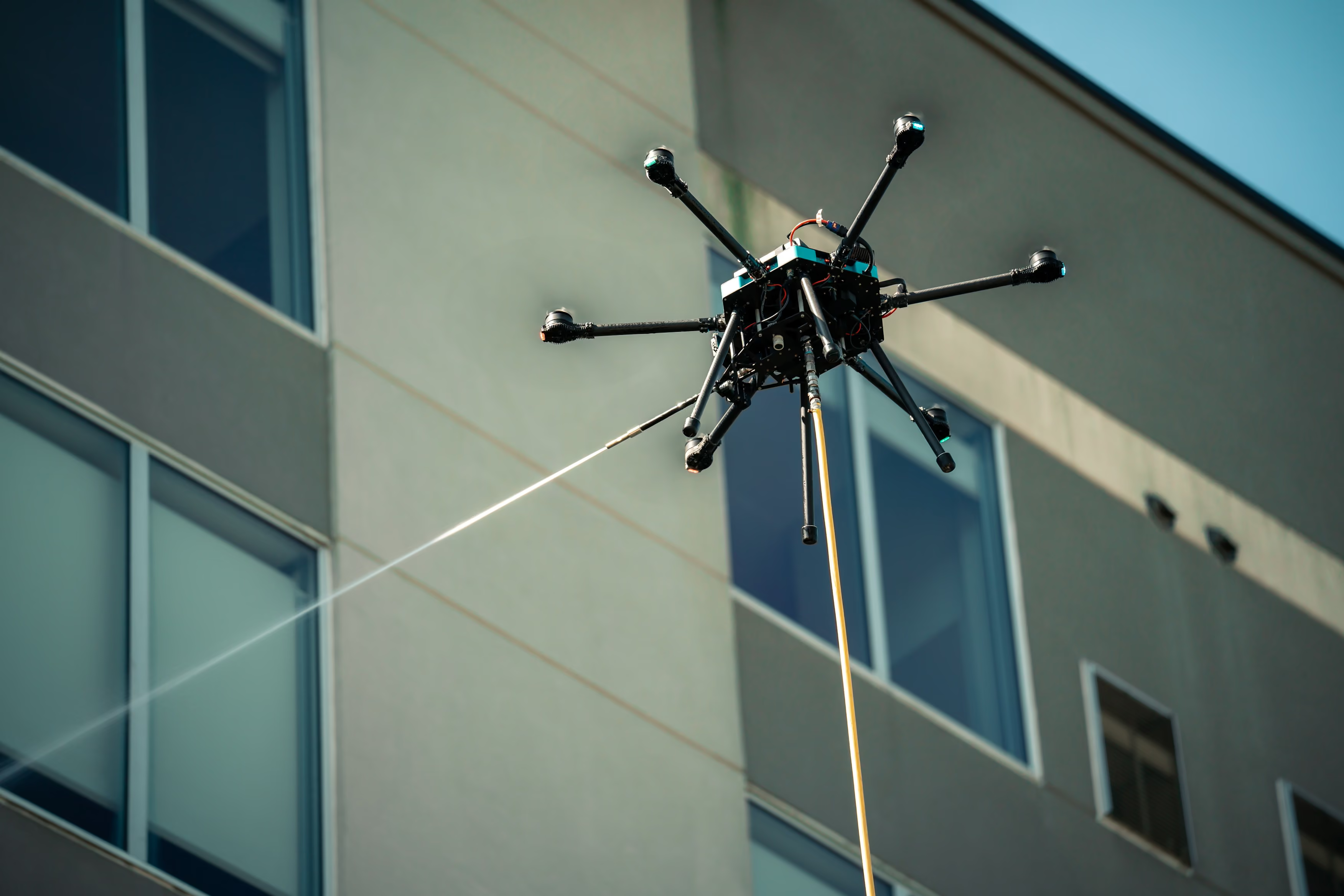
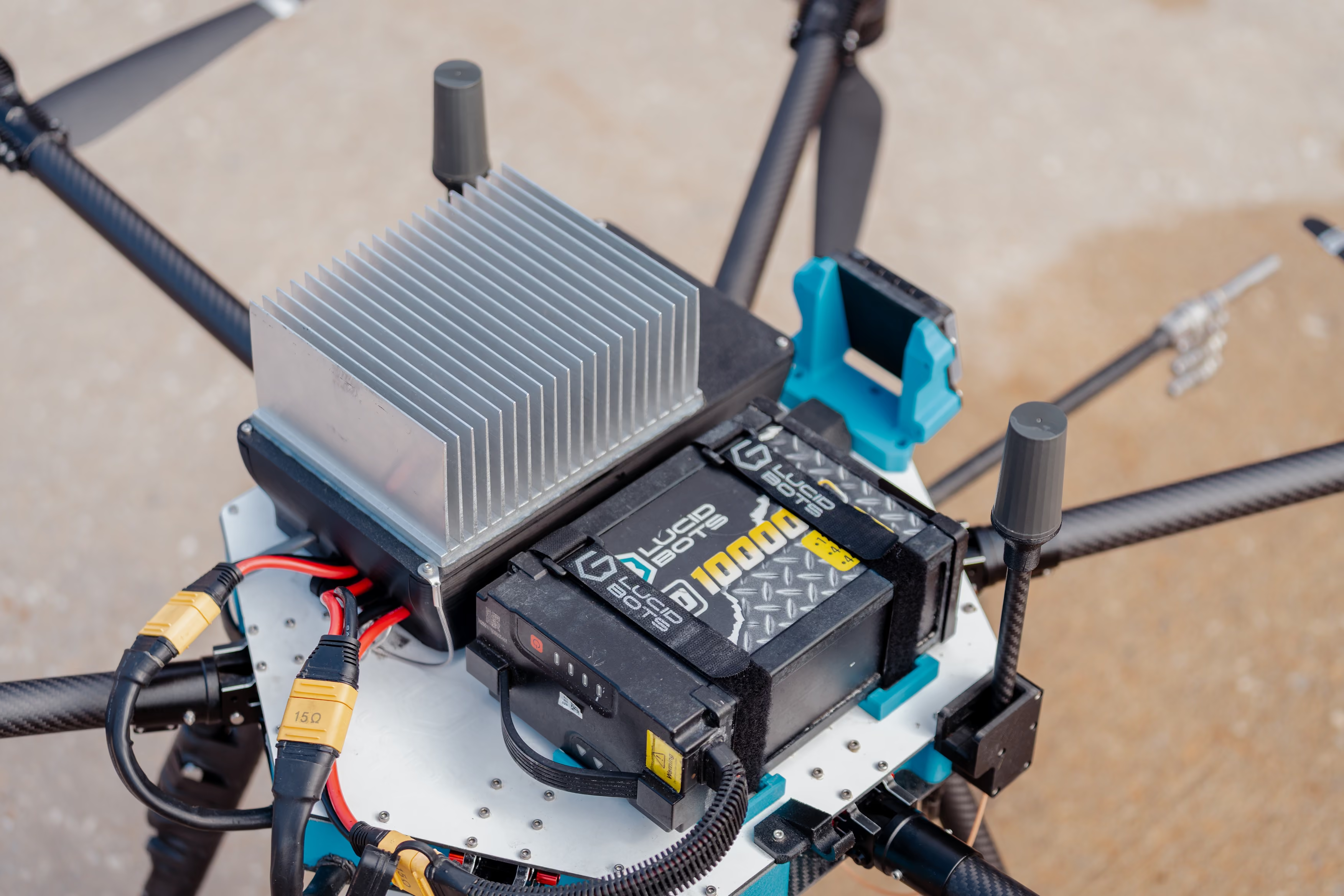
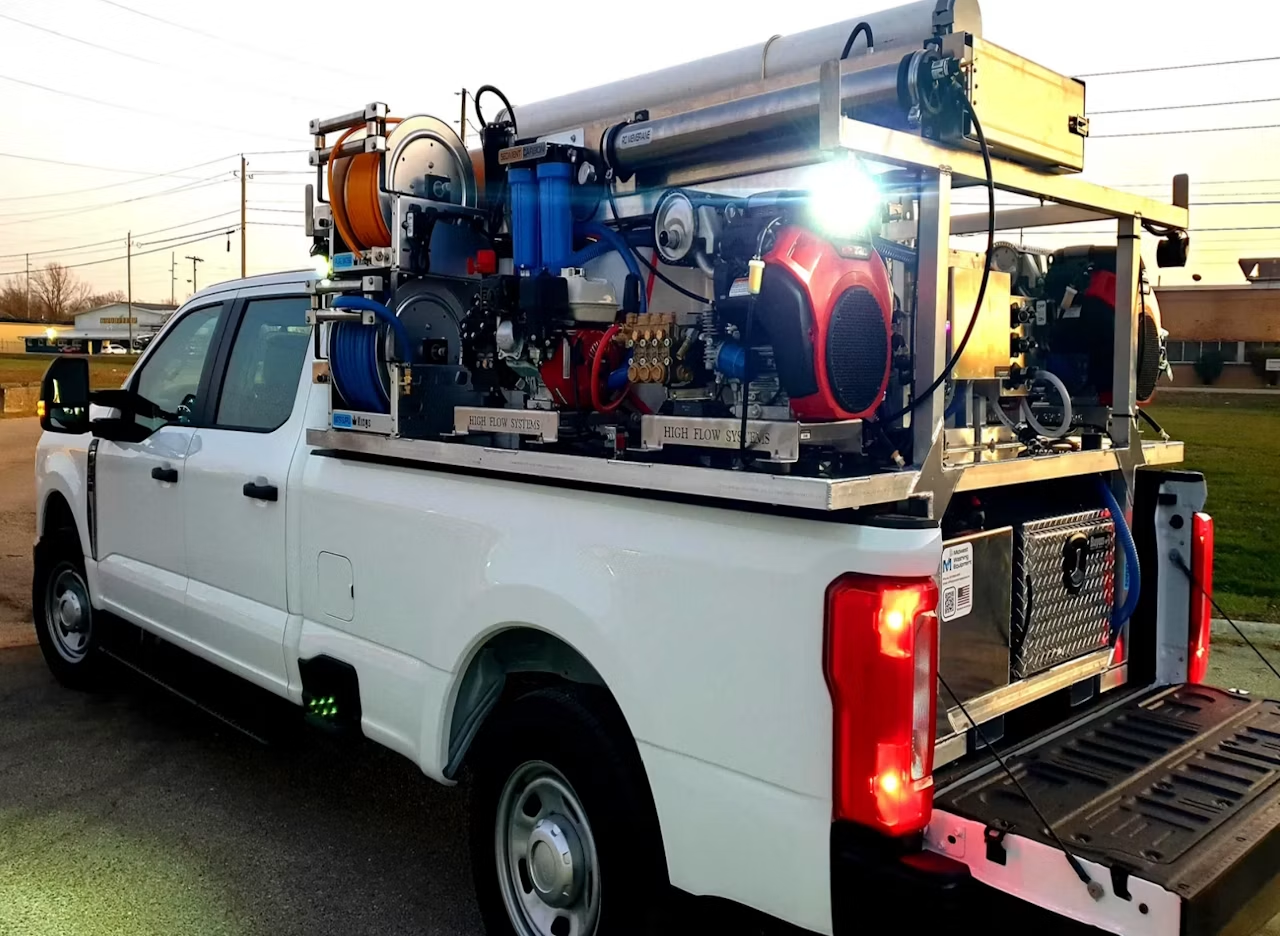
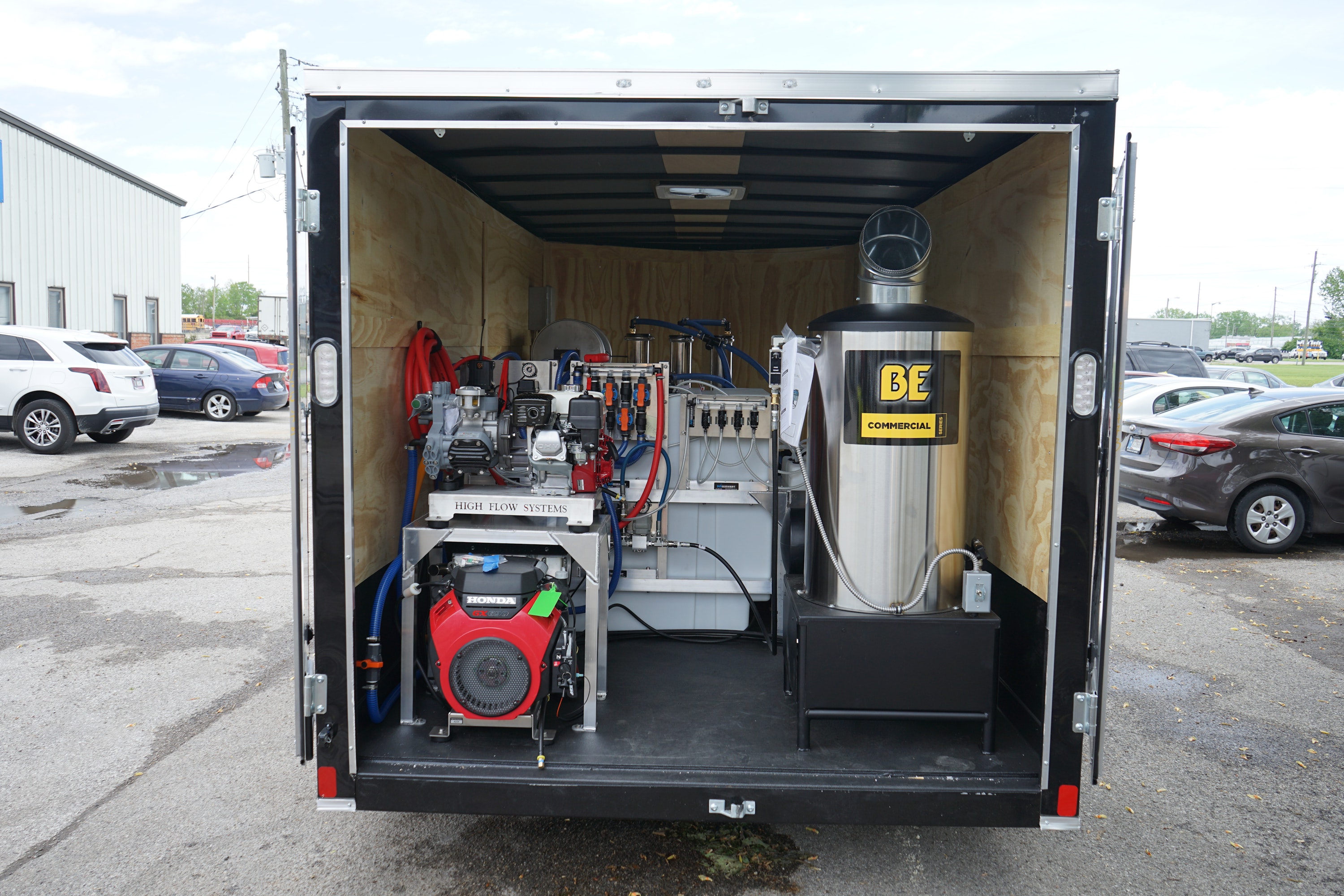
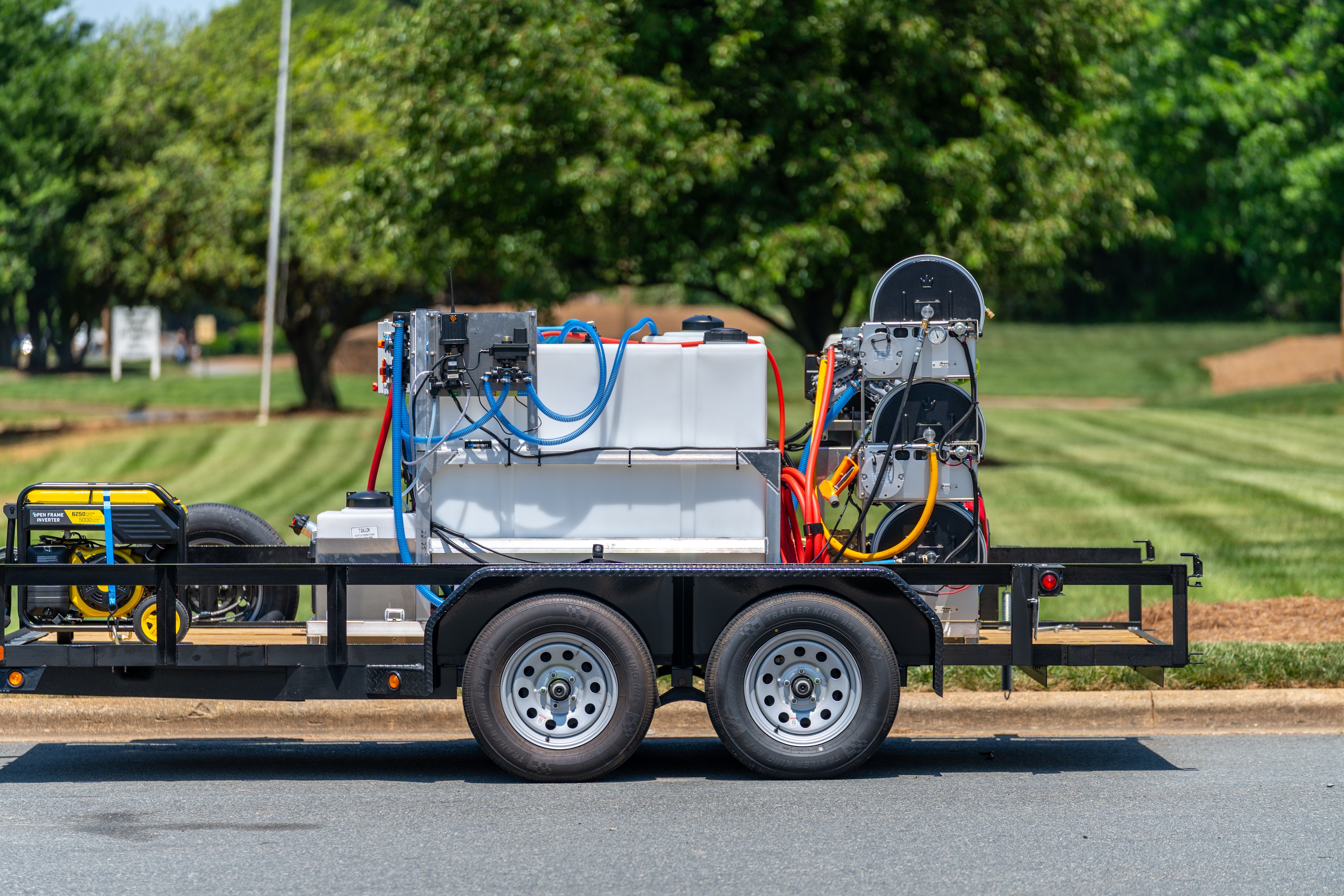
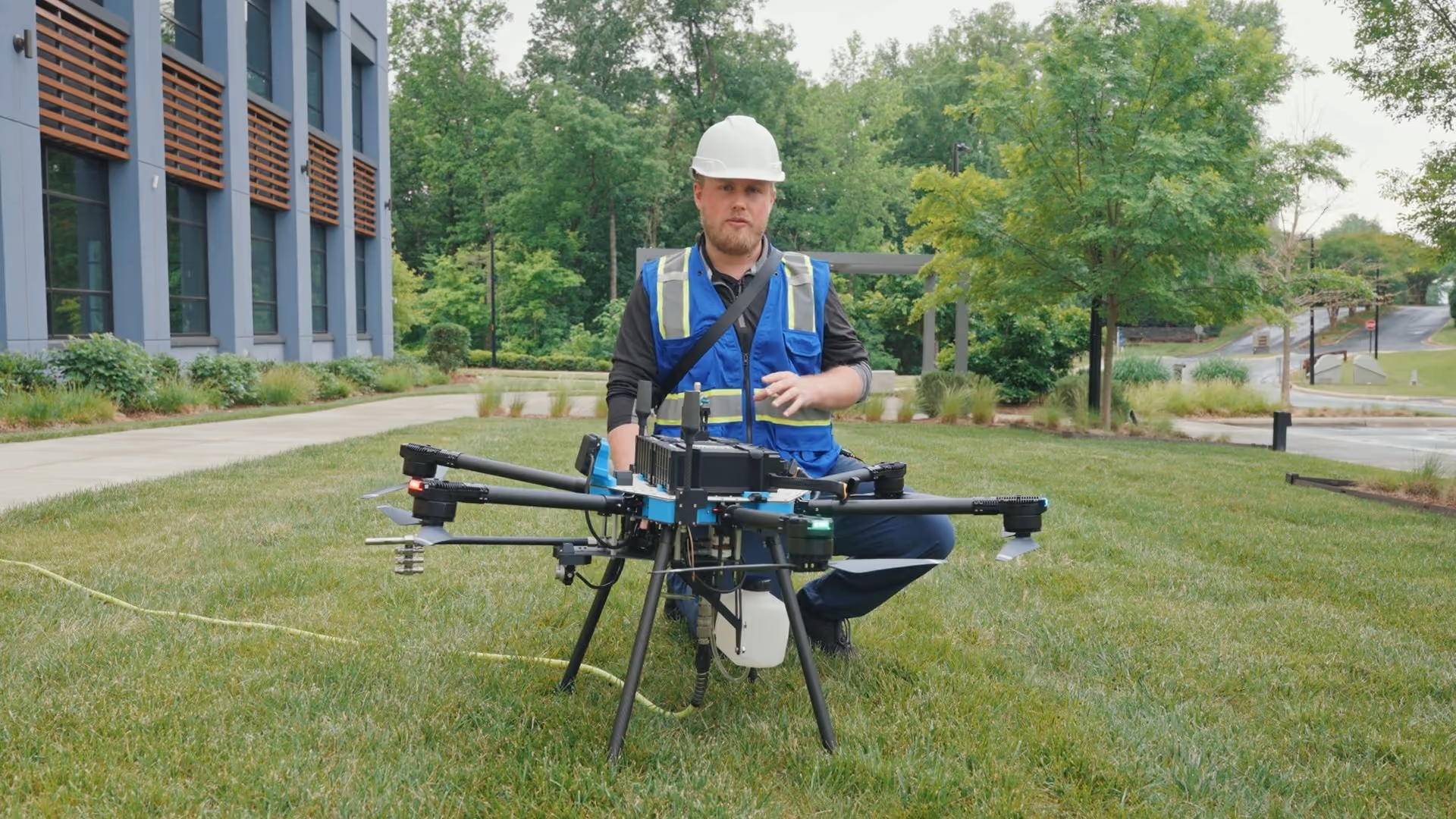
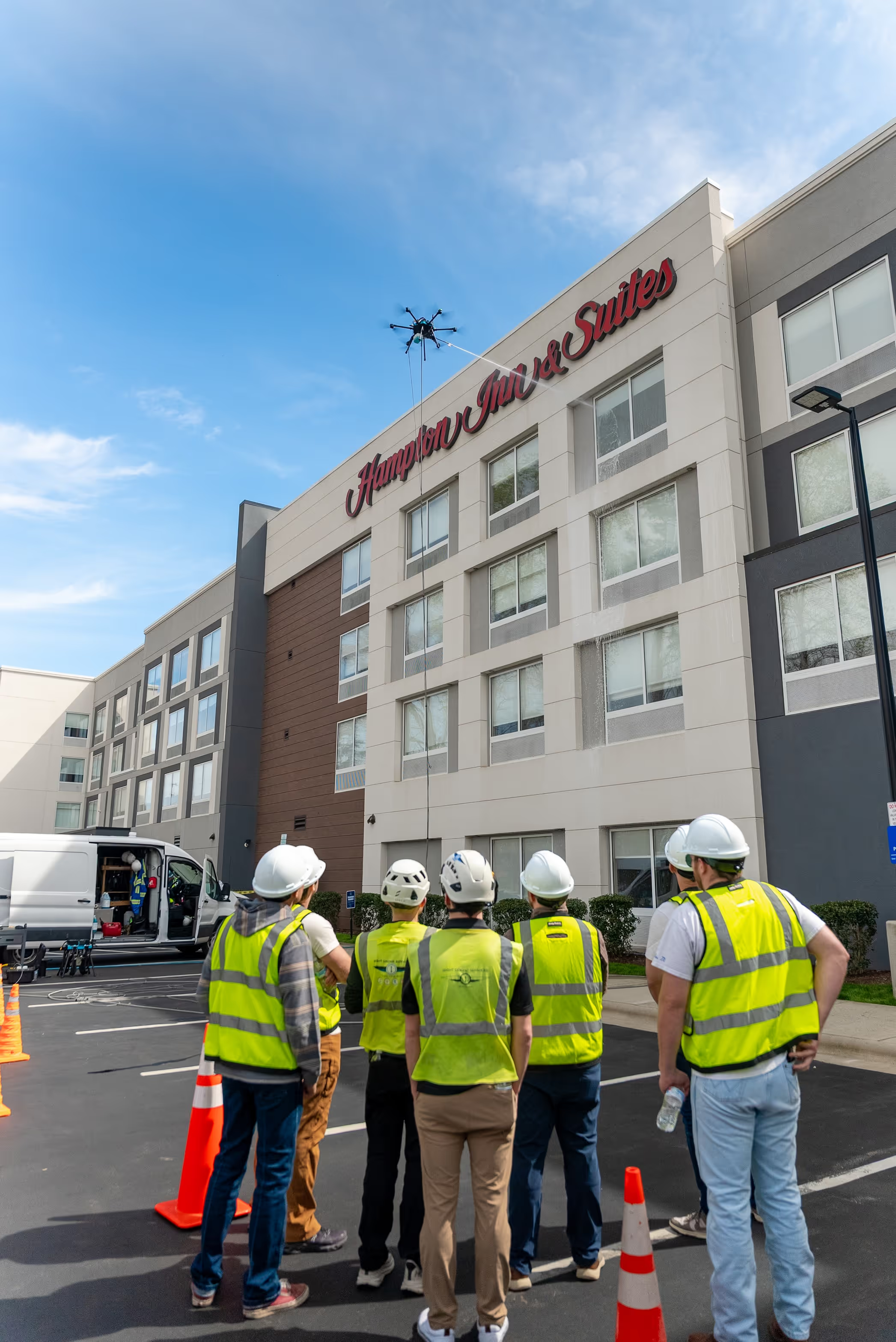
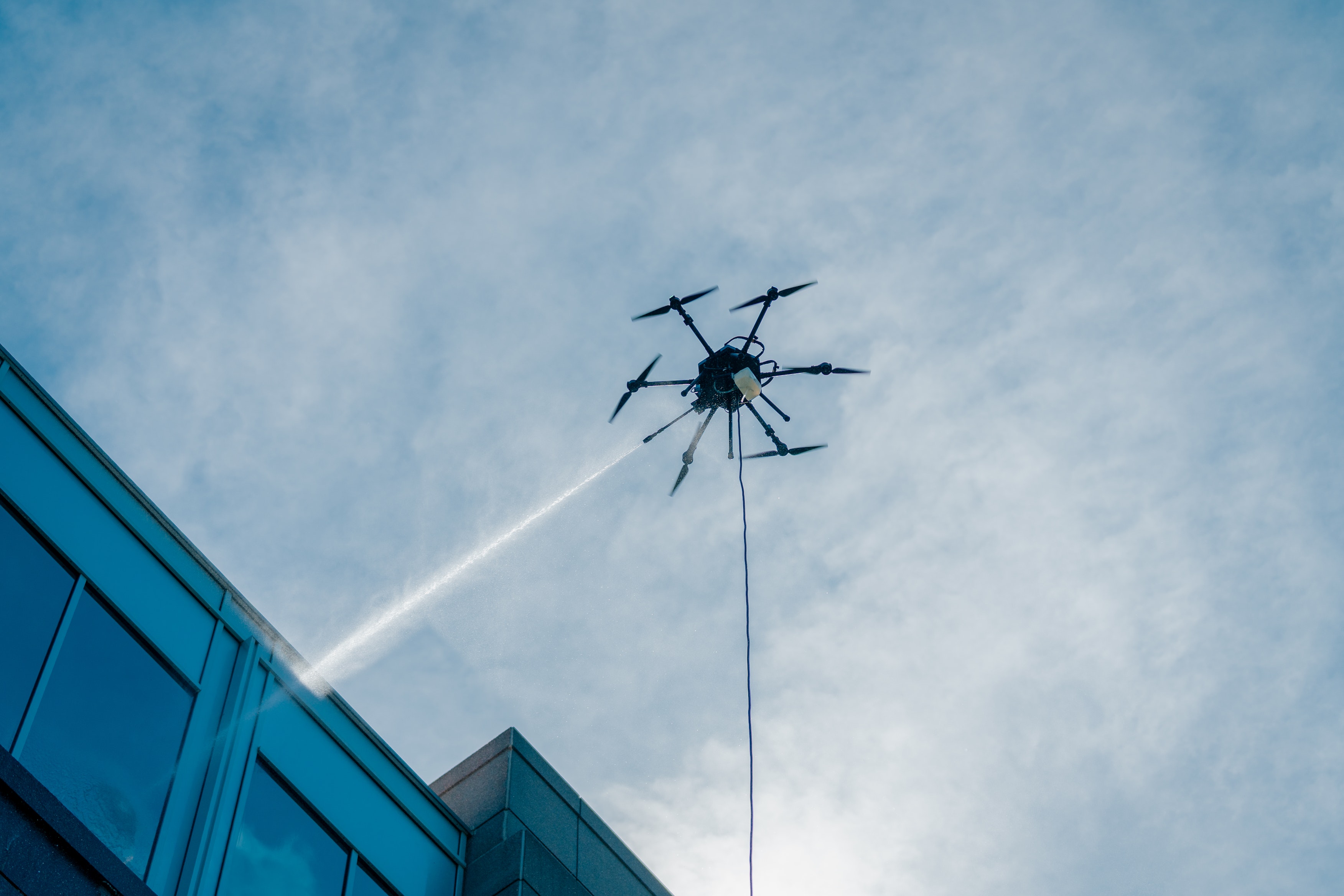
The Sherpa drone carries the spray system while water and cleaning solution travel through a lightweight hose from a ground rig. The pilot controls the drone from the ground and applies the same water, chemistry, and cleaning methods used in professional exterior cleaning.
Lucid Bots is a Charlotte, North Carolina-based robotics company that builds commercial cleaning drones to take on dull, dirty, and dangerous exterior maintenance work.