You're not creating demand. You're capturing it.
One of the most common fears among new drone cleaning operators is that they'll invest in equipment and training only to discover there's no real demand in their market. This post dismantles that fear with a simple but powerful reframe: drone cleaning doesn't create a new market. It captures an existing one. Every commercial building gets dirty. Every property manager budgets for exterior cleaning. The demand is already there, operators just need a system to find it, size it, and prove they can serve it better than the traditional methods customers are already using. Topics covered include: why the shift from 'creating demand' to 'capturing demand' changes how operators approach territory validation, the hidden mid-rise opportunity that most operators overlook when they fixate on skyscrapers, a practical market sizing formula that turns a drive through your territory into a dollar figure, the highest-value property categories and why hotels, office parks, hospitals, and universities sit at the top of the list, and an underrated partnership channel large interior cleaning companies that currently subcontract exterior work that can accelerate territory penetration without cold outreach. Built for operators who want to stop wondering if their market is big enough and start proving it.
This is for drone cleaning operators new or prospective who are worried that their market might not have enough demand to support a real business. If you've been hesitating to commit to a territory because you're not sure the opportunity is there, this post reframes the question entirely. The demand already exists in every market with commercial buildings. Your job isn't to create it it's to prove you can capture it faster, safer, and with less disruption than what property managers are already paying for.
The biggest fear most new drone cleaning operators have is that they'll need to convince an entire market that their service is worth paying for. They won't. Exterior cleaning demand is built into the physical world around us. Buildings get dirty. Property managers budget for cleaning. Facilities teams need reliable maintenance partners. Drone cleaning isn't introducing a new need, it's delivering a better solution to one that already exists and is already being paid for. That shift in mindset changes everything about how you approach territory validation. You're not looking for customers who might want exterior cleaning. You're finding ones who already buy it.
You're Not Creating Demand You're Capturing It
"The best way to find out if you can trust somebody is to trust them." Ernest Hemingway
The biggest fear new operators bring into drone cleaning is the belief that they need to create a market from scratch. They don't. Exterior cleaning demand is already baked into the world around you. Buildings get dirty. Property managers budget for cleaning every year. Facilities teams need maintenance partners they can rely on. The demand exists in every city, in every territory, in every market with commercial real estate above three stories.
Drone cleaning isn't a new need. It's a better answer to an old one. And that distinction changes everything about how you validate your territory and win your first revenue.
The Mindset Shift That Changes Your Approach
When operators think they need to create demand, they spend their energy on education explaining what drone cleaning is, why it exists, and why someone should care. That's a slow, expensive path. When operators understand they're capturing existing demand, the conversation shifts entirely. You're not convincing anyone to buy something new. You're proving that you can solve a problem they already pay someone else to solve faster, safer, and with less disruption to their tenants, guests, and operations.
That shift turns territory validation into a visible exercise. You don't need a research report. You need to drive around and look at buildings.
Where the Real Market Is The Mid-Rise Opportunity
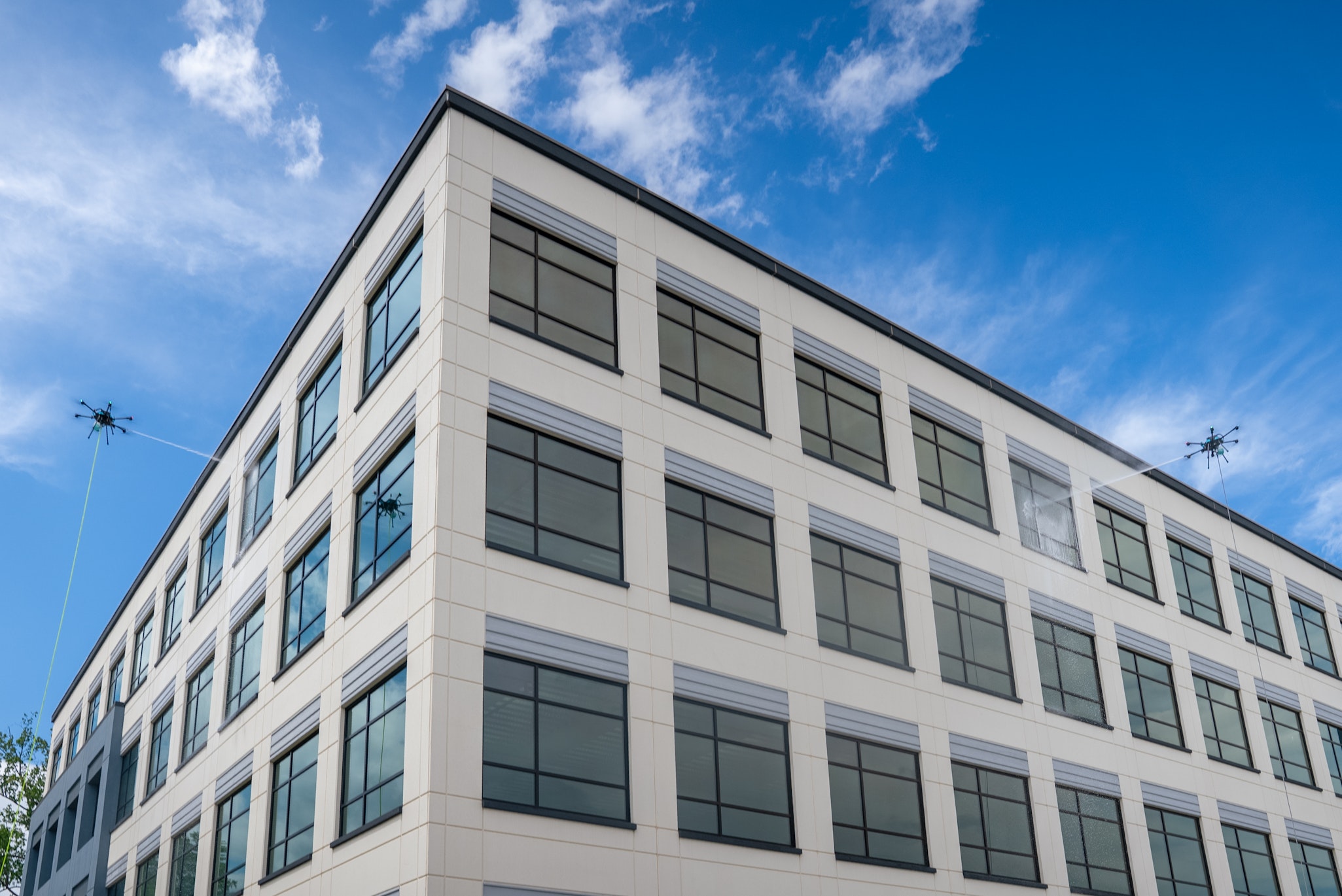
Most people picture drone cleaning and think of skyscrapers. That instinct leads operators toward the wrong targets. Over 99% of commercial buildings in the United States are below 10 stories and the sweet spot for drone cleaning profitability sits squarely in the 4 to 10 story mid-rise range.
Mid-rise buildings offer maximum efficiency advantages from drone technology. They show dramatic before-and-after contrast that is visible from the ground. They tend to have predictable maintenance budgets and recurring cleaning schedules. And they include the highest-volume commercial property categories: hotels and extended-stay properties, office parks and corporate campuses, hospitals and medical office buildings, and industrial and warehouse facilities.
If you spend your early territory validation energy chasing the tallest buildings in your market, you'll miss the real opportunity. The money is in the middle of the skyline, not the top of it.
A Simple Market Sizing Formula
You don't need a research firm or an industry database to estimate the size of your territory. Spend two to three hours driving your market and counting commercial buildings over four stories. Then run the math. Take the number of buildings in your radius, multiply by cleaning frequency most commercial exteriors are cleaned two times per year and multiply again by average job size, which typically falls between $5,000 and $15,000 depending on your market and property types. That calculation gives you a working estimate of your annual addressable market.
As a concrete example: 200 buildings cleaned twice a year at an average of $8,000 per job equals $3.2 million in annual market value in a single territory, before you've knocked on a single door. The market is visible. You just have to look for it.
The Highest-Value Property Categories
Not all commercial properties are equally attractive as drone cleaning targets. The categories that consistently produce the best combination of deal size, cleaning frequency, and decision-maker accessibility are hotels and hospitality properties, which have strong aesthetic incentives and visible exteriors that directly affect guest perception; medical facilities and hospitals, which have large exterior footprints, strict maintenance standards, and facility management teams with real cleaning budgets; office parks and corporate campuses, which often manage multiple buildings under a single property management relationship; and universities, which have large, high-visibility building inventories and facilities departments that plan maintenance on annual budget cycles.
Prioritize these categories in your early outreach and you'll spend your prospecting time where the conversion rates and job sizes are highest.
An Underrated Growth Channel: Interior Cleaning Companies
One of the most overlooked partnership opportunities in drone cleaning territory development is the large interior cleaning company. Commercial janitorial and facilities services firms often get asked by their existing clients to handle exterior work but most of them subcontract it out because of the complexity involved: lift rentals, workers' compensation risk for elevated work, specialized equipment, and operational overhead they're not built to manage.
Drone cleaning changes that equation for them. By partnering with a drone cleaning operator, an interior cleaning company can bring exterior services in-house, capture revenue they're currently passing to subcontractors, and offer a more complete maintenance package to the client relationships they've already built. For the drone operator, it's a warm introduction channel into accounts that have already said yes to regular commercial cleaning. In many markets, this partnership model can accelerate territory penetration faster than cold outreach alone.
The Big Takeaway
Your territory has demand. It has always had demand. Every commercial building that gets dirty and they all do represents a maintenance budget that someone is already spending. Your job as a drone cleaning operator is to prove, quickly and visibly, that you can solve the same problem with better outcomes.
Stop asking whether the demand is there. Start driving around and counting dirty buildings. Then go show what you can do.
.jpg)

.jpg)