Drone Cleaning Is Chemistry: The Two Analogies That Build Instant Customer Trust
The biggest misconception about drone cleaning is that the technology is the secret ingredient. It is not. The cleaning chemistry used in drone exterior cleaning is identical to the proven methods traditional contractors have used for decades. The drone is simply a safer, more efficient delivery system. The problem is that when customers do not understand this, they approach the service with skepticism that no amount of technical explanation can dissolve. This gives operators two simple analogies that reframe chemical cleaning in terms every prospect already understands. The dishwasher analogy addresses the agitation objection directly by connecting drone cleaning to a process every homeowner trusts. The pool chemistry analogy neutralizes fear of bleach-based solutions by linking sodium hypochlorite to chlorinated pools that customers happily let their families swim in. The post also includes the limestone cautionary story that illustrates what happens when method selection goes wrong, the full customer education framework with tailored language for four distinct customer types, and guidance on what not to lead with in sales conversations. Built for operators who want to close more deals by explaining their service more simply.
This is for drone cleaning operators who struggle to explain their service to skeptical customers in plain language. If you have ever watched a prospect's eyes glaze over during a technical explanation of your cleaning process, or fielded the question 'but how does it actually clean without scrubbing,' this post gives you two simple, field-tested analogies that cut through confusion immediately. Understanding the chemistry behind drone cleaning and knowing how to communicate it simply is one of the most practical sales skills an operator can develop.
When people first encounter drone cleaning, they often assume the drone is doing something special to the surface: scrubbing, blasting, or using some new futuristic method. That assumption creates immediate skepticism. How does it clean without brushing? Is it strong enough? Is it safe? The fastest way to overcome those objections is not a technical explanation of your equipment. It is a familiar analogy that connects chemical cleaning to something the customer already understands and trusts. This post walks through the two analogies that drone cleaning operators use to build instant customer confidence, and the customer education framework that turns those analogies into closed deals.
Drone Cleaning Is Chemistry: The Two Analogies That Build Instant Customer Trust
"The expert in anything was once a beginner." - Helen Hayes
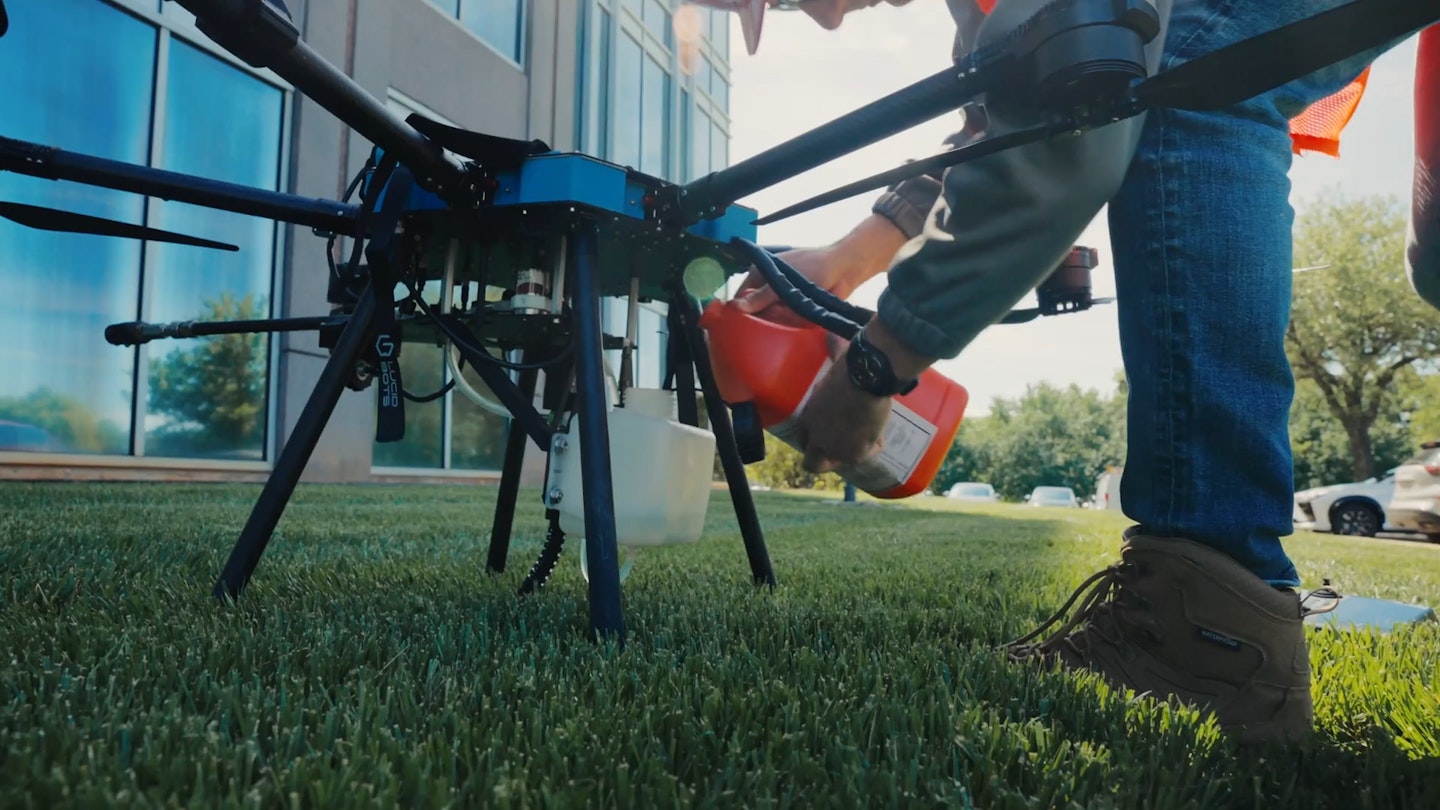
The biggest misconception about drone cleaning is that the drone is the secret sauce. It is not. After thousands of successful jobs across hundreds of operators, one truth becomes clear: the cleaning chemistry is identical to traditional exterior cleaning methods. The drone is simply a safer, more efficient delivery system that gets proven solutions exactly where they need to go.
The challenge is that customers do not know this. And when they do not understand how chemical cleaning works, skepticism fills the gap. The answer is not a more technical explanation. It is a simpler language.
The Dishwasher Analogy
When a customer asks how drone cleaning works without scrubbing, this is the response that lands every time:
"There are no scrub brushes in your dishwasher. The detergent is specially designed to break down food and bacteria chemically, and water flow rinses it away. Exterior cleaning works exactly the same way."
This analogy works for several reasons. Everyone understands how dishwashers clean without scrubbing, so the concept requires no technical education. It normalizes chemical-based cleaning as proven, familiar technology rather than something experimental. It addresses the agitation objection directly without being defensive. And it shifts the customer's attention from the mechanism to the outcome, which is a clean surface, which is all they actually care about.
Once a customer accepts that their dishwasher cleans without brushes, the logic of drone cleaning follows naturally. Chemistry breaks down contamination. Dwell time allows it to work. Rinsing removes the residue. The drone just delivers the chemistry more safely and efficiently than a crew on a lift.
The Pool Chemistry Analogy
Some customers hear the word bleach and immediately become concerned. Sodium hypochlorite sounds industrial and dangerous to people who have not worked with it professionally. The pool analogy resolves that concern in a single sentence:
"Do you have a pool? Have your kids ever swam in a pool? How do you think that water stays clean? It is chlorine. Sodium hypochlorite is the same family of chemistry, used correctly at the right concentration for the job."
The psychology behind this analogy is straightforward. People who are comfortable with chlorinated pools, which is most people, already trust the chemistry at a personal level. They have made peace with the fact that their families swim in chlorinated water regularly. Connecting sodium hypochlorite to that existing comfort immediately reframes the conversation. The chemical is no longer scary industrial bleach. It is a familiar cleaning agent they already accept in their daily lives.
The Limestone Story: Why Method Matters More Than Equipment
Understanding chemistry is not just a sales tool. It is what protects customers from expensive mistakes. One of the clearest illustrations of this comes from a real job at a university.
The building had beautiful limestone trim that was heavily stained with mold. A previous contractor had approached it with a lift, high pressure, and hot water at 4,000 PSI. They literally ate away a quarter inch of the limestone trying to clean it with mechanical force.
The correct approach had nothing to do with pressure. Mold is an organic compound with root systems. If you do not treat it chemically, you are not truly removing it. You are just abrading the surface. The right solution was a soft wash pump running around 150 PSI with proper chemistry and dwell time. The pressure was almost irrelevant. The chemistry did the work.
The principle applies to every job: match the method to the contamination type and the surface material, not to the equipment you happen to have available. Operators who understand this protect their customers from exactly the kind of expensive damage that makes property managers distrust contractors for years.
How to Explain Drone Cleaning to Any Customer
Not every customer cares about the same thing. The operators who communicate most effectively tailor their explanation to what the specific customer values. Here is the framework that works across four common customer types.
For Safety-Focused Customers
"We use the same proven cleaning chemistry that traditional contractors use. The difference is that our drone keeps workers safely on the ground throughout the entire job. No lifts, no ladders, no workers at height."
For Quality-Focused Customers
"Our window cleaning works like a dishwasher. Specialized chemistry breaks down dirt without physical scrubbing, and we use ultra-pure filtered water to prevent any spotting or streaking. The result is consistent, streak-free glass every time."
For Cost-Focused Customers
"Chemical cleaning kills organic growth at the root level, which means buildings stay clean longer after a soft wash than after a pressure wash. Fewer cleanings per year translates directly into lower total annual maintenance costs."
For Skeptical or Technical Customers
"The chemistry is identical to what traditional exterior cleaning contractors have used for decades. We are not doing anything experimental. We are just delivering proven solutions more safely and efficiently using a drone as the delivery system instead of a crew on a lift."
What Not to Lead With
When introducing drone cleaning to a new prospect, resist the urge to open with equipment specifications. Flight time, battery capacity, payload engineering, and drone model numbers do not answer the questions customers are actually asking. They want to know whether it works, whether it is safe, and whether it will damage their building. Lead with the analogies. Let technical details come out naturally if the customer is curious, not as your opening pitch.
The operators who explain drone cleaning most effectively do not sound like engineers. They sound like trusted professionals who happen to use a smarter tool.
The Big Takeaway
Drone cleaning is not magic. It is proven chemistry delivered more safely and efficiently. The dishwasher analogy explains how chemical cleaning works without scrubbing. The pool analogy neutralizes fear of bleach-based solutions. The limestone story illustrates what happens when operators prioritize equipment over chemistry knowledge. And the customer education framework gives you the right language for any prospect you sit across from.
Master the simple explanation. Use the analogies. Let the chemistry do the work it has always done.

.jpg)
.jpg)