Insurance, Safety, and Documentation: The Risk Framework Customers Trust
FAA Part 107 certification is the starting point for commercial drone cleaning compliance, not the finish line. The operators who win and retain high-value commercial accounts have built a complete risk framework that addresses every category of exposure a property manager or facilities director might reasonably worry about: financial liability through comprehensive insurance coverage, operational safety through documented standard operating procedures, and administrative credibility through organized documentation systems. This post walks through each component in detail. Topics covered include the three insurance coverage types that serious commercial properties require and the specific coverage levels that satisfy enterprise vendor qualification requirements, the core elements of an operational safety system including pre-job site assessments, safety zone protocols, weather and emergency procedures, and aircraft malfunction response plans, and the documentation categories that function as silent sales tools throughout the customer relationship. The post also addresses how documentation reduces insurance premiums, speeds vendor approval processes, and protects operators legally when incidents occur. Built for operators who want to operate at the level that enterprise commercial accounts require and who understand that professional risk management is not overhead but a core business competency.
This is for drone cleaning operators who have their FAA certification and are ready to build out the rest of their professional risk framework: insurance coverage, standard operating procedures, and documentation systems. If you are targeting commercial properties, medical facilities, universities, or any institutional account with a formal vendor qualification process, this post gives you a complete picture of what those customers expect to see before they approve a new contractor and how to present your risk management systems in a way that builds confidence rather than raising more questions.
FAA certification gets you legally authorized to fly. It does not, by itself, get you hired for premium commercial work. The property managers and facilities directors who oversee institutional properties, enterprise facilities, and high-value commercial real estate have vendor qualification requirements that go significantly beyond regulatory compliance. They want to know what happens if someone gets hurt, what coverage is in place if property gets damaged, and what documentation exists to prove that your operation runs professionally every time. This post covers the complete risk framework that answers all of those questions before they become objections.
Insurance, Safety, and Documentation: The Risk Framework Customers Trust
Skill alone does not win enterprise commercial contracts. What wins them is proof: proof that people will not get hurt, proof that property will not be damaged, proof that incidents have been planned for, and proof that the operator's systems are professional enough to be trusted with a building that represents millions of dollars in asset value.
FAA Part 107 certification establishes your legal right to operate. The risk framework described in this post is what establishes your right to the accounts worth having.
Insurance: The Gatekeeper to Premium Work
Many high-value commercial properties will not consider an uninsured or underinsured contractor regardless of how compelling the demonstration looks or how competitive the pricing is. Insurance requirements are often embedded in vendor qualification processes that happen before any sales conversation takes place, which means operators without adequate coverage are eliminated from consideration before they ever get the chance to prove their work.
The three coverage types that professional drone cleaning operations require are general liability insurance, aviation and hull insurance, and workers' compensation. General liability coverage should sit at a minimum of one million dollars per occurrence with a two million dollar aggregate. This is the baseline that most commercial properties require and what enterprise vendor qualification processes typically specify. Aviation and hull insurance covers the aircraft and payload against damage or loss, which matters both for protecting your equipment investment and for satisfying insurers who want to know that a drone malfunction during a job will not result in an uninsured claim against the property. Workers' compensation coverage needs to explicitly include aviation-related work, as standard workers' compensation policies sometimes exclude aerial operations and operators who have not confirmed this with their carrier may find themselves with a gap in coverage at exactly the wrong moment.
This level of coverage does more than satisfy vendor requirements. It allows you to work on properties that competitors without adequate coverage cannot access, price with confidence because your cost structure reflects your actual liability exposure, and present yourself in vendor qualification conversations as an operator that has thought seriously about risk rather than one who is hoping nothing goes wrong.
Safety SOPs: Where Trust Is Built Before the Job Starts
Professional operators do not improvise on commercial job sites. They run standard operating procedures that have been developed, documented, and practiced before any customer ever sees them. The difference between an operator with written SOPs and one without is not primarily operational. It is perceptual. When a property manager asks how you handle an equipment malfunction mid-job and you hand them a written emergency response protocol, the conversation about whether you are a professional vendor ends immediately.
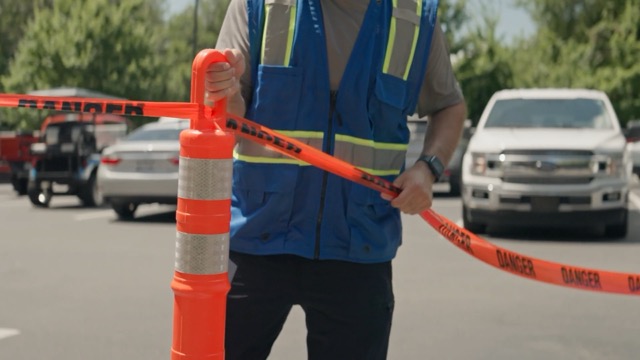
The core elements of a drone cleaning safety system begin with pre-job site assessments that identify hazards, access constraints, overhead obstacles, proximity to uninvolved people, and any site-specific conditions that affect the operational plan. Safety zones and access control procedures establish the perimeter around the work area that keeps uninvolved people clear of the flight path during operations. Weather protocols define the wind speed, visibility, and precipitation thresholds below which operations are suspended, and they specify the notification and rescheduling process that follows.
Emergency readiness planning covers the scenarios that operators hope never happen but must be prepared for: aircraft malfunction and uncontrolled descent, medical response if a team member is injured, and the customer and regulatory notification steps that follow any incident. Good safety systems prevent most incidents. Great safety systems prove you were prepared for the ones that occur anyway.
Documentation: Your Silent Sales Tool
Documentation is not administrative busywork. It is proof of professionalism that works for you in every vendor qualification process, every insurance renewal conversation, and every legal dispute that might arise from an incident on a job site. Operators who maintain organized, current documentation records operate with a confidence that operators who do not simply cannot replicate.
The documentation categories that matter most for commercial drone cleaning operations are training records showing that all team members have completed relevant certifications and safety training, equipment inspection logs that demonstrate regular maintenance and airworthiness verification, incident reports for any event that deviates from normal operations regardless of whether it resulted in damage or injury, and maintenance schedules that show the aircraft and equipment are being serviced according to manufacturer specifications.
Well-organized records build customer confidence during vendor qualification because they demonstrate operational maturity. They reduce insurance premiums over time because insurers reward documented risk management. They protect operators legally if an incident generates a claim or a regulatory inquiry. And they speed the vendor approval process at institutional accounts where procurement teams need to verify compliance before approving a new contractor.
Presenting Your Risk Framework to Customers
The operators who get the most commercial value from their risk framework are the ones who present it proactively rather than waiting for customers to ask. In a proposal or vendor qualification document, leading with your insurance coverage levels, referencing your FAA certification, and summarizing your safety SOP structure does something important: it answers the risk questions before they become objections.
Customers who never have to ask whether you are insured, whether you are certified, or whether you have a plan for emergencies are customers who spend their mental energy evaluating the quality of your work rather than the reliability of your operation. That is exactly where you want their attention.
The Big Takeaway
Insurance, safety systems, and documentation are not the cost of doing business in drone cleaning. They are the foundation of doing it at the level that premium commercial accounts require. Operators who build this framework early do not find that it slows them down. They find that it clears the path to the accounts worth having and keeps competitors without equivalent credentials from following them there.
Build it completely. Document it thoroughly. Lead with it confidently. That is how compliance becomes a competitive moat.
.jpg)
.jpg)