How High Can the Sherpa Drone Fly?
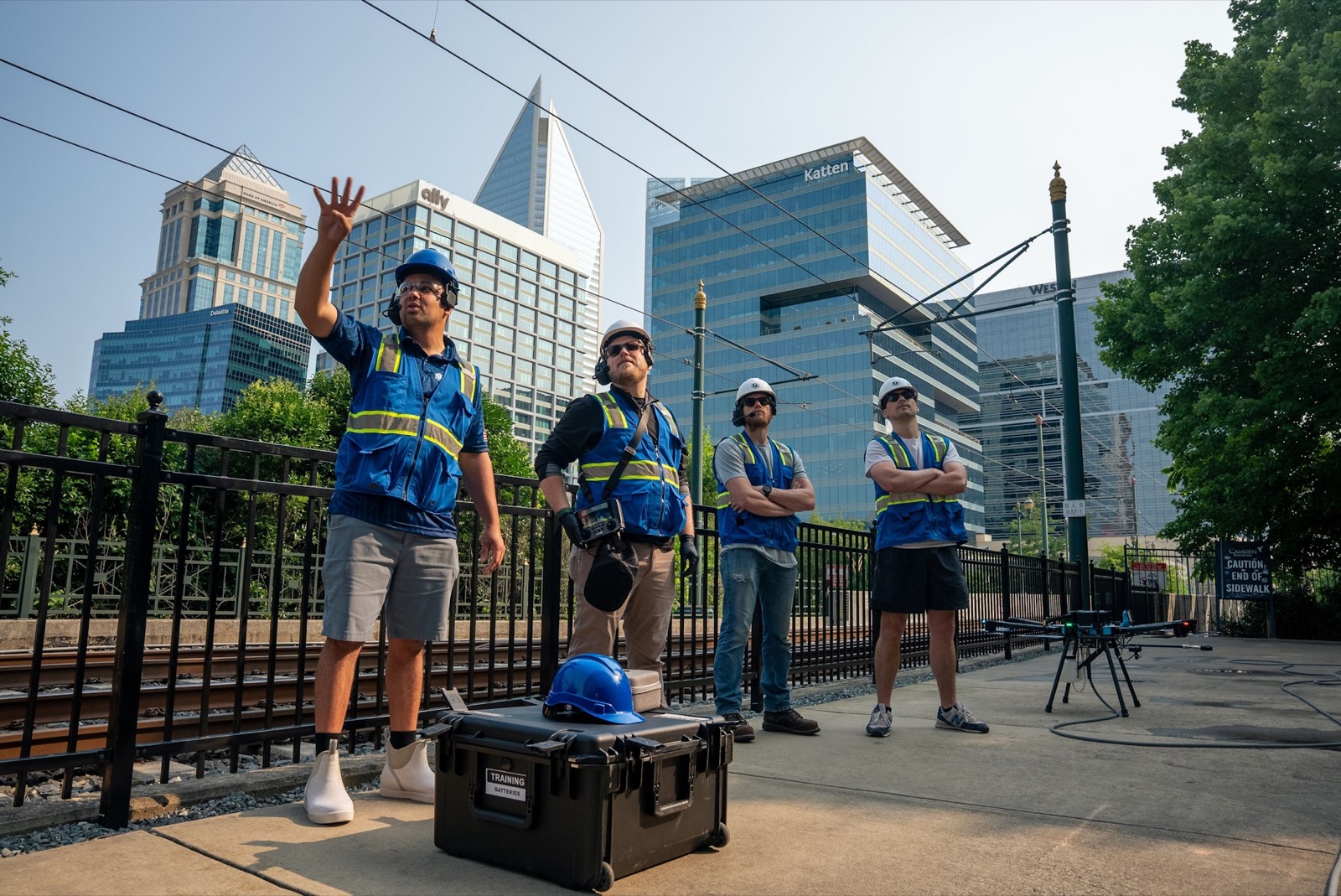
How high can Sherpa clean?
Sherpa supports cleaning heights of up to approximately 180 feet above ground in supported configurations. The working height for a particular job may be lower. Your payload, power source, hose, liquid weight, weather and site conditions all affect the setup.
Three different limits matter when planning a job. The FAA sets operating rules, the aircraft has physical limits, and Lucid Bots specifies the configurations supported for cleaning. A regulatory altitude ceiling is not a cleaning-height rating.
Sherpa cleaning reach
Up to 180 ft
Above ground in supported cleaning configurations.
What the FAA altitude rule means
Under the general Part 107 altitude rule, a small unmanned aircraft must remain at or below 400 feet above ground level. When it stays within 400 feet of a structure, the rule permits flight up to 400 feet above that structure’s immediate uppermost limit. Airspace restrictions and other operating requirements still apply. See 14 CFR 107.51.
That rule does not mean Sherpa can clean at 400 feet. Use the supported limit for your equipment and job, even when the airspace would permit a higher flight.
Why cleaning height depends on the complete setup
A cleaning drone lifts more than an aircraft. It also supports a payload and a portion of the hose and liquid needed to reach the surface. As the drone climbs, the suspended load can increase. Wind, temperature and elevation can also affect performance.
- Aircraft and payload. Confirm the Sherpa model and cleaning attachment being used.
- Power. Battery and power-tether configurations have different operating considerations.
- Hose and liquid. Hose diameter, material, fittings, length and the weight of the liquid all matter.
- Routing. Account for the hose between the ground equipment, takeoff area and work surface.
- Conditions. Evaluate wind, obstacles, airspace, takeoff and landing areas, and emergency procedures before flying.
Confirm your planned working height and complete configuration with Lucid Bots before quoting a job near the system’s limits. Do not use an unloaded flight capability as a loaded cleaning-height specification.
How hose diameter changes the load
For the same length, a larger hose holds more liquid. As a simple illustration, 100 feet of hose filled with water contains approximately the following liquid weight.
- ¼-inch inside diameter holds about 2 pounds of water.
- ⅜-inch inside diameter holds about 5 pounds of water.
- ½-inch inside diameter holds about 9 pounds of water.
These rounded calculations cover the water only. Add the weight of the hose, fittings and attachments. Cleaning solutions may have a different density. The amount of hose suspended in flight depends on how the system is routed.
Does a longer power tether allow a higher flight?
Not by itself. Cable length is not a working-height rating. A power tether can support extended operation, but usable cleaning height still depends on available power, the complete load, operating conditions and the supported configuration. Follow the instructions for your Sherpa Power Tether.
Weight and altitude are separate requirements
The FAA’s small-drone rules apply to aircraft weighing less than 55 pounds at takeoff, including equipment onboard or attached. A setup also needs to meet the applicable airspace and operating rules. Staying below an altitude limit does not resolve a weight or configuration issue. Read the FAA’s Part 107 overview and confirm the requirements for your operation.
Plan the job before choosing the height
Send Lucid Bots the building height, intended cleaning method, payload, hose specifications and power configuration. The team can help assess the setup and identify questions to resolve before you arrive onsite.
Request a Sherpa demo to discuss your work, or contact Lucid Bots about an existing system.